Macadamia nuts show up in white chocolate cookies and Hawaiian desserts so often that it's easy to overlook what makes them distinct among tree nuts - a fat content so high the kernel almost melts on the tongue.
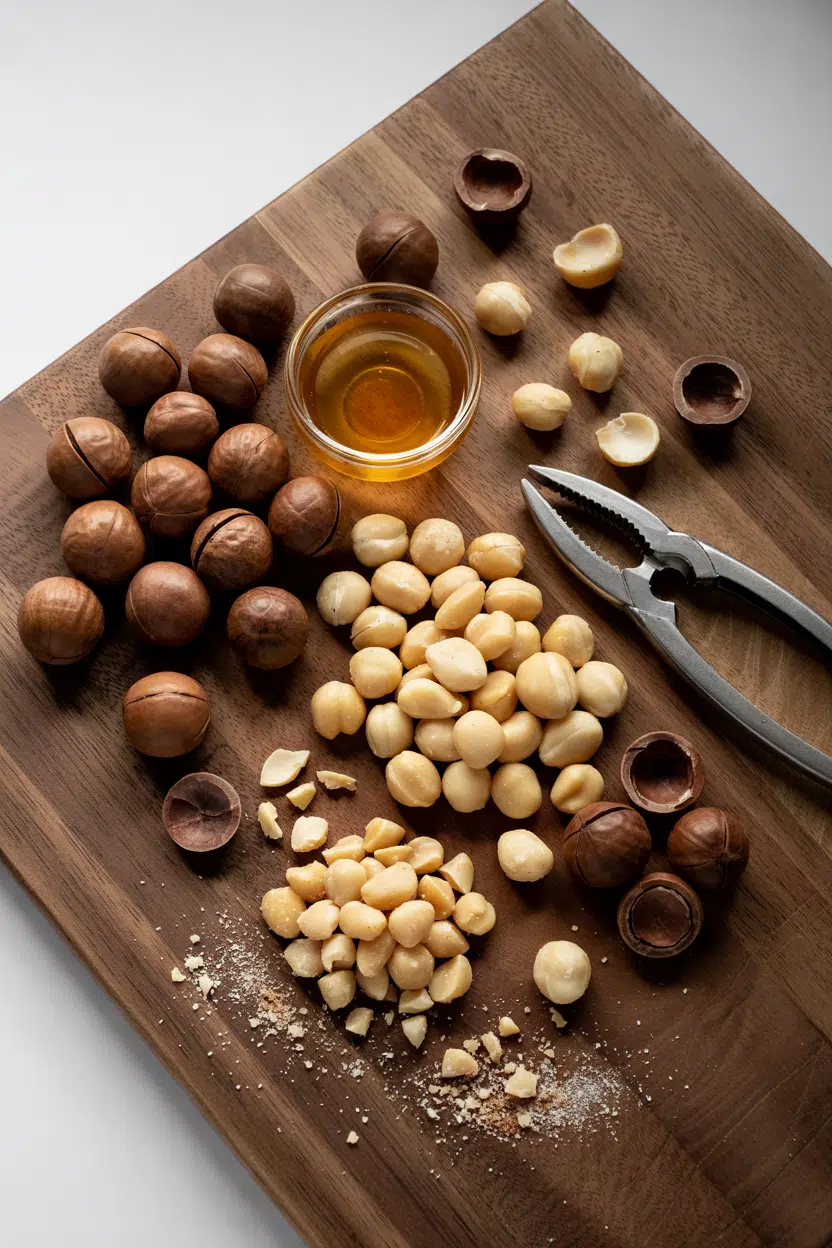
Unlike hazelnut in cooking, which brings forward roasted, slightly bitter depth, macadamias offer a quieter, cream-forward richness that rarely competes with other flavors.
Understanding coconut butter swaps that work can also shed light on why macadamia butter lands differently - the fat profiles diverge in ways that matter in baking and spreads.
This profile covers how macadamias taste, how to cook with them well, and what to look for at the store.
Macadamia nuts are rich, buttery tree nuts native to Australia with a mild, cream-forward flavor. Sold raw, roasted, or as butter and oil, they work in baking, crusts, salads, and confections. Shelf life runs up to a year refrigerated.
What Is Macadamia Nuts?
The macadamia kernel comes from Macadamia integrifolia and a closely related species, both native to the subtropical rainforests of eastern Australia. Commercial production shifted heavily to Hawaii in the twentieth century, and today South Africa is also a major supplier.
Remember it later
Planning to try this recipe soon? Save it for a quick find later!
The nut itself is small and round with a pale ivory color and a smooth, almost porcelain-like surface. Its shell is famously hard - among the hardest of any nut - and is removed before the kernel reaches retail.
Macadamias are sold in several forms:
- 🌰 Raw shelled kernels - mild flavor, creamy texture, longest ingredient flexibility
- Dry-roasted - deepened aroma, slightly firmer bite, ready to eat
- Roasted and salted - common snack form, stronger salty-sweet contrast
- Macadamia butter - blended whole kernels, used like peanut or almond butter
- Macadamia oil - pressed from kernels, used in dressings and low- to medium-heat cooking
No other common nut matches their fat-to-protein ratio. Macadamias are roughly 75% fat by weight, which is what drives both their signature texture and their price.
What Does Macadamia Nuts Taste Like?
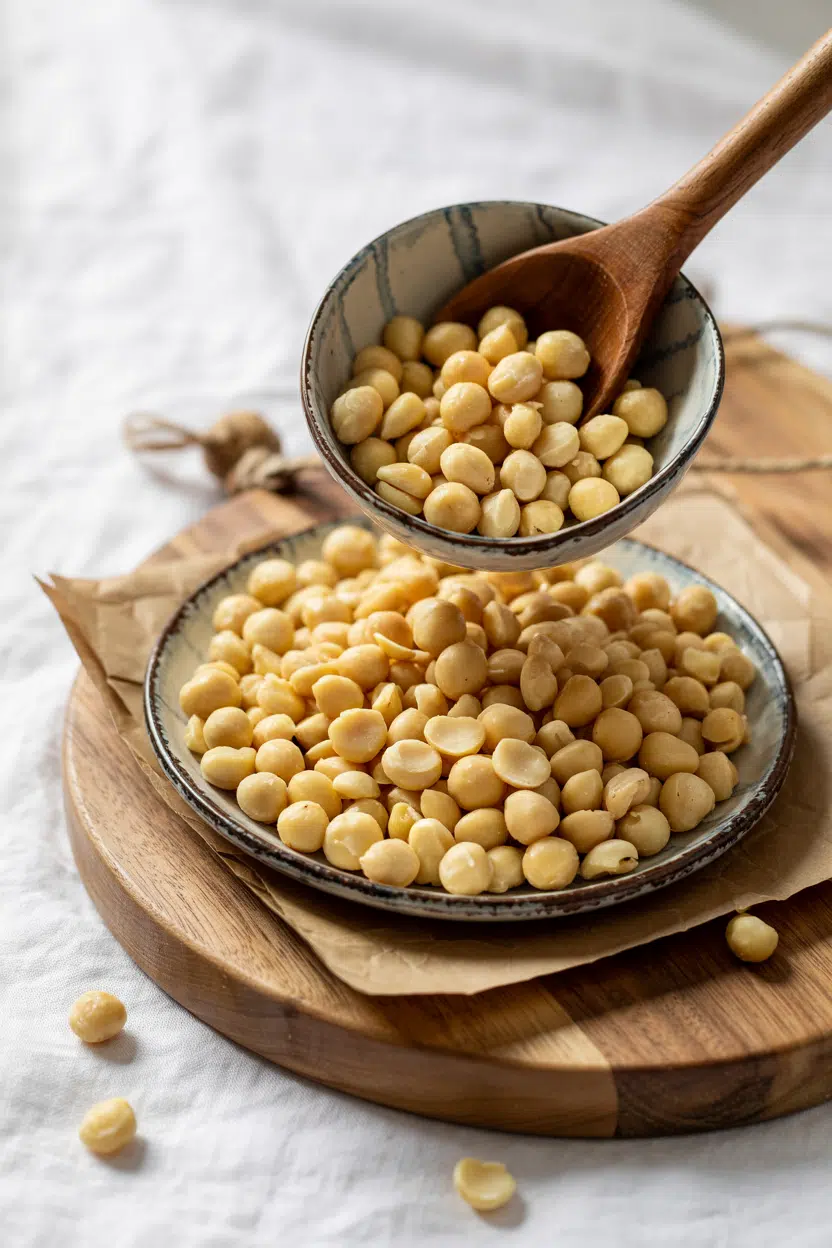
Raw macadamias taste rich and mildly sweet with a cream note that sits between a cashew and actual butter. The sweetness is subtle - nothing like a pecan - and there's almost no bitterness.
Heat changes the profile noticeably. Dry-roasting for 3-5 minutes develops a warm, faintly dairy-like aroma and firms the texture just enough to create a satisfying snap.
Compared to cashews - the closest flavor neighbor - macadamias are creamier and less starchy.
They're also milder than hazelnuts or pecans, which is why they pair well with ingredients like white chocolate and coconut rather than bolder flavors that would bury their character.
How to Use Macadamia Nuts
Baking is where macadamias are most recognized, particularly the white chocolate chip and macadamia cookie - a combination where the nut's buttery softness and the chocolate's sweetness reinforce each other. Finely chopping the kernels distributes flavor through the dough without creating large, hard chunks.
Crushed macadamias also work as a crust for fish or chicken, pressed into a coating before pan-frying or baking. The fat in the nut browns well and delivers flavor without a heavy breadcrumb layer.
In salads, toasted macadamias add richness alongside citrus vinaigrettes, where the acidity cuts through the nut's natural creaminess.
For savory applications, consider what the role pistachio plays in Middle Eastern dishes - macadamias fill a similar structural role in Australian and Hawaiian cooking, adding texture to both sweet and savory preparations.
| Method | Best For | Tip |
|---|---|---|
| 🥗 Raw | Nut butter, ice cream mix-ins, no-bake bars | Blend with a neutral oil if the paste is too thick |
| 🍳 Toasted | Salad topping, confections, brittle | Use a dry skillet on medium-low; stir constantly |
| 🥐 Baked | Cookies, crusted proteins, granola | Chop fine for even distribution in dough |
| 🫙 Pressed | Macadamia oil for dressings and low-heat sautés | Don't use for high-heat frying - smoke point is moderate |
Macadamia oil deserves mention on its own. Pressed from the kernels, it has a clean, mild flavor and works well as a finishing oil for dressings or light sautés. It's not suited for deep-frying. If you're serving the nuts alongside a Hawaiian-inspired spread, what pairs with hawaiian chicken kabobs covers side dishes where toasted macadamias would fit naturally.
Macadamias pair cleanly with white chocolate, coconut, lime, honey, brown sugar, sea salt, and dark chocolate. They clash with strong fishy sauces and long, high-moisture braises, which destroy their texture and mute their flavor entirely.
How to Buy and Store Macadamia Nuts
Look for pale ivory kernels that appear plump and uniform. Shriveled, darkened, or oily-looking nuts are a sign of age or improper storage.
When buying pre-packaged, favor vacuum-sealed or nitrogen-flushed bags - oxygen is the main driver of rancidity given the nut's high fat content.
For storage, keep raw shelled macadamias in an airtight container away from heat and light. Opened packs belong in the refrigerator.
For longer holds, sealed macadamias freeze well past the one-year mark - a full breakdown of how long macadamia nuts keeps covers every storage scenario in detail.
Roasted macadamias have a shorter fridge life than raw because the heat accelerates oxidation. Buy roasted in smaller quantities unless you're working through them quickly.
Where to Start with Macadamia Nuts
Start with dry-roasting a small batch in a skillet over medium-low heat for 3-5 minutes. That single step shows you the full range of the nut's flavor - from the mild, creamy raw kernel to the warm, aromatic toasted version.
Once you're familiar with the flavor, the white chocolate cookie is the logical first bake.
From there, the crushed crust on fish or chicken is a quick next step with a very different application.
If you want to branch into other nuts with comparable richness, reviewing swapping out macadamia nuts will point you toward the closest alternatives for each use case.
Frequently Asked Questions
Yes, in moderation. Most of their fat is monounsaturated, including oleic and palmitoleic acids linked to cardiovascular health. They're calorie-dense - around 200 calories per ounce - so portion size matters.
Two reasons: the trees take 7-10 years to bear fruit, and the shell is extraordinarily hard, requiring industrial cracking equipment. Yield per tree is also lower than most commercial nut crops.
Yes, in most applications. Macadamias are creamier and slightly richer, so the swap works well in baking, nut butter, and salads. Expect a milder, less starchy result.
No. Macadamia nuts are toxic to dogs and can cause weakness, vomiting, tremors, and fever. Even small amounts can trigger a reaction, so keep them well out of reach.
Yes, once opened. Their high fat content makes them vulnerable to rancidity at room temperature, especially in warm climates. Seal tightly and refrigerate for up to 12 months.