
You spot a head of frisée at the grocery store and pause - it looks like a salad green that couldn't decide what it wanted to be.

The outer leaves are dramatically frilly, nearly white at the core, and unlike anything sitting next to the romaine.
If you're already comparing it to similar leaves, comparing endive vs belgian endive options helps clarify where frisée lands in the chicory family - and swapping out endive gives you practical backup when it's not available.
Frisée is a curly endive with pale yellow-green leaves and a clean, pronounced bitterness. It's best known as the base of the French classic salade frisée aux lardons, where warm bacon fat and a poached egg temper its sharp bite.
What Is Frisee?
Frisée - also sold as curly endive or chicory frisée - is a member of the chicory family grown primarily in France and Western Europe.
Remember it later
Planning to try this recipe soon? Save it for a quick find later!
Its tightly curled, frilly leaves range from dark green on the outside to a pale straw-yellow at the heart, where the leaves grow densest and most tender.
Unlike its close relative radicchio, frisée forms a loose, open head rather than a tight round one.
The inner yellow-white heart is the most prized part - lower in chlorophyll, which means less bitterness and a slightly softer texture than the outer fringe.
It's botanically the same species as broad-leafed endive, though the name "frisée" typically refers specifically to the fine-leafed, tightly curled French type.
Cooks sometimes confuse it with Belgian endive, which is a different growth form entirely - compact, torpedo-shaped, and grown in darkness to blanch the leaves.
- 🇫🇷 French curly type - the fine-leafed variety most common in bistro cooking
- Broad-leaf curly endive - coarser, darker, more assertively bitter
- Inner heart / frisée heart - pale, tender center sold separately in some markets
What Does Frisee Taste Like?
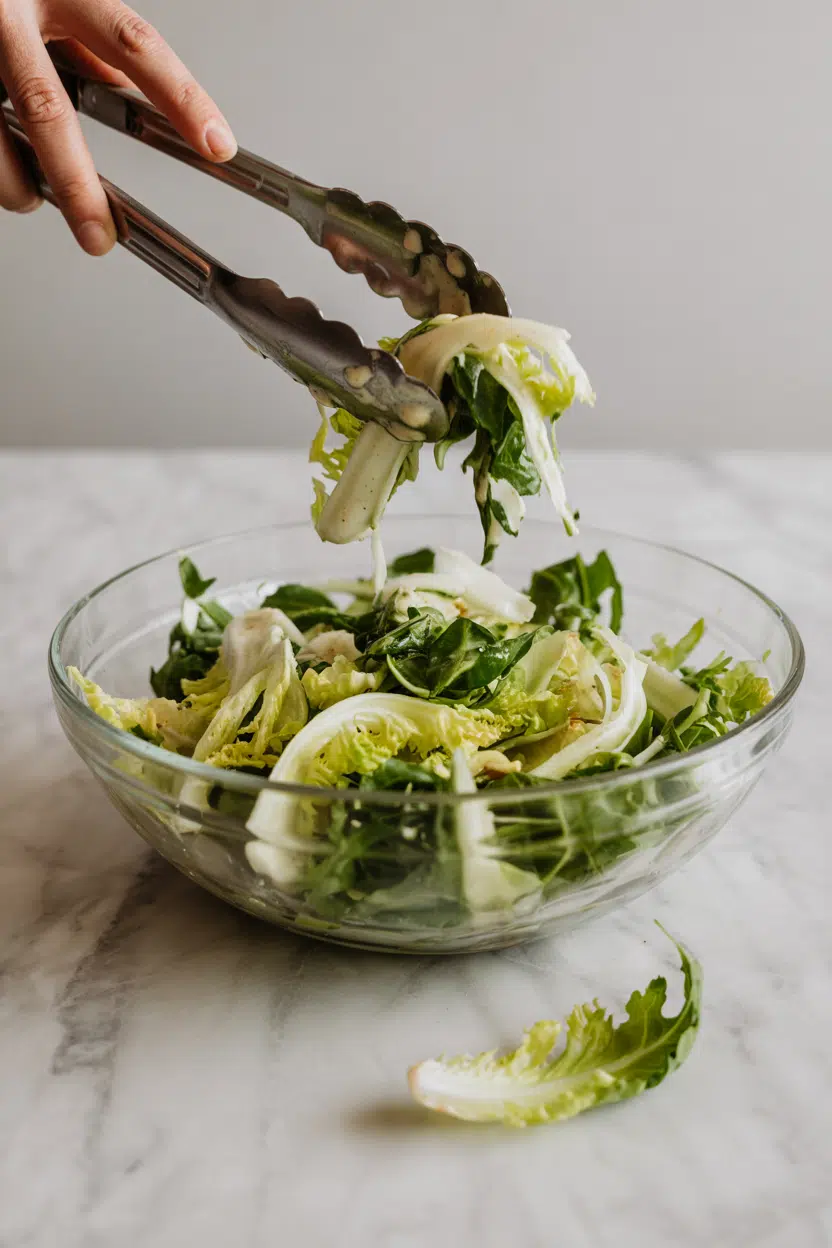
Frisée's bitterness is clean and green - not the roasted or medicinal bitterness you get from some chicories, but a sharp, clear bite that hits the back of the palate. There's a peppery undertone running through the outer leaves, and the pale inner core softens into something almost nutty.
Compared to other bitter greens, it sits between romaine (mild, barely bitter) and radicchio (deeply astringent).
For context on how arugula and its flavor compares, arugula delivers a sharper, more peppery punch - frisée is more uniformly bitter with less spice.
Heat softens frisée's bitterness noticeably. A few seconds in warm bacon fat - the classic chaud-froid approach - rounds the edges without turning it limp.
How to Use Frisee
Salade frisée aux lardons is the French bistro benchmark: frisée tossed with warm lardons, a soft-poached egg, and a sharp mustard vinaigrette. The warm fat gently wilts the outer leaves while the egg yolk folds into the dressing, coating every curl. It's a study in contrast - bitter green against fatty, salty pork.
Beyond that classic, frisée earns its place as a textural counterpoint in composed plates. It holds crunch under roasted meats, adds a bitter lift inside sandwiches, and won't go limp the moment a warm grain bowl touches it.
Pairing-wise, frisée responds best to bold flavors that can hold their own: sharp mustards, citrus segments, blue or goat cheese, and toasted hazelnuts or walnuts. Overly sweet dressings flatten its character and leave nothing interesting in the bowl.
| Method | Best For | Tip |
|---|---|---|
| 🥗 Raw | Salads, sandwiches, composed plates | Use inner heart for milder bitterness; outer fringe for more punch |
| 🍳 Wilted | Warm salads, grain bowls, bistro-style dressings | Add frisée off the heat - residual warmth is enough to wilt without cooking |
| 🍽️ Garnish | Under roasted meats, composed restaurant plates | Place last so heat from the plate doesn't collapse the leaves |
| 🥣 Tossed In | Grain bowls, pasta salads | Tear rather than chop - cut edges brown faster |
For dressings that work well here, a sharp Balsamic Vinaigrette Dressing (Homemade) handles the bitterness cleanly. If you're going the cheese route, Blue Cheese Dressing (Homemade) doubles down on the richness.
A Greek Vinaigrette Dressing (Homemade) adds bright acidity that cuts right through the outer leaves.
How to Buy and Store Frisee
A good head of frisée has a firm, pale straw-yellow center and tightly curled outer leaves that spring back when pressed.
Avoid anything with brown tips, limp fringe, or slimy spots at the base - those signal age and poor storage.
Store it unwashed - moisture speeds deterioration.
Wrap the head loosely in a dry paper towel, place it in a perforated bag, and keep it in the crisper drawer.
Used this way, it holds well for 5-10 days, with the inner heart lasting toward the longer end.
Check the frisee spoilage signs guide before using older heads, since the outer leaves brown before the center deteriorates.
Start Here With Frisee
If you've never cooked with frisée before, start with the lardons salad. It's the most forgiving entry point - the warm fat, mustard, and egg do the balancing work, and you'll immediately understand how this green operates.
Once you're comfortable, use it where you'd normally reach for a milder leaf.
Anywhere you want crunch and a bitter edge - grain bowls, composed plates, sandwiches - frisée holds its own.
When you need a substitute in either direction, frisee swaps that work covers the most practical options.
If you're curious how its broader chicory relatives compare, the differences between radicchio vs red cabbage shows how dramatically bitterness varies across the family.
Frequently Asked Questions
They're related but not the same. Frisée is a curly-leafed form of endive with frilly, tightly curled leaves and a pale yellow heart. Belgian endive is a separate growth form - compact, torpedo-shaped, and blanched in darkness to reduce bitterness.
Don't apply direct heat. Add frisée to the bowl off the burner and let warm dressing or bacon fat do the wilting. Ten to fifteen seconds of residual heat softens the bitterness while keeping the leaves from going limp.
Both are bitter, however frisée is less astringent and has a cleaner, greener bite. Radicchio carries a deeper, more wine-like bitterness. Frisée is also crisper in texture where radicchio is firmer and more substantial.
Stored unwashed and dry in a paper towel in the crisper, frisée holds for 5-10 days. The pale inner heart stays fresh longer than the outer fringe, which browns first.
Yes, with care. Brief wilting in warm bacon fat or [lard swaps that work](https://forkliftkitchen.com/lard-substitutes/) keeps texture intact for warm salads. Full cooking turns it waterlogged and very bitter - avoid simmering or roasting it.



