
Tagliatelle is the pasta that holds sauce rather than letting it slide off - those long, flat egg-enriched ribbons have a slightly rough, porous surface that clings to every drop of ragù alla bolognese or browned butter.
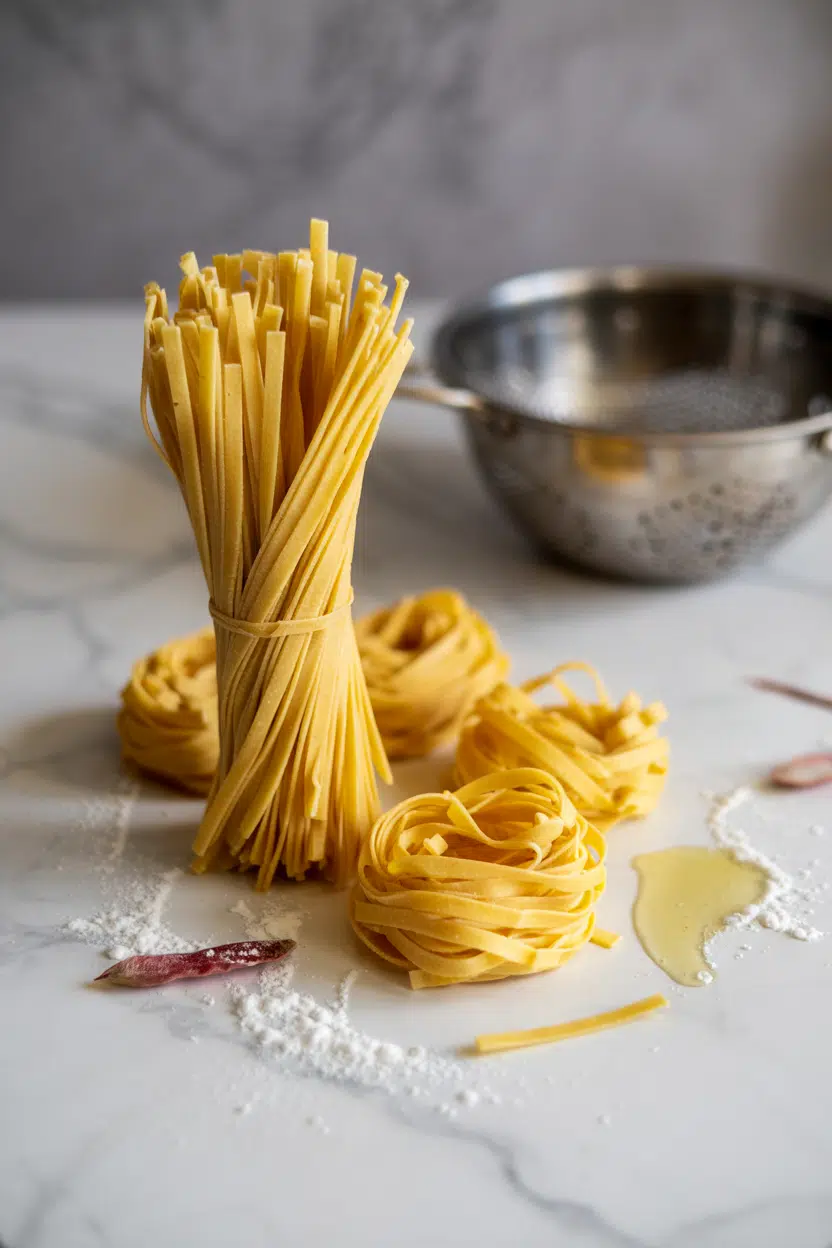
Understanding what makes this pasta work is tied to understanding its partners: the differences between parmesan vs parmigiano reggiano matter when you're building a finished dish, and knowing when swapping out porcini mushroom is sensible will save a weeknight meal.
This is a pasta with a specific job, and it does that job better than most.
Tagliatelle is a long, flat egg pasta ribbon from Emilia-Romagna with an eggy-rich, wheaty flavor and a silky-toothsome bite. It grips thick sauces exceptionally well. Fresh cooks in 2-5 minutes; dried takes longer. Not suitable for gluten-free or vegan diets.
What Is Tagliatelle?
Tagliatelle is a ribbon pasta from Emilia-Romagna, the northern Italian region that also gave us mortadella and Parmigiano-Reggiano.
Remember it later
Planning to try this recipe soon? Save it for a quick find later!
Each strand is traditionally hand-rolled from a dough of durum or soft wheat flour and whole eggs, then cut to roughly 6-8 mm wide - a width that, according to Bologna's Chamber of Commerce, should equal one-twelfth the height of the Asinelli Tower.
You'll also hear it called tagliatelle al uovo or fresh egg tagliatelle. It's commonly mistaken for fettuccine, though fettuccine originates in Rome, tends to be slightly wider, and uses a denser dough; tagliatelle is typically the more delicate of the two.
A thinner cousin, tagliolini, shares the same egg-rich base but is cut far narrower.
Both fresh and dried versions exist. Fresh tagliatelle is sold refrigerated or made at home; dried comes in nests or flat bundles labeled all-uovo (with egg).
The fresh variety has a more pronounced egg flavor and softer texture, while dried holds up better in longer-cooked preparations.
What Does Tagliatelle Taste Like?
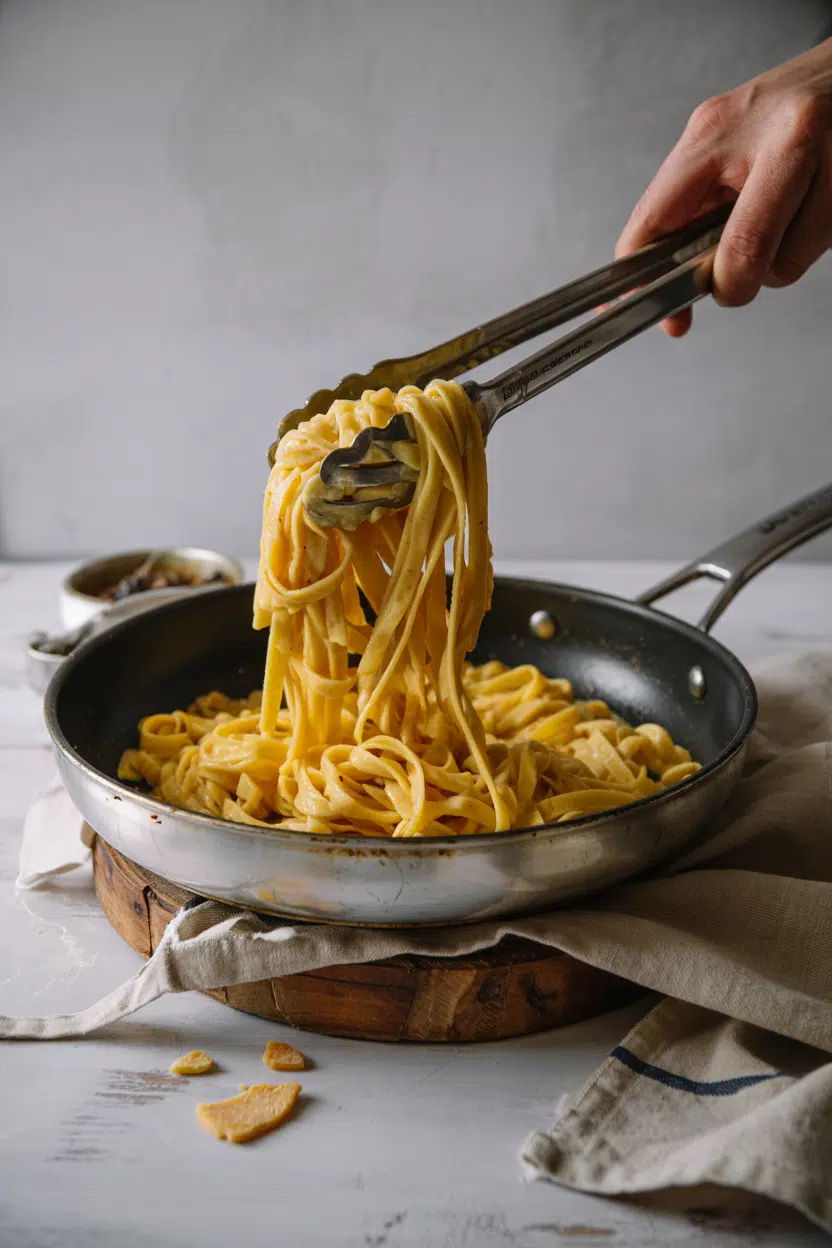
Tagliatelle has a mild, eggy richness that sets it apart from plain durum pasta. The wheat provides a gentle, slightly sweet backbone, while the eggs add depth without heaviness - closer to fresh pasta dough than to a neutral noodle.
Heat changes the experience slightly. Boiled to al dente, fresh tagliatelle has a silk-like surface with a firm inner bite; overcooked, it turns limp and loses that grip on sauce entirely.
Dried versions have a chewier, more neutral profile - still eggy, however the egg note is less forward than in fresh.
The pasta itself is a delivery vehicle with flavor of its own. That's what makes it a better match for ragù than a thin broth.
How to Use Tagliatelle
Ragù alla bolognese is the definitive use - this is not tradition for tradition's sake. The sauce's fat and meat particles lodge in the ribbon's porous surface and every forkful carries both pasta and sauce together. The technique of finishing pasta in the pan with its sauce, called mantecatura, works especially well here because the ribbons absorb the final emulsification.
Beyond bolognese, the egg flavor pairs cleanly with sautéed porcini and light cream, browned butter and sage, or pancetta and Parmigiano-Reggiano.
Knowing what makes pancetta distinct from other cured pork helps here - its clean, fatty salt cuts through the egg richness without overpowering it.
A spring variation with peas, pancetta, and Parmigiano-Reggiano is one of the most effective uses of the ribbon format.
Avoid pairing tagliatelle with very thin broths or strongly spiced Asian sauces. The egg-wheat notes get lost in both cases, and the wide ribbons overwhelm a delicate soup base.
| Method | Best For | Tip |
|---|---|---|
| 🍲 Boiled + Tossed | Ragù, cream sauces, butter-based finishes | Cook 2-5 min fresh; finish in pan with sauce (mantecatura) |
| 🥗 Boiled + Dressed | Light oil, garlic, anchovy as a primer dish | Use minimal fat so egg flavor stays forward |
| 🫕 Baked | Layered Emilian casseroles, pasta al forno | Slightly undercook before baking; residual heat finishes it |
If you need a substitute for this pasta format, there are solid replacements for tagliatelle depending on whether you're after a similar width or a similar egg-rich profile.
How to Buy and Store Tagliatelle
Fresh tagliatelle should show pale yellow strands with even thickness and a surface that's slightly tacky - the ribbons should pull apart without tearing. Avoid anything clumped solid, discolored, or bone-dry at the edges.
For dried, look for ribbons labeled all-uovo with no visible breaks and an even golden color throughout.
Freeze fresh pasta the right way: spread portions on a tray first, then bag once solid.
This stops the ribbons from fusing into a block.
For how long tagliatelle keeps across fresh, frozen, and dried formats in detail, that guide covers each scenario.
Dried tagliatelle is less sensitive - it survives 1-2 years in a cool pantry, though storing wheat correctly applies to the flour in homemade dough as well.
Start With the Right Sauce
Bolognese first. If you're new to tagliatelle, cook it with ragù alla bolognese before anything else - that combination exists for structural reasons, not just convention. The ribbon width and egg-rich surface were built for exactly that sauce.
Once you're comfortable with the format, move toward mushroom-cream or browned butter preparations. Those dishes expose the egg-wheat flavor directly rather than burying it under meat sauce.
Fans of similar pasta dishes in the wider fettuccine family will find a creamy fettuccine alfredo recipe a useful reference point for sauce consistency and pan technique.
Frequently Asked Questions
No. Tagliatelle comes from Emilia-Romagna and is typically 6-8 mm wide with a more delicate texture; fettuccine is Roman, slightly wider, and denser. Both use egg dough, however the regional traditions and sauce pairings differ.
Traditionally, durum or soft wheat flour and whole eggs - no water, no oil. The egg-to-flour ratio gives the pasta its golden color and characteristic richness. Dried versions sometimes include semolina for extra firmness.
Fresh tagliatelle cooks in 2-5 minutes in boiling salted water. Dried egg pasta takes longer - check the packet, but 7-10 minutes is typical. Pull it 1 minute early if finishing in the pan with sauce.
Yes. Spread portions on a tray, freeze until solid, then transfer to a sealed bag. Frozen tagliatelle keeps for 1-2 months and cooks from frozen - just add an extra minute to the boiling time.
Ragù alla bolognese is the classic match - the ribbon's porous surface grips the meat sauce better than smooth pasta shapes. Porcini cream and browned butter with sage are strong alternatives that highlight the egg-wheat flavor.



