
Few Caribbean dishes hit the way they do without a scotch bonnet somewhere in the pot.

This squat, lantern-shaped chili is the heat engine behind jerk marinades, oxtail stews, and the kind of hot sauce that cooks keep on the table rather than in the cupboard - and if you've ever reached for alternatives to hot sauce or even alternatives to jalapeno pepper mid-recipe, you already know how hard this pepper is to replicate. Scotch bonnet doesn't just add heat - it brings a sweet, tropical brightness that changes the whole character of a dish.
The scotch bonnet pepper is a thick-walled Caribbean chili with intense heat, fruity tropical flavor, and a floral aroma. Use it in jerk seasoning, hot sauces, and stews. Refrigerate whole for up to 2 weeks, or freeze purée for up to 6 months.
What Is Scotch Bonnet Pepper?
Scotch bonnet is a hot chili pepper native to the Caribbean, most closely associated with Jamaican and Trinidadian cooking.
Remember it later
Planning to try this recipe soon? Save it for a quick find later!
Its name comes from its resemblance to the traditional Scottish tam o'shanter bonnet - a squat, round shape with a slightly flattened top.
The pepper sits in the same species as the habanero (Capsicum chinense), which explains a lot about its heat. It registers between 100,000 and 350,000 Scoville heat units, putting it roughly 12-25 times hotter than a jalapeño.
You'll also see it labeled as bonnet pepper, Caribbean scotch bonnet, scotch bonnet chilli, or scotch-bonnet. Color signals ripeness rather than variety - green is unripe, while orange, red, and yellow indicate full maturity.
Thick, rigid walls and a waxy, glossy skin are characteristic of the pepper at any stage.
What Does Scotch Bonnet Pepper Taste Like?
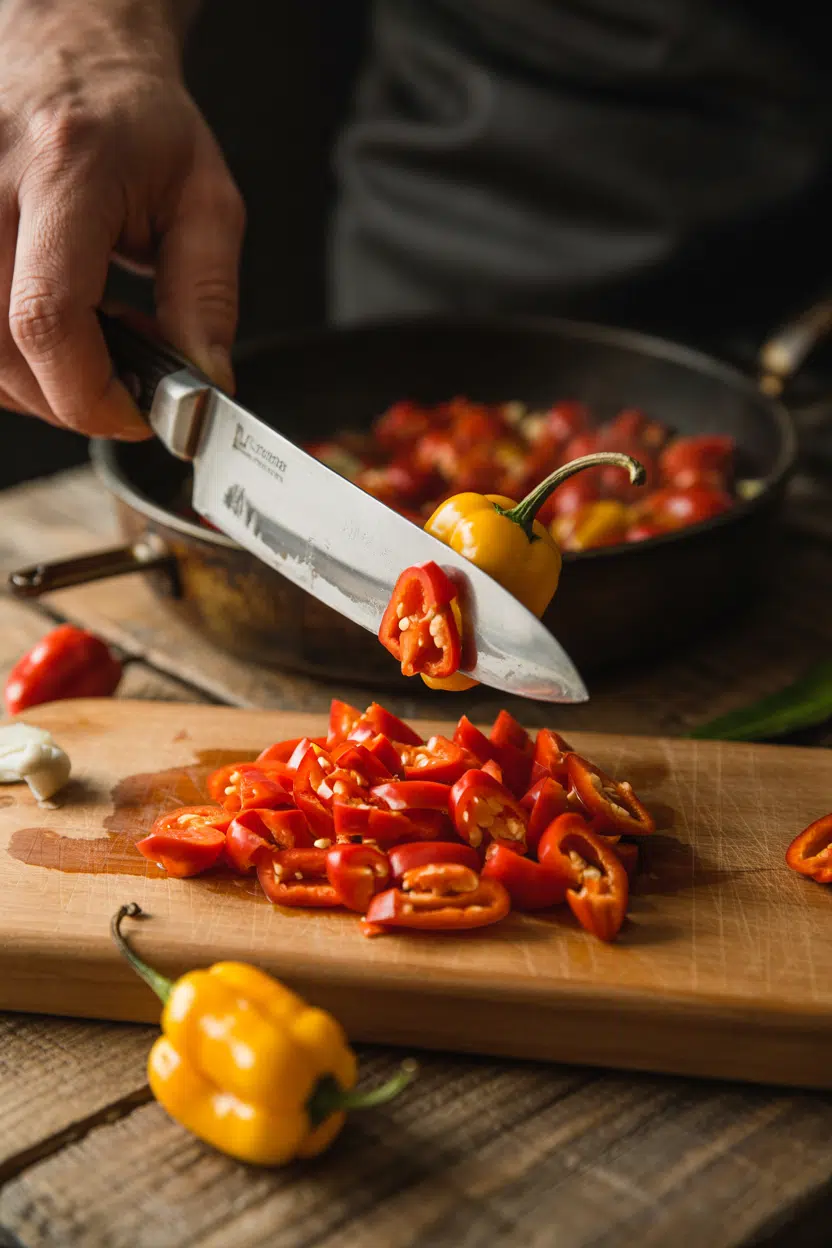
Heat is the headline, but it's not the whole story. The first impression is actually fruity - tropical notes of guava and mango hit before the capsaicin does, layered over a citrusy sharpness and a faint vegetal green-pepper tang underneath.
That's what separates scotch bonnet from most other hot chilies. The heat itself is sustained and deep, not a sharp spike - it builds and lingers.
When you cook it briefly in oil or sweat it into a base, the sweetness intensifies while some of the raw brightness softens.
Compared to a habanero, scotch bonnet is rounder and sweeter - the role habanero pepper plays in Mexican and Yucatecan cooking is similar in heat level, but the flavor profile leans more floral and less fruity than scotch bonnet's distinctly tropical character.
How to Use Scotch Bonnet Pepper
Scotch bonnet drives the flavor in Caribbean cooking more than almost any other single ingredient.
Jamaican jerk seasoning relies on it alongside allspice (pimento) and thyme - a combination worth knowing well, and if you're adapting any jerk-adjacent recipe, check which alternatives to allspice hold up alongside the pepper's heat.
Trinidadian and Barbadian cooks use it in pepper sauces, curry bases, and braises.
The pepper works in several distinct ways depending on prep method:
| Method | Best For | Tip |
|---|---|---|
| 🥗 Raw | Relishes, condiments, salsas | Mince finely; wear gloves - oils transfer fast |
| 🍳 Sweated/Sautéed | Sofrito bases, stews, rice and peas | Add early so heat infuses the whole dish |
| 🌀 Puréed | Jerk marinades, hot sauces, mango salsas | Blend with vinegar or citrus to balance intensity |
| 🔥 Roasted/Charred | Simmered sauces, smoked preparations | Charring mellows brightness and adds depth |
Whole peppers can be studded into jerk chicken or whole-roasted fish to infuse heat without blowing out a dish. Blending scotch bonnet with mango or pineapple tames the raw edge while keeping the tropical synergy intact - what pairs with mango salsa chicken gives a useful picture of how those fruit-heat combinations land on the plate. Coconut milk, sweet potato, lime, garlic, and scallion are the natural companions in the pot.
How to Buy and Store Scotch Bonnet Pepper
At the market, look for firm, glossy peppers with tight, unblemished skin. Color tells you ripeness - orange, red, and yellow are fully ripe; green is usable but sharper.
A thick, rigid stem is a sign of a fresher harvest; soft spots or dull wrinkling mean the pepper is past its window.
For storage:
- 🌶️ Whole in the fridge - wrap in paper towel inside a container or perforated bag; keeps 1-2 weeks
- ❄️ Frozen purée - blend with oil or vinegar before freezing; lasts up to 6 months
- 🧴 Pickled or dried - significantly extends shelf life; dried flakes keep up to a year in an airtight jar
Proper seasoning with scotch bonnet pepper depends partly on how long your supply has been stored - older peppers lose some top-note brightness even before they visibly deteriorate.
Where to Start With Scotch Bonnet
If you're cooking with scotch bonnet for the first time, start with a puréed jerk marinade. You control how much goes in, and the allspice and citrus in the mix give the heat somewhere to land.
- 🟢 Start here - one pepper puréed into a jerk marinade for chicken; taste before adding more
- 🔁 Next step - sweat half a minced pepper into a stew base to understand how heat infuses over time
- 🔄 Need a swap? - [alternatives to scotch bonnet pepper](https://forkliftkitchen.com/scotch-bonnet-pepper-substitutes/) cover the closest heat-and-flavor matches; [habanero pepper swaps that work](https://forkliftkitchen.com/habanero-pepper-substitutes/) are worth checking if habanero is what you have on hand
Scotch bonnet rewards restraint at first. One pepper goes further than most cooks expect.
Frequently Asked Questions
Significantly hotter. Scotch bonnet registers 100,000-350,000 Scoville heat units; a jalapeño tops out around 8,000. That makes scotch bonnet roughly 12-25 times more intense, with a heat that builds and lingers rather than fading quickly.
Yes - it's the closest widely available substitute. Habanero matches the heat range, but the flavor is more floral and slightly less sweet than scotch bonnet's tropical profile. Use a 1:1 ratio and expect a minor flavor shift.
Orange, red, and yellow scotch bonnets are fully ripe and carry the most developed fruit sweetness. Green peppers are unripe - still usable, but sharper and more vegetal with less of the tropical character ripe ones deliver.
Add coconut milk, starchy vegetables like sweet potato, or extra acid from lime juice - all dilute capsaicin intensity. Dairy fats also help, but avoid raw cream in high-acid dishes since it can split.
Use with caution. Capsaicin at high concentrations can aggravate reflux and IBS symptoms. Cooking the pepper into a stew base rather than using it raw reduces direct irritation without fully eliminating the effect.



