
Pad see ew shows up on almost every Thai restaurant table, its wide, charred ribbons soaking up sweet soy until barely anything else matters - and those ribbons are rice and its flavor distilled into noodle form.

Rice noodles show up across Vietnam, China, Malaysia, and Thailand in forms ranging from hair-thin vermicelli to broad, silky sheets, yet they share one defining trait: a mild, clean base that lets the surrounding broth or sauce do the talking.
Understanding what they are, how they behave in the pan, and which format to reach for first saves a lot of guesswork at the market.
Rice noodles are starch-based noodles made from rice flour and water, available dried or fresh in multiple widths. They have a mild, neutral flavor, absorb sauces readily, and are naturally gluten-free. Use them in soups, stir-fries, cold salads, and steamed rolls.
What Is Rice Noodle?
Rice noodles are a category of starch-based noodle made by combining rice flour - and sometimes a small amount of tapioca starch - with water to form a dough or batter that gets extruded, cut, or steamed into shape.
Remember it later
Planning to try this recipe soon? Save it for a quick find later!
Unlike wheat noodles, which rely on gluten for structure, rice noodles hold together through starch gelatinization, giving them that characteristic translucent, slightly glassy look after cooking.
The category covers a wide range of formats. Vermicelli (known as rice vermicelli, sen mi, or meehoon) are the thinnest, about the width of angel hair pasta. Rice sticks or bánh phở are flat and range from 3mm to 10mm wide - the wider cut is what fills a bowl of pho. Wide flat noodles like ho fun run up to 2cm across and are the standard for pad see ew and beef chow fun.
Finally, cheung fun are steamed sheets rolled around fillings or cut into tubes, common in Cantonese dim sum.
Fresh rice noodles are sold ready to use, while dried versions need rehydrating. Both forms appear across Vietnamese, Thai, Chinese, Malaysian, and Laotian kitchens under different local names, but the core ingredient stays the same.
What Does Rice Noodle Taste Like?
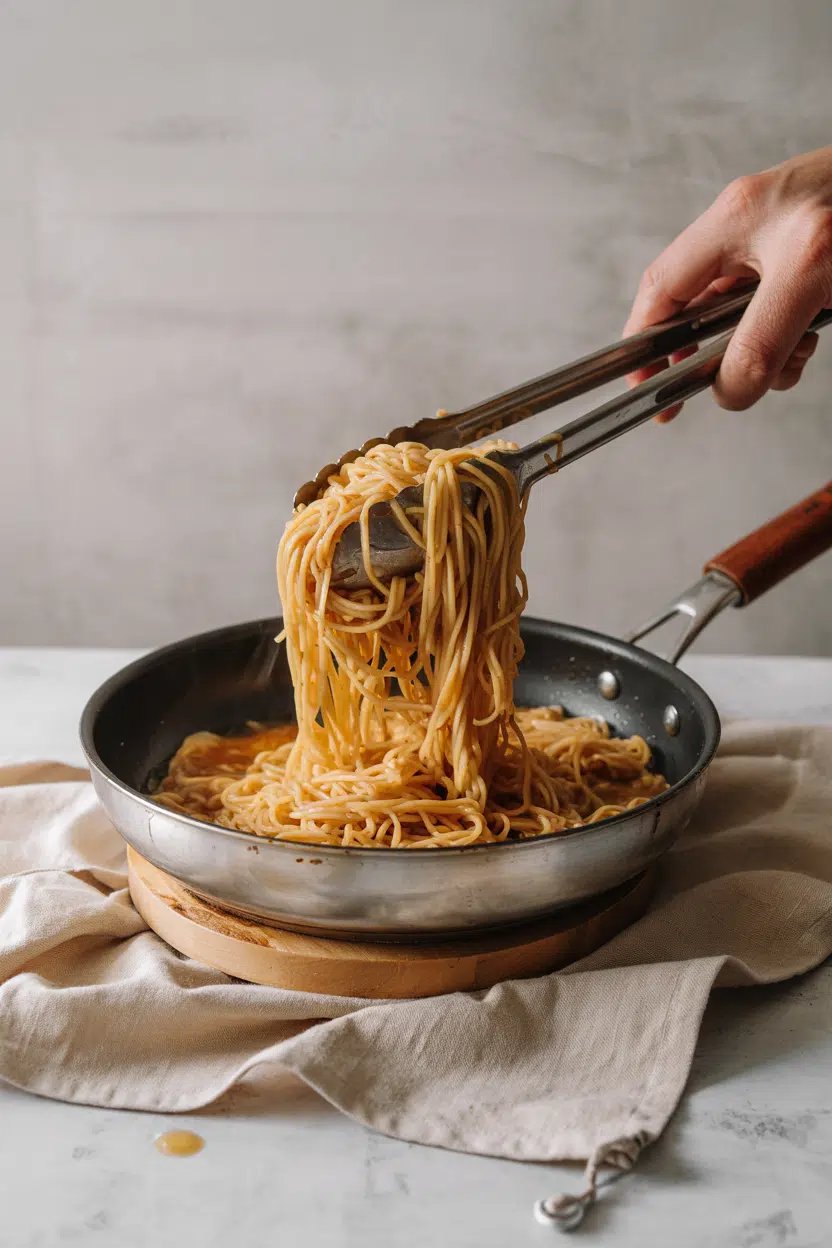
Rice noodles taste close to a bowl of plain steamed rice - a mild starchy sweetness with a subtle grainy background note.
They're noticeably more neutral than wheat noodles like udon or soba, which carry their own earthy or nutty flavors into a dish.
That neutrality is the point. Pho broth has hours of bone and spice behind it, and the noodle simply carries it without competing.
In a stir-fry, fish sauce, soy, and oyster sauce all penetrate the noodle's surface quickly because the starch is so open to absorption.
Texture shifts with format and heat.
Thin vermicelli stays delicate and almost melts into whatever it's dressed with.
Thicker flat noodles develop a pleasant chew, and in a screaming-hot wok, the edges pick up a faint toasty note from contact with the surface.
That wok char - called "wok hei" in Cantonese - introduces the only real flavor complexity rice noodles develop on their own.
How to Use Rice Noodle
Rice noodles handle five distinct cooking methods, each suited to a different format and dish.
| Method | Best For | Tip |
|---|---|---|
| ♨️ Hot Soak | Pho, vermicelli bowls, salads | Soak dried noodles in hot (not boiling) water 8-10 min; drain before adding to broth |
| 🍳 Stir-Fry | Pad see ew, pad kee mao, beef chow fun | Use fresh or just-soaked noodles; toss in a dry, very hot wok to prevent sticking |
| 🍲 Simmer in Broth | Pho, hu tieu, noodle soups | Add soaked noodles to the bowl and pour hot broth over; don't boil long or they break down |
| 🫧 Steam | Cheung fun (rice noodle rolls) | Pour thin rice-flour batter onto a greased tray; steam 3-4 min and roll while warm |
| 🔥 Deep-Fry | Crispy noodle nests, garnishes | Drop dry vermicelli straight into hot oil; they puff in seconds - no soaking needed |
For pairing, rice noodles work best with clear broths (beef or chicken), soy sauce, fish sauce, and oyster sauce.
Lime, fresh chilies, Thai basil, and cilantro brighten vermicelli bowls.
Shrimp, thinly sliced pork or beef, and tofu all pair well; so do bean sprouts, scallions, and fried shallots for crunch.
If you're working with alternatives to soy sauce in a stir-fry, coconut aminos hold up well against the noodle's mild base.
Avoid pairing rice noodles with heavy dairy-forward sauces - cream or butter masks the texture and makes the dish muddy. Long, slow braises are also a problem; the noodles disintegrate before the other ingredients finish cooking.
For protein pairings, getting the protein right matters as much as the noodle - cooking fish perfectly ensures it doesn't fall apart when tossed with delicate vermicelli.
How to Buy and Store Rice Noodle
Good dried rice noodles look uniformly translucent and sit in tight, unbroken bundles. Avoid packages with heavily powdered or shattered strands - that breakage signals moisture damage or rough handling and the noodles will dissolve unevenly in hot water.
For fresh noodles, look for smooth, moist sheets or folds with no gray discoloration and no sour smell.
Storage is straightforward:
- 🌾 Dried, unopened - keep in a cool, dry pantry away from humidity; lasts months to a full year
- ❄️ Fresh noodles - refrigerate in an airtight container; use within 2-4 days
- 🍜 Cooked noodles - refrigerate and eat within 2-3 days; toss with a little oil to prevent clumping
Full details on rice noodle's shelf life are worth checking if you're buying in bulk or storing fresh sheets for the week.
Start With Flat or Vermicelli
New to rice noodles? Pick one format and stick with it for the first few dishes. Flat rice noodles (medium width, 5-8mm) handle the most situations - broth, stir-fry, salads - without demanding precision timing.
Once that width feels familiar, thin vermicelli opens up cold bowls and quick-soak applications.
If you've already got both and want a quick win, a shrimp stir-fry using shrimp pad thai in grain dishes shows exactly how rice noodles behave under wok heat.
And if rice noodles aren't available, a quick look at rice noodle stand-ins will confirm what actually works as a swap.
Frequently Asked Questions
Yes, when made from 100% rice flour and water. Some brands add wheat starch as a binder, so always check the ingredient list. Look for a certified gluten-free label if cross-contamination is a concern.
Drain and rinse immediately after soaking or boiling, then toss with a small amount of neutral oil. For stir-frying, add noodles to a hot, lightly oiled wok and move them constantly.
Rice vermicelli is one specific type within the broader rice noodle category - the thinnest form, often sold in tight bundles. "Rice noodles" covers all widths, from vermicelli up to wide flat sheets.
In most stir-fries and broth soups, yes. Expect a softer, more delicate texture and shorter cooking time. Dishes with very thick, starchy sauces may need minor adjustment since rice noodles absorb liquid faster than wheat.
Fresh rice noodles keep for 2-4 days refrigerated in an airtight container. Beyond that, texture degrades and they may develop an off smell. Buy only what you'll use within that window.



