
Most people walk past chervil at the market and assume it's just a fussier version of parsley's flavor and uses - something decorative, easily skipped. That's the wrong read, and it costs cooks a genuinely distinctive herb.
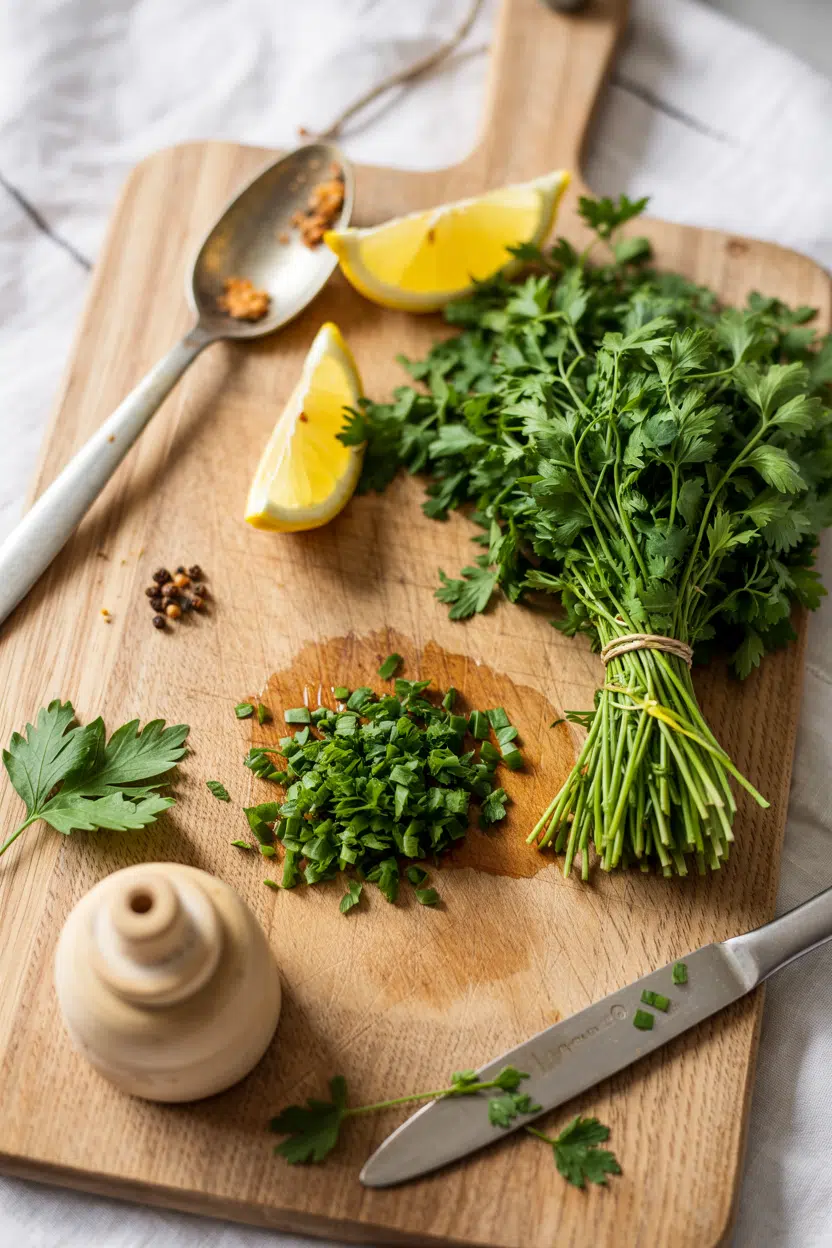
Chervil is a delicate leafy herb with a mild anise‑sweet flavor, prized in French cooking. Use it raw or off heat - fold it into eggs, stir into cream sauces, or scatter over fish. Buy fresh, use fast; it fades within days.
What Is Chervil?
Chervil (Anthriscus cerefolium) is a fine-leafed annual herb native to Western Europe, cultivated extensively in France for centuries. Its lacy, fern-like leaves sit on slender stems and look almost too delicate to survive a kitchen.
Remember it later
Planning to try this recipe soon? Save it for a quick find later!
It belongs to the same family as parsley and carrot, which explains some of its herbaceous greenness. Unlike parsley, however, chervil carries a distinctly anise-like note that sets it apart immediately.
You'll also see it labeled French chervil or "gourmet parsley" - though neither name fully captures what it does. In classic French cooking, it's one of four herbs in fines herbes, the canonical blend alongside chives, parsley, and tarragon.
- 🌍 Origin - Western Europe; most associated with French bistro and classical cuisine
- 📛 Also known as - French chervil, gourmet parsley, *Anthriscus cerefolium*
- 🌿 Plant family - Apiaceae (same as parsley, dill, and fennel)
- ❄️ Season - Spring and early autumn; bolts quickly in summer heat
What Does Chervil Taste Like?
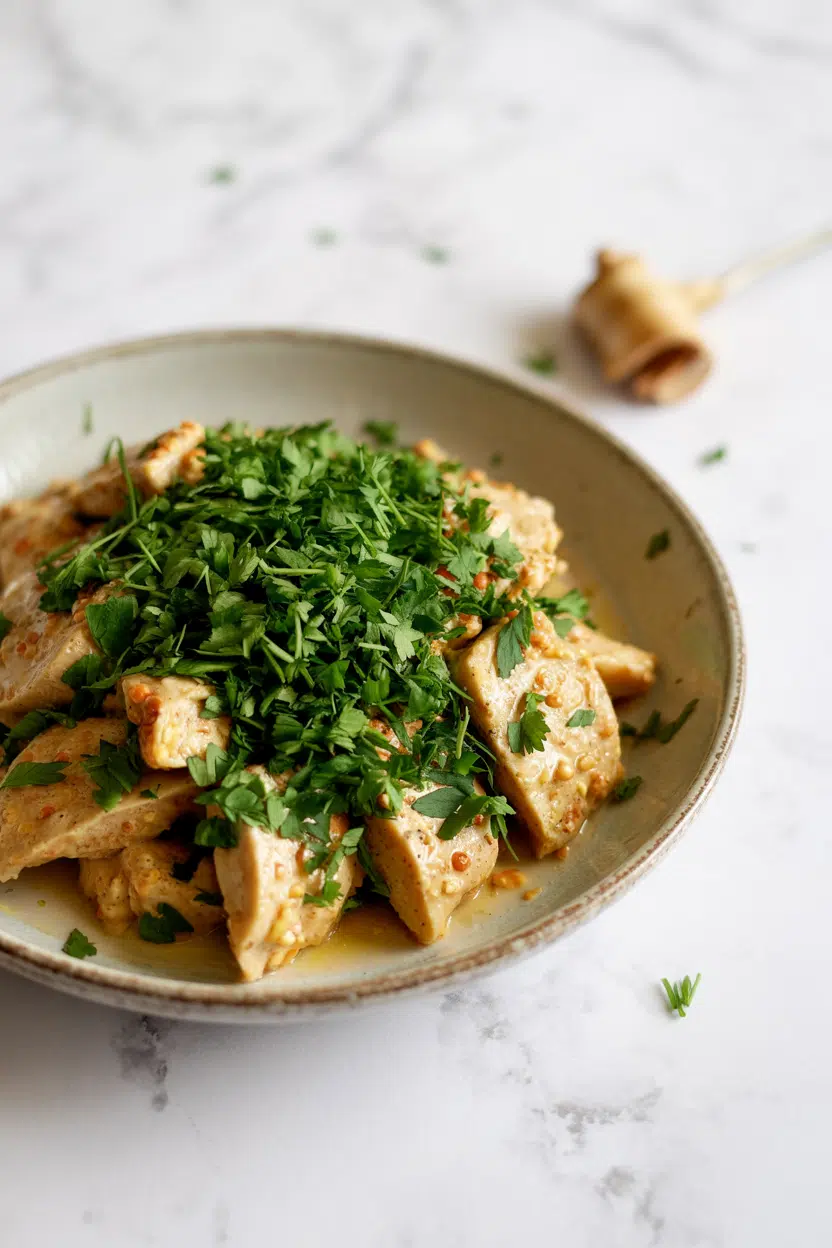
Chervil lands somewhere between parsley and tarragon - greener and lighter than tarragon, but with more personality than flat-leaf parsley. The anise note is mild, never sharp, with a gentle sweetness underneath.
Heat destroys chervil's aroma fast. Even a few minutes in a hot pan flattens both the anise note and the sweetness, leaving only a faint, vaguely herby ghost.
That fragility is the point. The flavor is precise and fleeting, which is exactly why French cooks treat it as a finishing herb rather than a background one.
How to Use Chervil
Chervil earns its place in French and Belgian kitchens because its mild anise lift doesn't compete - it completes. Eggs, cream, and butter are its natural partners, and it appears most in spring-season dishes where lightness matters.
| Method | Best For | Tip |
|---|---|---|
| 🥗 Raw garnish | Fish crudo, cold poached salmon, chilled vichyssoise | Scatter whole sprigs or torn leaves just before serving |
| 🍳 Folded in off heat | Omelettes, scrambled eggs, beurre blanc, cream sauces | Stir in after the pan leaves the burner; do not return to heat |
| 🧈 Herb butter | Steamed asparagus, peas, shellfish, white fish | Blend with softened butter and a squeeze of lemon; chill before use |
| 🥣 Cold blended | Herb vinaigrettes, cold herb sauces, salad dressings | Add to dressing base and use same day for brightest flavor |
In fines herbes form, chervil combines with chives, parsley, and tarragon for classic poultry and egg dishes.
The blend works because each herb contributes a different register - chervil brings the sweetness, tarragon the stronger anise note, and alternatives to tarragon show just how difficult that anise layer is to replace cleanly.
Pair chervil with young spring vegetables like asparagus and peas, white fish such as sole or cod, and soft dairy - crème fraîche, fromage blanc. Lemon and mild vinegars lift its flavor without overwhelming it.
Avoid heavy red sauces and long braises; neither will preserve anything worth preserving.
How to Buy and Store Chervil
Choose bunches with uniformly green, lacy leaves and no yellowing or dark spots. Pinch a leaf and smell it - fresh chervil gives a faint anise-sweet scent.
If it smells purely grassy with no sweetness, it's already fading.
Storage is straightforward but unforgiving. Wrap the stems in a damp paper towel, stand the bunch upright in a small jar with a little water, and refrigerate.
Use within 3-5 days - this herb does not wait. For a detailed breakdown on extending that window, keeping chervil fresh covers the method step by step.
Chervil's short life also affects prep timing.
Chop it only right before use, and keep it separate from hot components until the last second - much like chives's shelf life, the clock on chervil's aroma runs fast once the leaves are cut.
Start Here If You're New to Chervil
If you've never cooked with chervil, fold a small handful into your next omelette right before you plate it.
That single move shows you exactly what the herb does - the way it softens into warm eggs without disappearing, and how the anise lifts without announcing itself.
From there, try it over cold poached salmon or stirred into a simple beurre blanc.
Once you understand how omelette's shelf life intersects with fresh herb timing, you'll start thinking about chervil the way French cooks do - as something added at the last possible moment.
Don't overthink the pairings. Eggs, butter, fish, cream.
That's the whole map.
Frequently Asked Questions
No. Both are in the same plant family, but chervil has a distinct anise-sweet note that parsley lacks entirely. The leaves are also finer and more delicate, and chervil wilts far faster than flat-leaf parsley.
Technically yes, but sustained heat kills its flavor. Add it off heat or in the final seconds of cooking - anything more and the anise aroma disappears completely.
The classic four are chervil, chives, parsley, and tarragon. They're used fresh and in roughly equal proportions, typically finishing egg dishes or light poultry.
It is sold dried, but the drying process strips most of its volatile oils - the anise aroma almost completely disappears. Fresh chervil and dried chervil are not practical substitutes for each other.
Freezing works better than drying - blanch briefly, squeeze dry, and freeze in small portions. Texture suffers, so use frozen chervil only in cooked applications like sauces, not as a raw garnish.



