
Roasted whole and sliced at the table, pork tenderloin looks like it took hours - it rarely takes more than thirty minutes.

Unlike the role pork chop plays as a thick weeknight slab, tenderloin is lean, fast, and quietly elegant, a cut that rewards restraint over heavy technique.
Knowing how to season and cook it correctly matters more than any special equipment, much like understanding cooking rosemary right changes how an herb performs at heat. Pork tenderloin is the most forgiving high-quality pork cut you'll regularly find at a grocery store, and it deserves more attention than it typically gets.
Pork tenderloin is the leanest, most tender muscle on the pig - mildly sweet, faintly savory, and fine-grained in texture. It cooks quickly, suits pan sauces and roasting equally well, and pairs cleanly with fruit, mustard, and herbs. Best cooked to 145°F and rested before slicing.
What Is Pork Tenderloin?
Pork tenderloin is the long, narrow muscle that runs along the backbone inside the loin section of the pig.
Remember it later
Planning to try this recipe soon? Save it for a quick find later!
It does almost no physical work, which is precisely why it stays so tender - no weight-bearing, no heavy movement, no connective tissue buildup.
Most supermarkets sell it whole as a cylindrical roast, typically weighing between ¾ pound and 1.5 pounds. You'll also find it pre-trimmed into medallions, though buying whole gives you more control over thickness and less water retention from processing.
It goes by several names depending on the country or butcher:
- 🥩 Pork fillet - common in the UK and Australia
- Pork filet - French-influenced labeling in North America
- Pork tender - informal American term
- Filet mignon of pork - a nod to its position on the animal and its tenderness
One thing to watch before cooking: the silverskin, a thin, tough membrane running along one side. It doesn't break down with heat and should be trimmed with a boning knife before any cooking method.
Leave it on and the tenderloin curls unevenly and chews tough in spots.
What Does Pork Tenderloin Taste Like?
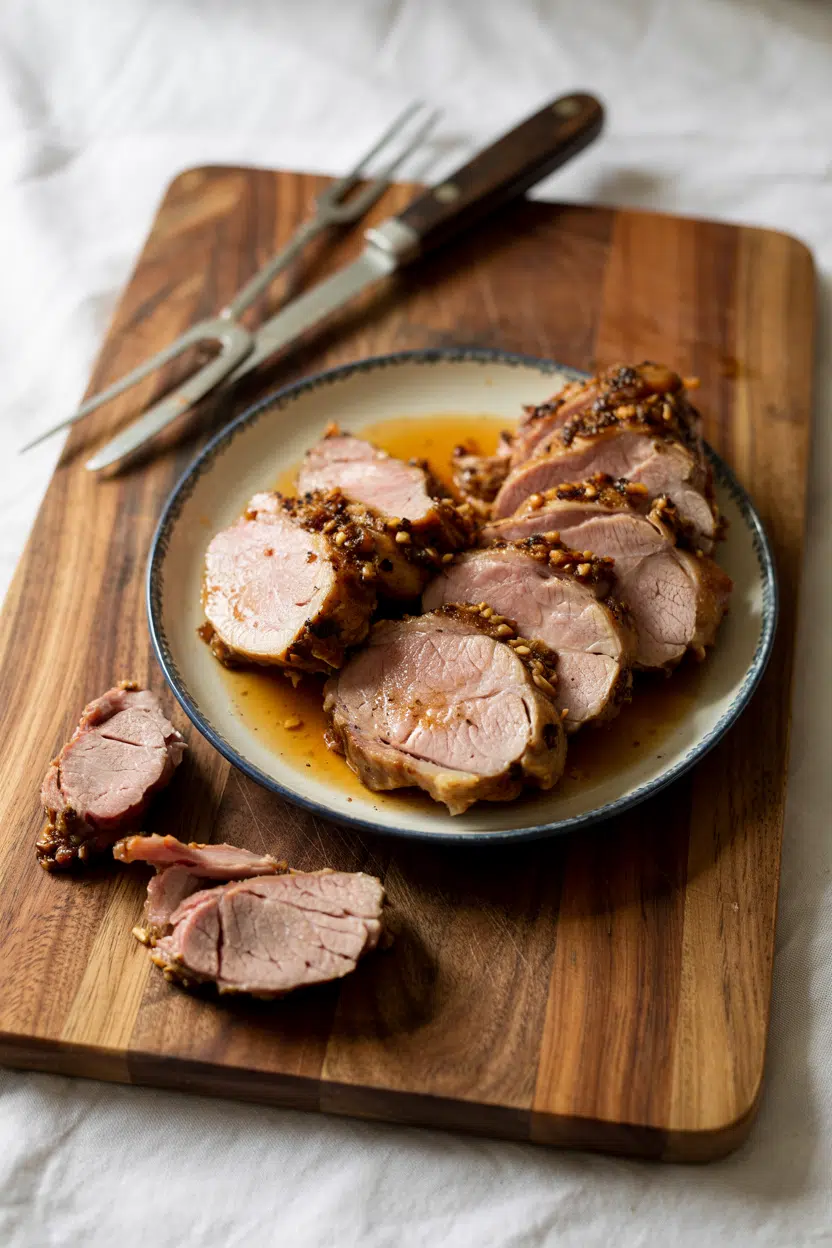
Pork tenderloin has a mild, clean flavor - gentle porky sweetness with a faint savory depth that never overwhelms.
Understanding the taste of pork across its different cuts helps put this in perspective: tenderloin sits at the mild end of the spectrum, closer to chicken breast in neutrality but with more recognizable pork character.
Heat changes the flavor noticeably. A proper sear develops a lightly nutty, caramelized crust through the Maillard reaction, adding depth that raw tenderloin completely lacks.
Overcooked tenderloin, on the other hand, turns dry and chalky fast - this cut has almost no intramuscular fat to bail you out past 160°F.
How to Use Pork Tenderloin
Tenderloin's mild flavor makes it one of the most adaptable pork cuts in the kitchen. It absorbs marinades quickly, responds well to bold glazes, and cooks fast enough for a weeknight dinner without shortcuts.
Just as cooking pork tenderloin right means knowing when to sear versus when to roast, understanding which method suits your dish shapes the final result.
| Method | Best For | Tip |
|---|---|---|
| 🔥 Sear + Oven | Medallions with pan sauce, weeknight roast | Sear 2-3 min per side, finish at 425°F for 10-12 min |
| 🍖 Roast Whole | Dinner party centerpiece, stuffed tenderloin | Butterfly and stuff before tying; roast at 400°F |
| 🔥 Grill | Charred exterior, smoky flavor | Brine 2-4 hours first to protect against drying out |
| 🥢 Stir-Fry | Quick Asian-style dishes with soy and ginger | Slice thin against the grain; high heat, fast toss |
| 💧 Sous Vide + Sear | Maximum tenderness, precise doneness | Cook at 140°F for 1-2 hours, then sear for crust |
Glazes and pan sauces are where tenderloin shines brightest. A maple or brown sugar glaze - similar to the caramelized coating used in making maple glazed roasted pecans at home - clings to the seared surface and builds a lacquered finish in the oven. Dijon or whole-grain mustard makes an excellent base for French bistro-style pan sauces, and brown mustard stand-ins work well if you're out of the real thing.
For pairings, apples and apple compote are the most classic match - the fruit acidity cuts through the richness of any added fat. Garlic and butter, rosemary, thyme, and soy with ginger all work cleanly with the cut's neutral base.
How to Buy and Store Pork Tenderloin
Good tenderloin is pale pink with fine-grained muscle and a thin strip of white fat along one edge. Avoid gray edges, excessive blood pooling, or packages where the diameter varies widely - uneven thickness means uneven cooking.
Buying whole is worth it; pre-cut medallions often sit in liquid and lose texture before you get them home.
For storage, keep raw tenderloin on the bottom shelf or meat drawer, and use it within 1-2 days of purchase.
Proper storing pork tenderloin correctly extends its life significantly when freezing is necessary - wrap tightly in plastic, then foil, and freeze for up to 12 months at best quality. Cooked leftovers hold 3-4 days refrigerated.
Where to Start With Pork Tenderloin
If you haven't cooked this cut before, start with a simple sear-then-oven-finish method. Season generously with salt and pepper, sear in a hot oven-safe skillet, and finish in a 425°F oven.
From there, the technique branches naturally:
- Want a sauce? - Deglaze the pan with cider or white wine and finish with butter and Dijon.
- Cooking for a crowd? - Butterfly, stuff with a herb or apple filling, and tie before roasting.
- Grilling instead? - Brine it for two hours first; that small step prevents the dryness that lean cuts are prone to on direct heat.
The cut is thin and cooks through fast - checking the internal temperature at the 20-minute mark is always the right move. A meat thermometer here isn't optional; it's the difference between juicy and dry.
Frequently Asked Questions
They are two different muscles. Pork tenderloin is small, narrow, and very lean - typically under 1.5 pounds - while pork loin is a large, broad roast that can weigh 4 to 8 pounds. Cooking times and methods differ significantly between them.
The USDA sets the safe minimum at 145°F with a 3-minute rest, which leaves the center faintly pink - that's not medium rare, but it's not fully gray either. Cooking below 145°F is not recommended for food safety reasons.
Very lean - it's one of the leanest cuts from any animal, comparable to skinless chicken breast. That's why it dries out quickly when overcooked; there's almost no intramuscular fat to compensate.
A whole tenderloin takes roughly 20-25 minutes total using a sear-then-oven method at 425°F. Thickness varies, so a meat thermometer at the thickest point is the only reliable way to confirm doneness.
Pan sauces built from the drippings work best - deglaze with apple cider, white wine, or chicken stock, then whisk in Dijon mustard or butter. Fruit-based sauces like apple compote or cherry reduction also pair well with its mild flavor.



