
Bite into a well-seared pork chop and the first thing you notice is the crust - deeply browned, faintly sweet, with a savory richness that carries through to the juicy center.

Understanding pork's flavor and uses helps explain why this cut holds such a central place across so many cooking traditions.
Fat content, bone placement, and thickness all shift the experience dramatically from one chop to the next.
A pork chop is a loin-section cut with mild porky umami, a slightly sweet sear, and firm-yet-juicy texture when cooked correctly. Best used pan-seared, grilled, or braised, it suits everything from weeknight dinners to slow braises. Raw chops last 1-3 days refrigerated.
What Is a Pork Chop?
A pork chop is a single-serving cut taken from the loin, the long muscle running along the pig's back between the shoulder and hip.
Remember it later
Planning to try this recipe soon? Save it for a quick find later!
Most chops include a portion of rib or vertebra bone, though boneless versions are sliced from the same region.
Four main subtypes matter for cooking decisions:
- 🥩 Rib chop - cut from the rib section, well-marbled, mild flavor, stays juicy under high heat
- 🥩 Center-cut chop - from the middle loin, leaner, the most widely sold variety in American markets
- 🥩 Loin chop - includes both loin and tenderloin muscle separated by a T-bone; can dry out quickly
- 🥩 Blade chop - from near the shoulder, more fat and connective tissue, best for braising; its richness is similar to [pork shoulder and its flavor](https://forkliftkitchen.com/pork-shoulder/)
Thickness is a critical variable. Chops cut under ¾-inch are prone to overcooking in minutes, while bone-in chops at 1-1½ inches give more room for error.
The bone itself slows heat transfer at the center, helping the meat stay juicy while the exterior browns.
What Does a Pork Chop Taste Like?
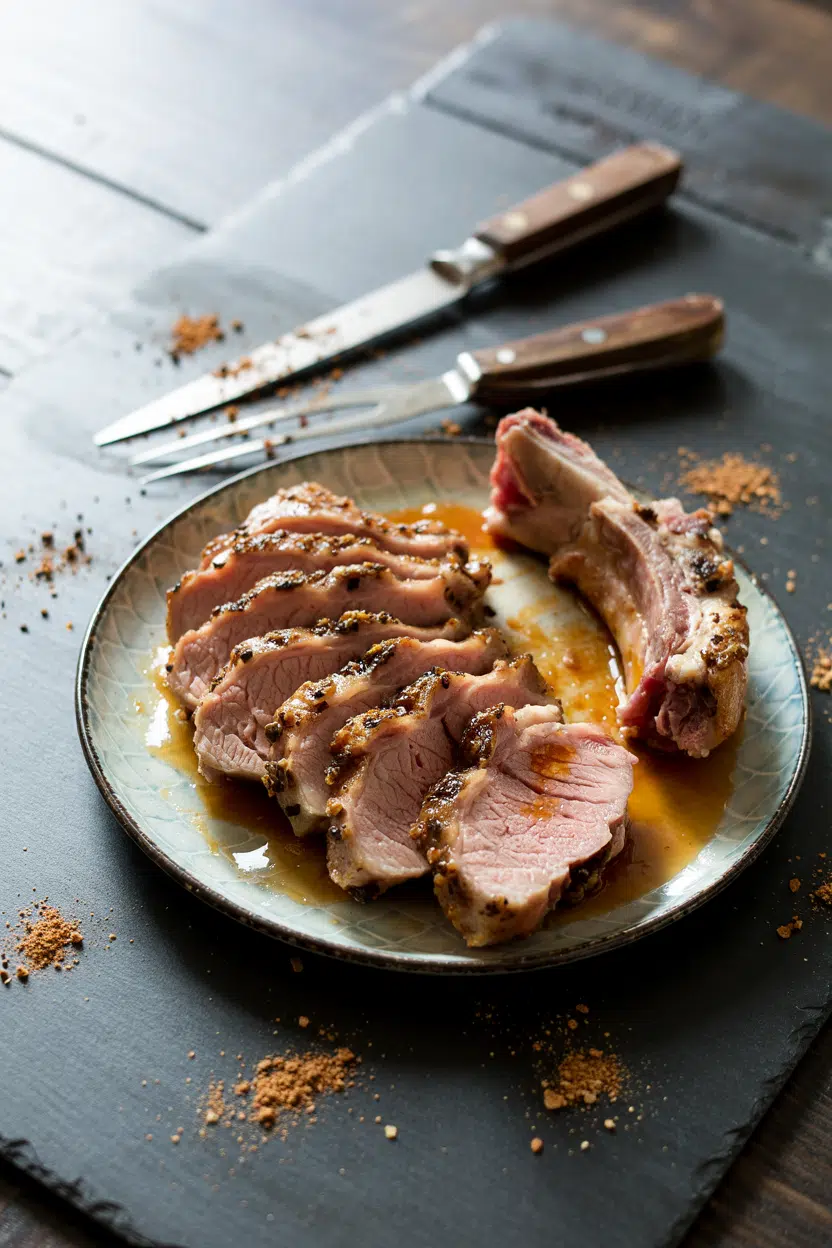
A pork chop delivers mild porky umami - not as neutral as chicken breast, not as assertive as lamb. Raw, it smells faintly sweet and metallic.
Cooked, a good sear produces a caramelized crust with roasted, slightly sweet top notes.
Compared to other meats, a pork chop tastes closer to lean veal or chicken thigh - richer and slightly sweeter than most white meat cuts, however.
A blade chop braised low and slow develops deeper, fattier notes that the leaner center-cut never reaches.
Brining changes things noticeably. A salt-and-sugar brine for even two hours pulls moisture into the muscle fibers, making the cooked chop more forgiving and adding a subtle background sweetness that amplifies the natural flavor.
How to Use a Pork Chop
Pan-searing followed by an oven finish is the most reliable method for thick bone-in chops. You build the crust on the stovetop in a cast iron or stainless pan, then transfer to a 400°F oven to bring the center up to temperature without burning the exterior. Good cooking pork chops right relies heavily on understanding carryover cooking - pull the chop at 140°F, rest it three minutes, and it will reach the safe 145°F on its own.
| Method | Best For | Tip |
|---|---|---|
| 🍳 Pan-Sear + Oven | Thick bone-in or center-cut chops | Use cast iron; finish at 400°F |
| 🔥 Grill (Direct) | Brined chops, rib chops | High heat, flip once; watch for flare-ups |
| 🫕 Braise | Blade chops with connective tissue | Low heat, long time, liquid halfway up chop |
| 🥢 Stir-Fry | Thin-sliced boneless loin meat | Slice thin against grain; high-heat wok only |
| 🧄 Stuffed + Roasted | Thick loin chops with pocket cut | Pack filling tightly; tie or skewer shut |
For pairings, apple or pear compote cuts through the fat cleanly, while mustard-and-vinegar pan sauces sharpen the umami. Rosemary, thyme, garlic, and smoked paprika all amplify the savory notes.
Root vegetables roasted alongside absorb the drippings well.
Pork chops appear across many cooking traditions. American barbecue relies on direct grill heat with spice rubs, while Filipino adobo-style preparations braise chops in vinegar and soy for a sharp, concentrated result.
French loin preparations often pair chops with a classic pan sauce, and Chinese stir-fries use thin-sliced loin in high-heat wok cooking.
For pork chop preparation tips when a specific cut isn't available, knowing the fat content and thickness of your chop guides every substitution decision.
Similarly, if you want a leaner loin-section cut entirely, reviewing pork tenderloin preparation tips gives a useful side-by-side contrast.
How to Buy and Store Pork Chops
Look for chops with a pale pink color and clean white fat at the edge. Avoid grayish edges or any sour smell - both indicate age.
For the juiciest result, choose a rib chop or a center-cut bone-in chop with visible marbling rather than a uniformly pale, lean slice.
Store raw chops in the original vacuum packaging or wrap tightly in plastic and refrigerate at 40°F or below. Knowing the pork chop spoilage signs helps you judge when refrigerated chops are still usable versus past their window.
- Refrigerator (raw) - 1-3 days; keep in original wrap or airtight container
- Freezer (raw) - 4-6 months for best quality; wrap in freezer paper or vacuum-seal
- Refrigerator (cooked) - 3-4 days; store in a sealed container with any cooking juices
Start Here for the Best Chop
Thickness and cut determine everything. Grab a bone-in rib chop or center-cut chop, at least 1 inch thick, for your first cook - these give you the most margin before the meat dries out.
If you're new to the cut, use a simple brine and the pan-sear-then-oven method. From there, blade chops braised in liquid are the next step up in richness.
Reserve thin boneless chops for quick stir-fries where speed, not juiciness, is the goal.
Frequently Asked Questions
Pork chops are cut from the loin, the muscle running along the pig's back between the shoulder and hip. Depending on position along the loin, you get rib chops, center-cut chops, loin chops, or blade chops near the shoulder end.
Scientifically, pork is classified as red meat due to its myoglobin content. The USDA historically marketed it as "the other white meat," however, which caused lasting confusion about its actual classification.
The USDA safe internal temperature for pork chops is 145°F, followed by a 3-minute rest. This replaced the older 160°F guideline and allows for a slightly pink center, which is safe and noticeably juicier.
A pork chop tastes richer and slightly sweeter than chicken breast, with more pronounced umami. It's closer in character to a chicken thigh, though pork has a distinct meatier depth that chicken doesn't replicate.
Yes, though cooking time increases by roughly 50 percent and achieving an even sear is harder on a frozen surface. Thawing overnight in the refrigerator produces significantly better browning and more even doneness.



