
Most people assume calvados is just fancy apple juice that got out of hand.
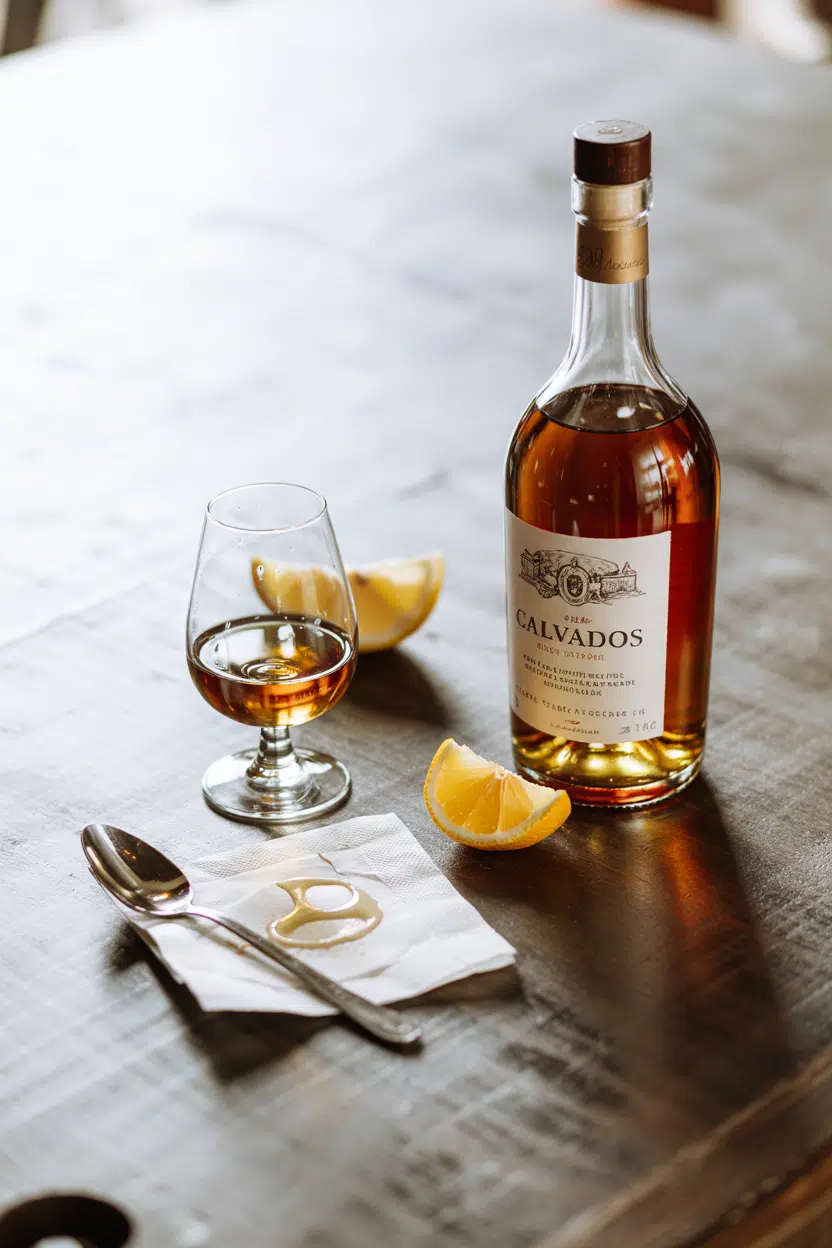
That assumption undersells one of France's most carefully governed spirits - a distilled apple brandy with its own appellation system, age classifications, and a flavor depth that makes it genuinely useful far beyond the glass.
Understanding what makes brandy distinct as a category helps explain why calvados occupies a category of its own: more orchard-specific than cognac, more structured than most fruit eaux-de-vie.
Calvados is a French apple brandy from Normandy, aged in oak and graded by age statement. It tastes of baked apple, vanilla, and warm spice with a dry finish. Use it for deglazing, flambéing, or soaking fruit. An opened bottle stays at its best for 1-3 years.
What Is Calvados?
Calvados is an apple brandy produced exclusively in Normandy, France, made by fermenting apple cider (and sometimes a proportion of pear) into a low-alcohol base, then distilling it and aging it in oak barrels.
Remember it later
Planning to try this recipe soon? Save it for a quick find later!
Its production is governed by AOC (Appellation d'Origine Contrôlée) law, meaning the fruit source, distillation method, and minimum aging periods are all legally defined.
Three main appellations exist within the AOC framework:
- 🏆 Calvados Pays d'Auge - the prestige sub-appellation, requiring double distillation in a pot still and a minimum of two years' oak aging; typically richer and more complex
- Calvados Domfrontais - must include at least 30% pear and uses column distillation; tends to be lighter and slightly floral
- Calvados (generic AOC) - may use either distillation method; widest production zone in Normandy
Age statements mirror the cognac system: VS (minimum two years), VSOP (four years), and XO (six or more years). Younger expressions show brighter, greener apple character; older XO releases lean toward dried fruit, vanilla, and oak spice.
You may see it misspelled as "calvado" or "calvadoss" - neither is a recognized term.
What Does Calvados Taste Like?
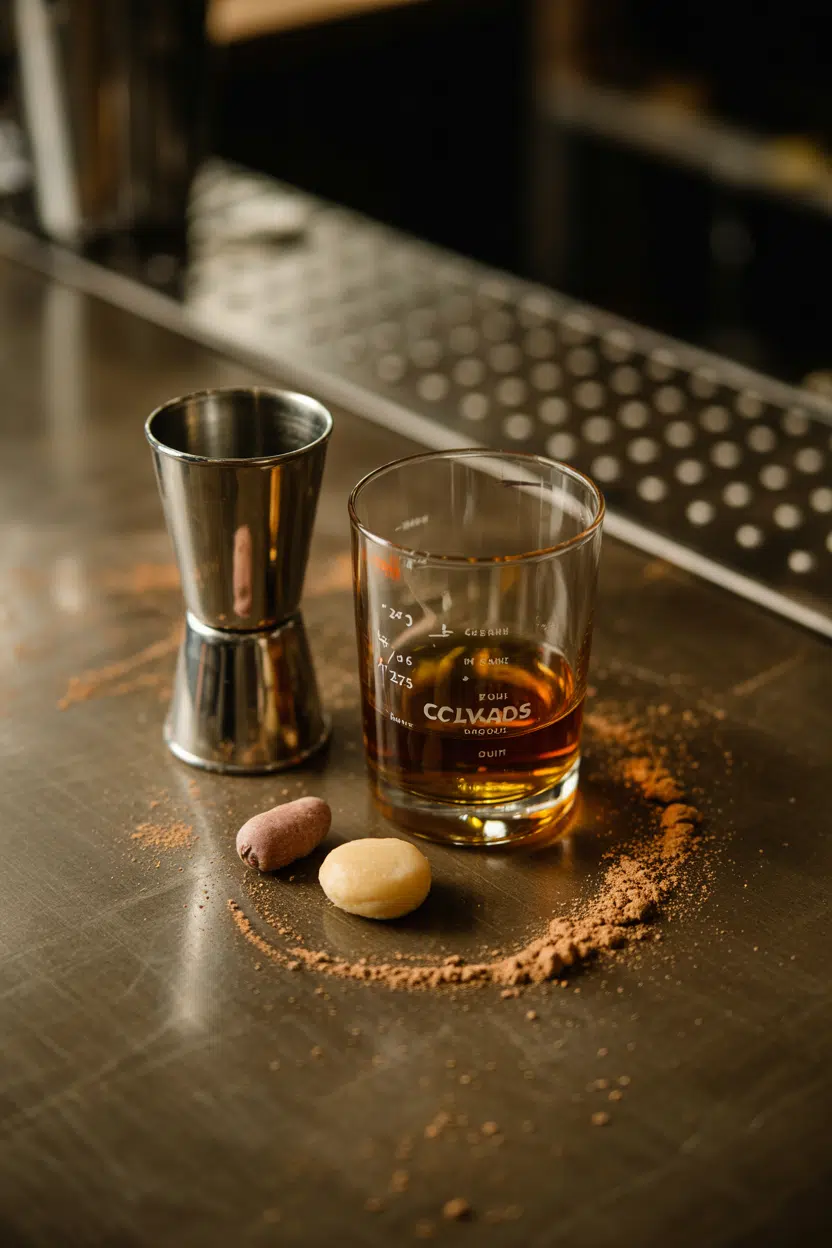
Calvados lands somewhere between an orchard and a spice cabinet.
The apple character is front and center - not the candy-sweet apple of a liqueur, but baked apple and dried orchard fruit, with quince and pear notes emerging in older expressions.
The finish is dry with a mild tannic grip - more structured than American applejack, and fruitier than cognac.
Applied heat during cooking drives off the alcohol rapidly, concentrating the apple and oak notes while mellowing the burn.
A fruit-forward cognac is the closest reference point for anyone approaching it without prior context, though calvados has far more orchard-fruit clarity by comparison.
How to Use Calvados
Calvados earns its place in cooking mainly through heat. It deglazes well - add a splash to a hot pork or duck skillet, let the alcohol flame off, then reduce until the pan sauce tightens into a glossy, apple-scented base.
That single technique covers a significant portion of Norman cuisine.
Beyond deglazing, there are several applications worth knowing:
| Method | Best For | Tip |
|---|---|---|
| 🔥 Deglaze | Pork chops, duck breast, game bird pan sauces | Add off the direct flame to control flare-up; reduce by half |
| 🍳 Flambé | Crepes, sautéed apples, banana variants | Warm the calvados slightly before igniting for a clean flame |
| 🍐 Maceration | Poached pears, dried apricots, prunes | Soak overnight; a little goes a long way with XO expressions |
| 🎂 Baking | Brushing into gâteaux, cake syrups, custard infusions | Use VS or VSOP; XO flavor becomes expensive to bake off |
| 🥃 Cocktails | Old Fashioned variants, stirred apple cocktails | Pair with walnut bitters and a cinnamon garnish |
Calvados pairs most naturally with pork, duck, cream, and aged cheeses like Comté or Gruyère.
Cinnamon, nutmeg, and vanilla amplify its warm-spice register without competing.
For a different flambé application, a flambéed crêpes suzette with orange recipe shows how the same technique translates from calvados-based preparations to citrus contexts.
If you're out of calvados entirely, check the available replacements for calvados before reaching for a generic brandy - some substitutes hold up far better in sauce work than others.
For broader substitution options, alternatives to brandy covers the wider field.
How to Buy and Store Calvados
Start with the label. Any bottle worth buying carries an AOC designation - look for "Calvados Pays d'Auge" for the most tightly regulated style, or the generic "Calvados" AOC for everyday cooking bottles.
Age statements matter for how you'll use it: VS and VSOP for cooking and cocktails, VSOP and XO for sipping.
Once you have a bottle, storage is straightforward. Store it upright, away from heat, light, and temperature swings - a kitchen cabinet away from the stove works fine.
After opening, reseal tightly; a nearly empty bottle oxidizes faster, so decanting into a smaller vessel extends the flavor window.
Tracking calvados's shelf life matters more once the bottle drops below the halfway mark.
Where to Start With Calvados
Don't open with your best bottle. A VS or entry-level VSOP is the right starting point for anyone using it in the kitchen - it delivers the apple-oak character without the complexity you'd bake off anyway.
- 🍳 First cook - deglaze a pork chop pan with two tablespoons; reduce until syrupy
- 🥃 First sip - try a VSOP neat or over one ice cube to understand the base flavor
- 🍐 First experiment - soak sliced pears overnight and fold into a tart or custard
Work up to Pays d'Auge or XO expressions once you know what the younger spirit tastes like. The difference becomes obvious - and worth it.
Frequently Asked Questions
Not exactly. All calvados is apple brandy, but not all apple brandy is calvados. The AOC designation restricts production to Normandy, with defined distillation methods and minimum aging - standards most generic apple brandies don't meet.
VS (2+ years) tastes greener and more apple-forward. VSOP (4+ years) adds vanilla and light oak. XO (6+ years) leans toward dried fruit, deeper oak, and warm spice - the least versatile for cooking, the most rewarding for sipping.
Calvados works well in stirred, spirit-forward builds. The most common are Old Fashioned variants with walnut or aromatic bitters, and the Corpse Reviver No. 1, which uses it alongside cognac and sweet vermouth.
Yes - it's one of the more practical spirits in a French kitchen. Heat drives off the alcohol and concentrates the apple-oak flavor. A VS or VSOP is the right grade; don't cook with XO expressions.
Typically 1-3 years with good storage. The key variable is headspace - a bottle that's three-quarters empty oxidizes faster. Decanting into a smaller bottle and resealing tightly keeps flavor stable longer.



