
That first hit of malt vinegar over a basket of hot chips is all bready sharpness and faint caramel, closer to a dark ale than a clean acid.

Unlike white vinegar swaps that work or alternatives to balsamic vinegar - both built around brighter, cleaner profiles - malt vinegar carries a grain-forward warmth that marks it as something distinct.
It's the condiment that built British chip-shop culture, and once you understand its fermented-grain foundation, you'll know exactly when to reach for it.
Malt vinegar is an amber, fermented-grain vinegar with a toasty, bready acidity and a subtle caramel note. Made from malted barley, it's milder than distilled white vinegar and a fixture of British cooking - especially fish and chips, quick-pickles, and chutneys.
What Is Malt Vinegar?
Malt vinegar starts with wort - the liquid extracted from malted barley during brewing.
Remember it later
Planning to try this recipe soon? Save it for a quick find later!
That wort is fermented into a low-alcohol beer, then converted to acetic acid by acetobacter bacteria, giving you the sharp, amber liquid sold in chip shops and supermarkets.
It falls under the category of fermented grain vinegars, which sets it apart from fruit-based vinegars like apple cider. You may also see it labeled malted barley vinegar, and the common misspelling "malt vinager" still turns up on recipe searches.
There are two main commercial forms worth knowing:
- 🟤 Brown (unfiltered) malt vinegar - deeper color, richer grain flavor, may show sediment; preferred for condiment use and pickling
- ⚪ Distilled malt vinegar - clear or pale, harsher and sharper; used in commercial pickles and some sauces, gluten typically removed in distillation
- 🪶 Spirit-blended versions - cheaper blends that dilute the malt character; less common but worth avoiding if grain flavor is the goal
Much like rice vinegar and its flavor reflect the grain it comes from, malt vinegar's barley origin is present in every pour.
What Does Malt Vinegar Taste Like?
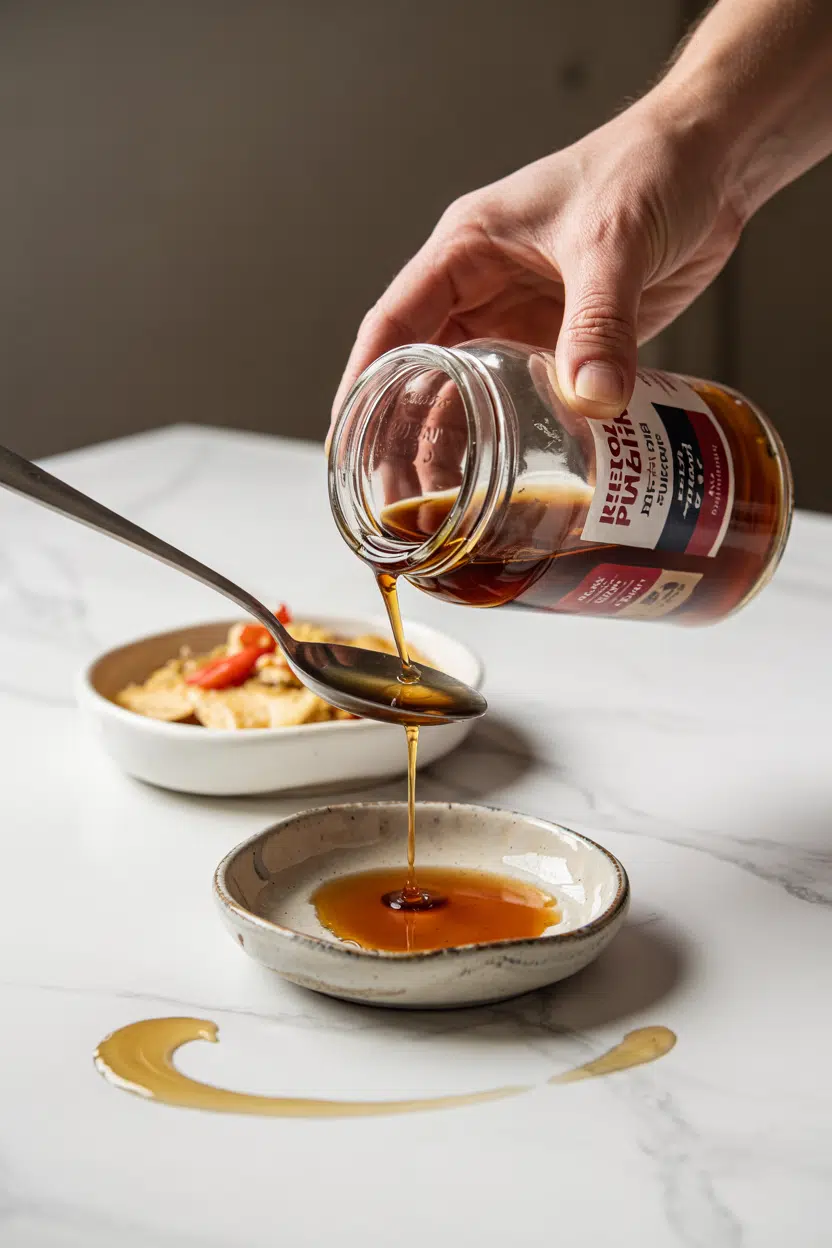
Malt vinegar tastes tangy with a rounded, bready depth that separates it clearly from sharper vinegars. The acidity hits first, but it doesn't have the raw bite of distilled white vinegar - it's rounder, almost ale-like.
Compared to apple cider vinegar, which shares a similar acidity level, malt vinegar has a darker grain note instead of fruit.
The caramel undertone comes from maltose in the original barley wort - a sugar that doesn't fully ferment and leaves a trace of sweetness.
Heat softens its sharper edges, making it well-suited to cooked applications like pan sauces and braises. Cold, it stays bright and tangy, which is why it works so well splashed directly onto hot fried food.
How to Use Malt Vinegar
British cooking built its identity around malt vinegar, and fish and chips is the obvious starting point - a generous splash over battered cod and thick-cut potatoes is still the benchmark use.
Beyond the chip shop, its application range is broader than most people expect.
| Method | Best For | Tip |
|---|---|---|
| 🧂 Finishing | Fish and chips, fried potatoes, pub snacks | Apply just before eating so acidity stays bright |
| 🫙 Quick-Pickling | Shallots, red onion, cucumbers for sandwiches | Use brown malt for deeper color and flavor in the brine |
| 🍳 Deglazing | Braised pork, beef stews, pan sauces | Add in small amounts - a tablespoon goes a long way |
| 🥗 Vinaigrette | Bitter greens, grain salads, slaws | Pair with a neutral oil so the malt note leads |
Chutneys and relishes rely on malt vinegar for both preservation and that distinctly British tangy-sweet backbone - think brown sugar or molasses alongside caramelized onions.
It pairs naturally with beef and lamb, where the bready acidity cuts through fat without overpowering the meat.
The differences between brown ale vs stout matter here too: stout-reduced sauces and malt vinegar share a family resemblance, and using both in a braised beef dish reinforces that grain character rather than clashing.
For the shallot and onion side of things, you can round out a fish and chips spread by checking sides for fish and chips for ideas that align with this flavor profile.
Skip it on delicate seafood where you want clean, neutral acidity - a mild white fish ceviche, for example, would be muddied by the grain note.
If you don't have a bottle on hand, our guide to alternatives to malt vinegar covers the closest practical swaps.
How to Buy and Store Malt Vinegar
Brown malt vinegar is the one to reach for at the store. Look for a deep amber color and a faint bready smell through the cap - both signal that the malt character is intact. Unfiltered bottles may show light sediment at the bottom, which is normal and not a defect.
Store it tightly capped in a cool, dark pantry. Refrigeration is optional; the acidity keeps it stable at room temperature for years.
The question of freezing malt vinegar comes up occasionally - it's unnecessary given its indefinite acidic stability, though peak aroma holds best within the first two to three years.
Malt vinegar is derived from barley, so it may contain gluten traces. People managing celiac disease should look for bottles specifically labeled gluten-free, which use distillation to remove gluten proteins.
Where to Start With Malt Vinegar
New to this vinegar? Splash it over fried potatoes first. That single use shows exactly what it does: it adds an acidic hit with grain warmth that salt alone can't provide.
From there, try a quick-pickled shallot brine for sandwiches - it takes ten minutes and demonstrates the vinegar's depth in a cold application.
If you're already familiar with apple cider vinegar, our guide on replacements for apple cider vinegar shows where malt vinegar can step in and where it can't.
The grain note is an asset in the right dish and a mismatch in the wrong one.
Frequently Asked Questions
It's made by fermenting the wort from malted barley into a low-alcohol beer, then converting that alcohol into acetic acid. The barley origin gives it the toasty, grain-forward character that distinguishes it from fruit-based vinegars.
Standard malt vinegar is not - it's derived from barley and may carry gluten traces. Some commercial versions are distilled to remove gluten proteins; look for bottles explicitly labeled gluten-free if celiac disease is a concern.
Yes, in most recipes. Apple cider vinegar matches the acidity level and has a similar mild sweetness, though it lacks the bready grain note. For chip-shop-style dishes, the swap is noticeable but workable.
The color comes from the malted barley used in fermentation - the same roasting process that darkens barley for beer gives the vinegar its amber tone. Distilled malt vinegar, which is filtered after production, runs clear or pale.
No. Its acidity keeps it stable at room temperature. A tightly capped bottle in a cool, dark pantry is sufficient, and peak aroma holds well for two to three years.



