
You spot them at the market in a brown paper tray, right next to the white button mushrooms - darker, firmer, and somehow more serious-looking. Cremini mushrooms sit in that productive middle ground between the mild button and the substantial portobello, which means they handle heat well, hold shape in long braises, and bring genuine umami depth to nearly any savory dish.

Understanding the role portobello mushroom plays in cooking helps clarify why creminis occupy such useful territory between two well-known relatives.
Cremini mushrooms are a young, brown stage of Agaricus bisporus - firmer and earthier than white button mushrooms, milder than a portobello. They sauté, roast, braise, and stuff well, and they add umami without dominating a dish.
What Is Cremini Mushroom?
Cremini mushrooms - also sold as brown mushrooms, baby bellas, or crimini - are the adolescent form of Agaricus bisporus, the same species that becomes a portobello at full maturity. The name comes from the Italian word for cream, though the cap color runs from light tan to deep brown.
Remember it later
Planning to try this recipe soon? Save it for a quick find later!
Compared to a white button mushroom, creminis are harvested slightly later, which gives them a denser cell structure and a more developed flavor.
Their round caps are closed or just starting to open, the gills remain hidden beneath the cap edge, and the short, thick stem stays firm even after cooking.
Growers cultivate them worldwide, though the variety traces back to Mediterranean Europe. You'll find them sold both loose and pre-packaged, typically in 8- or 16-ounce containers.
If a recipe calls for creminis and you can't find them, cremini mushroom stand-ins cover the closest options by cooking method - because the swap matters more when you're roasting than when you're blending into a sauce.
What Does Cremini Mushroom Taste Like?
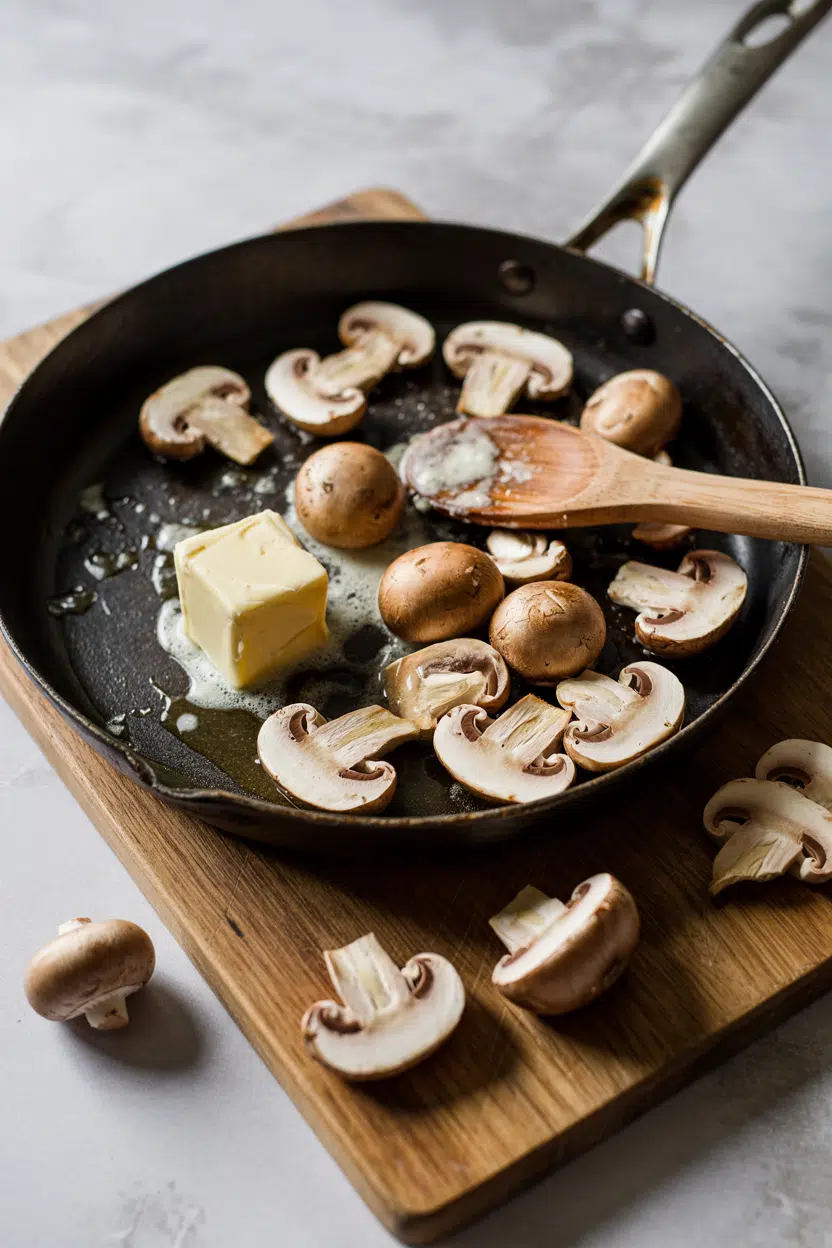
Raw creminis taste mildly earthy with a subtle nuttiness - more developed than a white button mushroom, but without the intensity a fully matured portobello delivers.
The button mushroom and its flavor profile reads comparatively bland next to a cremini, which carries more glutamate content even before heat is applied.
Heat changes them noticeably. Sautéing over medium-high produces browning that concentrates sugars and deepens the umami, while long braising in wine or stock makes them tender-chewy and almost meaty in a sauce.
Roasting at high heat drives off moisture and intensifies the earthy, nutty notes most.
How to Use Cremini Mushroom
Sautéing is where creminis earn their keep most often.
A hot pan with butter or olive oil, sliced creminis in a single layer, and a few minutes undisturbed produces the browned, umami-forward result that makes them useful as a side, a pasta topping, or a burger addition.
The step-by-step for making garlic butter sautéed mushrooms at home shows exactly how to get the browning right without burning the garlic.
Beyond sautéing, creminis hold up well across several cooking methods.
| Method | Best For | Tip |
|---|---|---|
| 🍳 Sauté | Pasta, rice dishes, side vegetable | High heat, single layer, minimal stirring |
| 🔥 Roast | Concentrated flavor, sheet-pan meals | 425°F, halved, toss with oil and thyme |
| 🥘 Braise | Stews, ragù, wine sauces | Add whole or halved; they hold shape well |
| 🫙 Stuffed & Baked | Appetizers, small bites | Remove stems, fill, bake at 375°F until tender |
| 🥗 Raw | Salads, thin-sliced boards | Slice very thin; dress just before serving |
In Italian cooking, creminis go into risotto and pasta with cream, shallots, and white wine.
French preparations use them in deglazes and pan sauces alongside thyme and red wine.
American cooks blend them finely into burger patties to add moisture and umami - a technique that reduces the need for added salt.
Their pairing with garlic, rosemary, soy sauce or tamari, and mascarpone gives them range across European and East Asian fusion dishes.
Finely chopped creminis sweated low and slow form an excellent base for ragù or stuffing - the texture that results works well alongside meat or on its own.
They also grill cleanly on skewers, and pairing them with peppers and onions gives what pairs with caponata real overlap in flavor territory.
How to Buy and Store Cremini Mushroom
Fresh creminis should feel firm and dry to the touch, with caps that are fully closed or just barely starting to open. Closed gills signal freshness - once the cap flattens and gills are fully exposed, the mushroom is aging fast.
- ✅ Good signs - Dry, brown, unblemished caps; firm stems; earthy smell
- ❌ Avoid - Slimy stems, dark wet spots, or any ammonia odor
- 📦 Storage - Loose in a paper bag in the refrigerator crisper drawer
- 💧 Don't wash before storing - Added moisture accelerates spoilage
Stored correctly, creminis last 5 to 10 days refrigerated. Check for cremini mushroom spoilage signs if you're unsure - sliminess and a sharp ammonia smell are the clearest indicators to discard.
Skip plastic bags, which trap humidity and shorten that window considerably.
Start With Cremini
Creminis are a reliable first choice for cooks who want more flavor than a button mushroom without the size and intensity of a portobello.
Reach for them when a dish needs umami structure - a pasta sauce, a braise, a stuffed appetizer - and let high, dry heat do the work.
If you're still undecided on which mushroom fits your dish, portobello mushroom swaps that work and button mushroom stand-ins both help clarify where creminis sit on the spectrum.
Frequently Asked Questions
Same species, different stage. Both are Agaricus bisporus, but creminis are harvested later, giving them a browner cap, denser texture, and more developed umami flavor than their white counterpart.
Portobellos are fully matured creminis, left to grow until the cap opens wide and the gills are exposed. They're larger, meatier, and more intensely flavored - better for grilling whole, while creminis suit sliced applications.
Yes. Slice them very thin and dress just before serving to prevent browning. Raw creminis have a firm, slightly chewy bite and a mild earthy flavor that works in salads.
Typically 5 to 10 days stored loose in a paper bag in the crisper drawer. Plastic packaging or pre-washing shortens that window - discard any that smell of ammonia or feel slimy.
Yes - they can lose up to 50% of their volume as moisture releases during cooking. Account for this by starting with more than the final dish requires, especially in stews or sautés.



