
Sardines are the ingredient that holds a dish together without announcing itself - the source of deep savory backbone in a pasta, the reason a simple toast feels satisfying enough to serve guests.
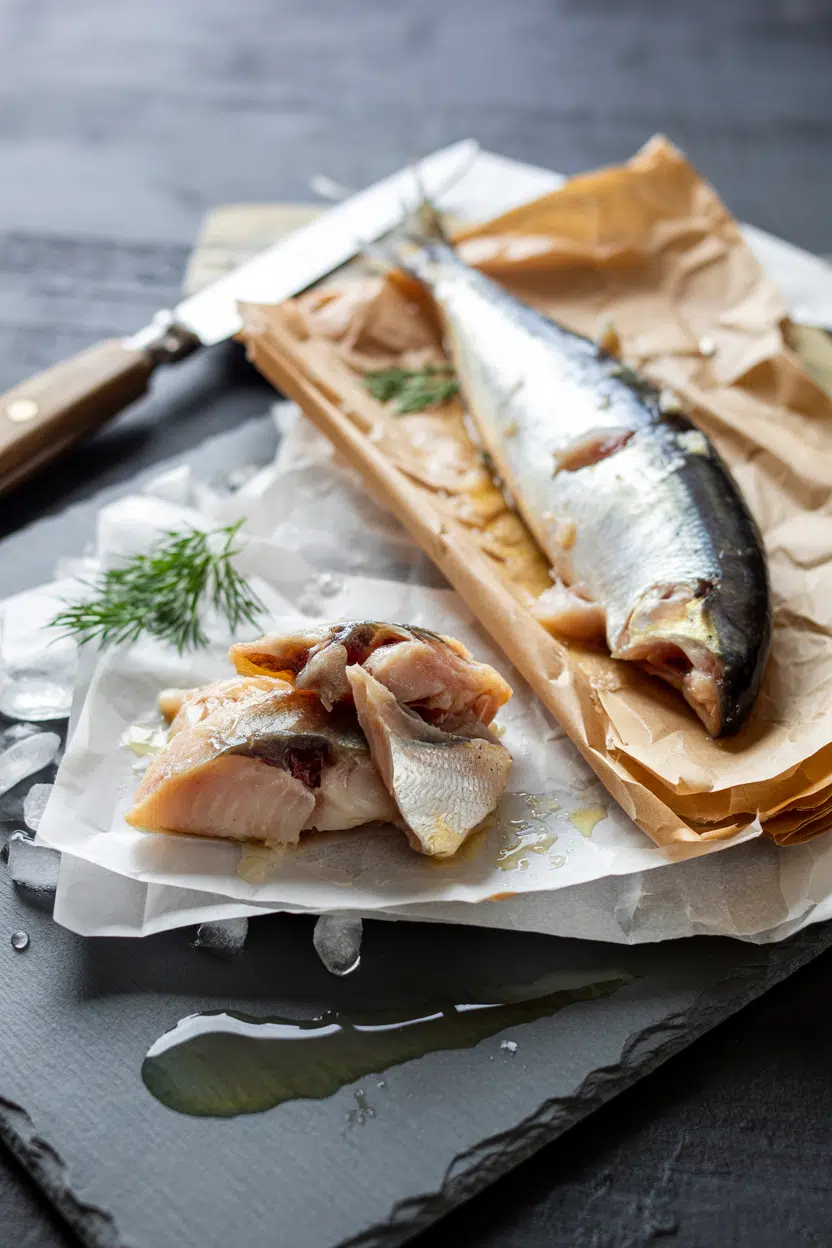
Understanding what makes anchovy distinct helps put sardines in context: both are oily, briny, and umami-forward, but sardines have milder, fleshier character that lets them function as a main protein, not just a seasoning.
If you've explored mackerel swaps that work, you already know the oily-fish category has more range than most cooks expect.
Sardines are small, oily ocean fish with briny, umami-rich flavor and tender flesh. Available fresh, canned, or smoked, they're used in everything from pasta and toast to grilled whole as a main dish. Canned sardines are pantry-stable for years; fresh ones must be used within 48 hours.
What Is Sardine?
Sardines are small, schooling pelagic fish belonging primarily to the species Sardina pilchardus, found along the Northeast Atlantic and Mediterranean coasts, with related species along Pacific shores.
Remember it later
Planning to try this recipe soon? Save it for a quick find later!
The name pilchard refers to the same or closely related fish, typically applied to larger, adult specimens - "sardine" usually describes younger, smaller ones, though the terms overlap by region and market.
Fresh sardines run roughly 15-25 cm long, with distinctive shiny silver skin, a slender body, and a single dorsal fin.
Their high fat content - distributed through the flesh rather than stored in a liver - is what defines their flavor, cooking behavior, and nutritional profile.
Understanding fish and its flavor broadly helps explain why oilier species like sardines taste richer and more assertive than lean white fish.
Three main market forms exist:
- 🐟 Fresh sardines - whole fish, typically grilled or pan-fried same-day
- 🥫 Canned sardines - packed in olive oil, sunflower oil, tomato, or water; bones included and edible
- 🌫️ Smoked sardines - hot-smoked and packed in tins or jars, with deeper, more resinous flavor
Brislings, a closely related Norwegian species, appear under the same sardine label in many markets.
What Does Sardine Taste Like?
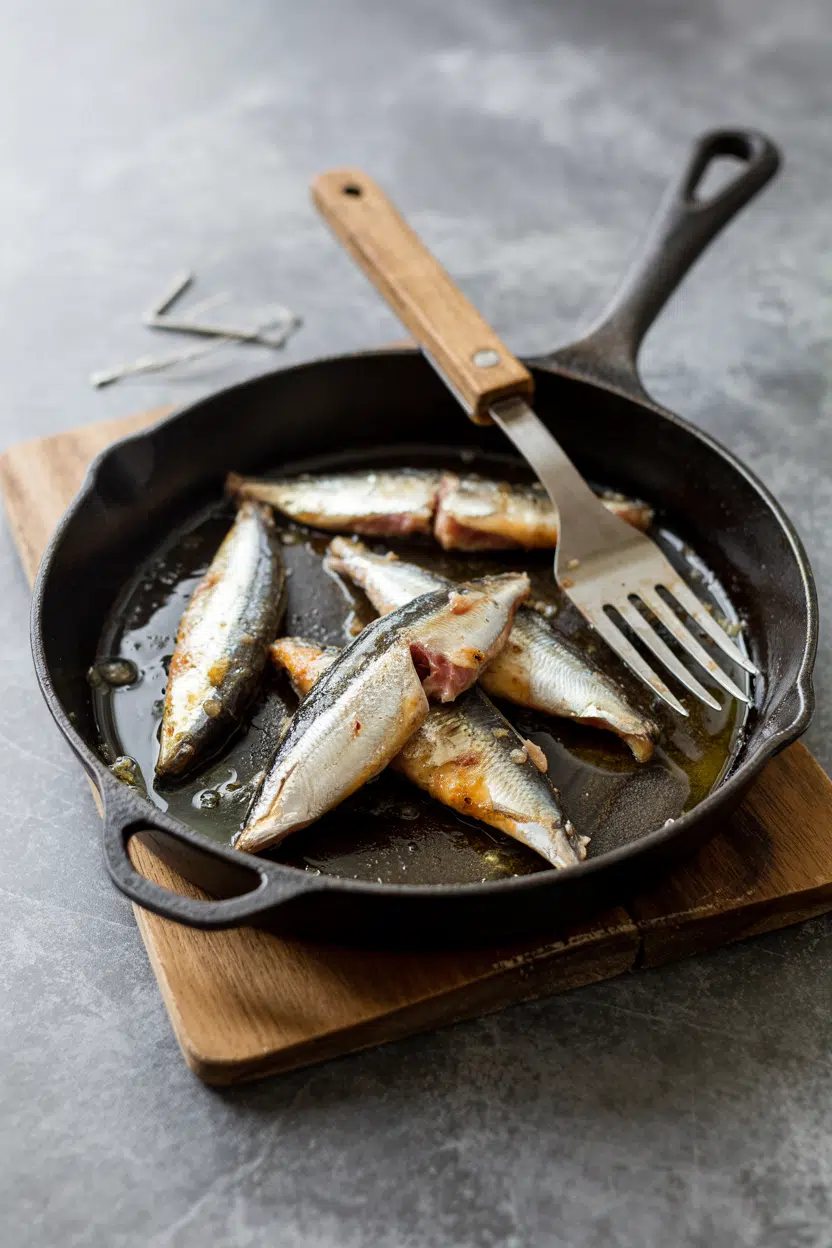
Sardines hit several flavor registers at once. The dominant note is briny and savory - a clean, direct sea salt character - followed immediately by a deep, glutamate-driven umami that coats the palate.
There's noticeable oiliness, not heavy but persistent, and a faint metallic edge on the finish.
Compared with anchovies, sardines deliver similar saltiness and umami but with milder, fleshier character - less concentrated and more forgiving in a dish.
Much like the taste of canned tuna shifts depending on packing liquid, sardines taste markedly different from tin to tin: olive oil-packed ones are richer and rounder, water-packed are leaner and sharper, and smoked sardines add a resinous depth that shifts their role entirely.
Heat softens the metallic edge and deepens the savory notes. Cold, straight from the can, the oiliness is more pronounced.
How to Use Sardine
Sardines work across more contexts than most people expect - from quick pantry meals to slow-cooked sauces. Fresh sardines take best to high, direct heat: grilling whole over charcoal is the classic Portuguese approach (sardinhas assadas), where the skin chars and crisps while the flesh stays moist.
Pan-frying fillets in olive oil works equally well indoors.
Canned sardines are the workhorse form. Break them into cooked pasta with garlic, chili, and toasted breadcrumbs for a fast weeknight meal; the oil in the tin counts as part of the cooking fat. Pressed onto toast with sliced tomato and olive oil, they make a solid open-faced snack that needs nothing else.
| Method | Best For | Tip |
|---|---|---|
| 🥫 Straight from Tin | Toast, salads, sandwiches, crackers | Use the packing oil as a dressing component |
| 🔥 Grilled/Broiled | Whole fresh sardines as a main dish | Score skin before grilling to prevent curling |
| 🍳 Pan-Fried | Fillets in pasta, grain bowls, stews | Medium-high heat - flip once, no more |
| 🫙 Baked | Herb or tomato crust preparations | Add breadcrumbs on top to absorb excess oil |
| 🥗 Blended/Spread | Pâtés, dips with cream cheese or yogurt | Smoked sardines give deeper flavor for spreads |
Sardines pair reliably with garlic, chili flakes, capers, olives, parsley, and oregano. Starchy bases - pasta, potatoes, bread - absorb the oil and balance the intensity.
If you're thinking about swapping out sardine in a recipe, the best alternatives depend heavily on whether the dish needs the whole flaky texture or just the savory depth.
How to Buy and Store Sardine
Fresh sardines should look alive on the counter. Bright, clear eyes and shiny silver skin signal freshness; sunken eyes, dull skin, or any ammonia smell mean pass.
Buy them the day you plan to cook them - their high oil content means they deteriorate faster than leaner fish.
For canned sardines, read the label: olive oil-packed sardines offer the richest result; water-packed are leaner; tomato-packed work well when going straight into sauces. Smoked tins should smell cleanly smoky, not sour or fermented.
- Fresh: Store on ice or in the coldest fridge zone; use within 24-48 hours
- Canned (unopened): Cool, dry pantry; shelf-stable for months to years per can date
- Canned (opened): Transfer to a sealed container; refrigerate and use within 1-2 days
Full guidance on storing sardine correctly covers the edge cases - including what to do with leftover smoked sardines from a jar.
If you rely on olive oil as a cooking fat here and run short, knowing olive oil swaps that work keeps the process moving.
Start With the Can
Canned sardines are where most cooks should begin. A tin of olive oil-packed sardines on toast with sliced tomato and good salt costs almost nothing and takes two minutes - it's the clearest way to understand what the ingredient actually tastes like before building from there.
Once you're comfortable with the flavor, move to fresh for grilling season or try breaking them into a simple pasta.
The anchovy-adjacent recipes you already know - puttanesca, pasta con le sarde - are natural next steps, and anchovy swaps that work can help you navigate where sardines fit in those dishes when anchovies aren't available.
Frequently Asked Questions
Yes. Sardines are high in omega-3 fatty acids (EPA and DHA), vitamin D, and protein. The edible bones in canned sardines also provide calcium - an unusual benefit for a fish product.
Anchovies are smaller, more intensely salted, and cured - they dissolve into dishes and season rather than add texture. Sardines are larger, milder, and fleshier, functioning as a standalone protein rather than a background flavoring.
Yes - in canned sardines, the bones are fully softened during processing and are safe to eat. They're the main source of calcium in the fish and add no unpleasant texture.
Briny, oily, and savory with a mild metallic edge. Olive oil-packed sardines taste rounder and richer; water-packed are leaner and sharper. Smoked varieties add a resinous depth that makes them taste distinct from unsmoked tins.
Transfer them to a sealed container and refrigerate immediately - they keep for 1-2 days. Don't store opened sardines in the tin itself, as the exposed metal can affect flavor.



