
Most people assume almond bark is just a budget stand-in for chocolate - something you reach for when the real thing isn't worth the trouble.
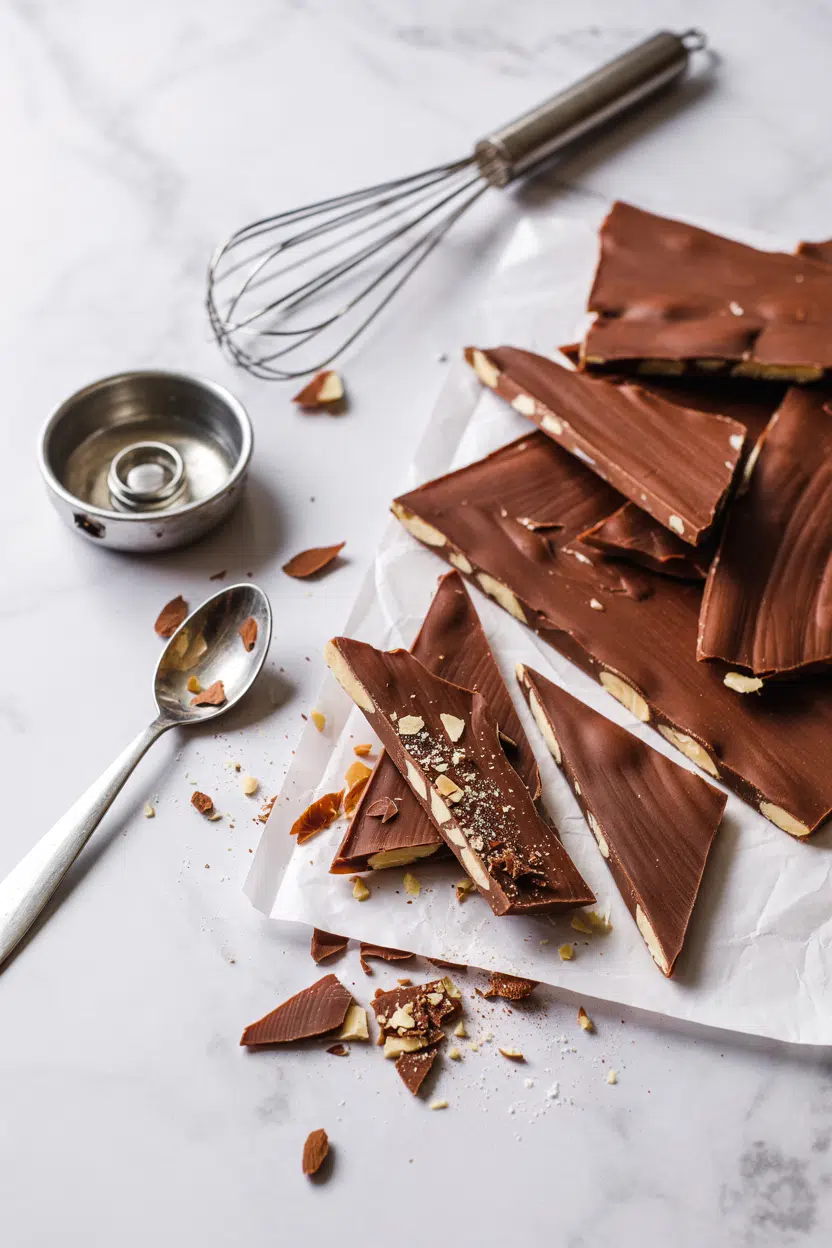
That assumption undersells it. Almond bark is a purpose-built confectionery coating that does things real chocolate can't: it melts without seizing, sets without tempering, and holds a glossy finish even in a warm kitchen.
Knowing what it actually is - and what it isn't - makes it a far more useful tool.
Almond bark is a sugar-and-vegetable-fat confectionery coating that melts smooth, sets firm, and requires no tempering. It tastes sweet and vanilla-forward in white varieties, with mild cocoa notes in chocolate versions. Best for dipping, molding, and holiday candy bark.
What Is almond bark?
Despite the name, almond bark rarely contains actual almonds. It's a confectionery coating built from sugar, vegetable fats (typically palm or partially hydrogenated oils), and flavoring - most commonly vanilla for white varieties, or cocoa powder for chocolate almond bark.
Remember it later
Planning to try this recipe soon? Save it for a quick find later!
The name comes from the candy it's traditionally used to make: a flat sheet of melted coating studded with roasted almond pieces, broken into irregular "bark" shapes once set.
Sold as blocks, wafers, or discs, it's a staple of North American holiday candy-making.
You'll also find it labeled as confectionery coating or almond confection coating at craft and grocery stores - these are the same product.
Because it contains no cocoa butter, it behaves differently from real chocolate and doesn't require the precise temperature control that tempering demands.
- 🍫 White almond bark - vanilla-flavored, ivory-colored; the most common variety
- 🍫 Chocolate almond bark - uses cocoa for mild chocolate flavor without real couverture
- 🧱 Forms available - sold in 1-2 lb blocks, wafer discs, or chip bags
- 🌿 Fat base - vegetable shortenings replace cocoa butter entirely
What Does almond bark Taste Like?
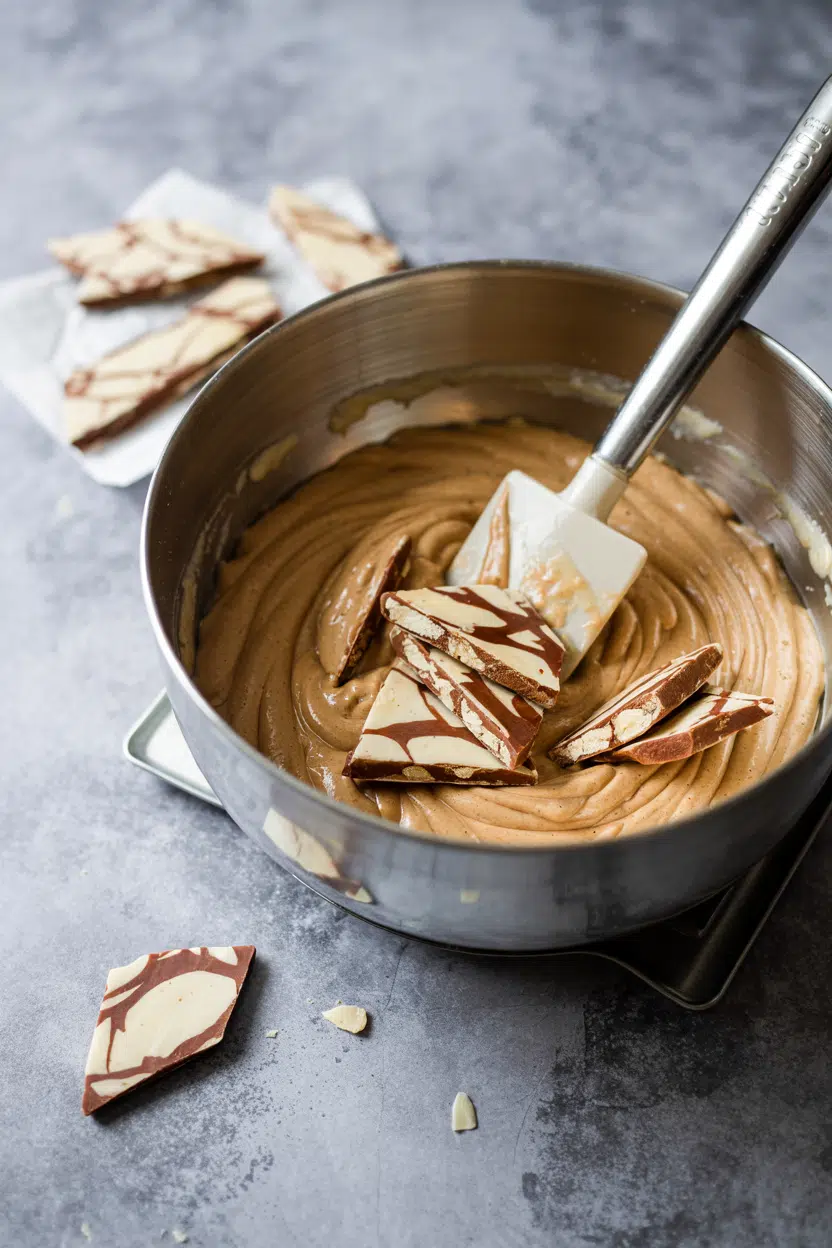
White almond bark leads with sweetness and a clean vanilla note - closer to a candy coating than a fine confection. The chocolate variety adds mild cocoa and faint caramel undertones, though neither version has the layered finish of real chocolate.
The mouthfeel is where it diverges most noticeably from real chocolate. Almond bark lacks cocoa butter's sharp melt point, so it feels slightly waxy rather than the clean snap you'd expect from couverture.
For context, the taste of white chocolate shares the vanilla sweetness but carries a richer, creamier finish that almond bark doesn't quite reach.
That gap matters less once it's coating a pretzel or anchoring a bark slab - the supporting ingredients do a lot of the sensory work.
How to Use almond bark
Almond bark's main advantage is its reliability. Melt it gently and it behaves - no bloom, no seizing, no thermometer required.
That makes it the go-to coating for home candy projects where precision isn't realistic.
| Method | Best For | Tip |
|---|---|---|
| 🫕 Microwave Melt | Quick dipping batches, cake pops | Use 30-second bursts at 50% power; stir between each |
| 🍳 Double Boiler | Large batches, sustained warmth | Keep water below a simmer - steam moisture causes clumping |
| 🧁 Mold Pouring | Shaped holiday candies, bark slabs | Tap mold on counter after filling to release air bubbles |
| ✨ Drizzle | Popcorn, cookies, brownies | Thin with a small amount of coconut oil for cleaner lines |
For holiday almond bark candy, spread the melted coating onto a parchment-lined sheet pan, then scatter roasted almonds, dried cranberries, or salted pretzels across the surface before it sets.
It pairs particularly well with salty or tart add-ins - cinnamon, cardamom, dark chocolate bits, or dried cherries all work cleanly against the sweet base.
Dipping strawberries, cookies, and truffles is where almond bark earns its reputation. It sets faster than tempered chocolate at room temperature, which speeds up production when you're coating dozens of pieces. If you need a coating but don't have almond bark on hand, a look at replacements for almond bark covers the closest-performing options.
How to Buy and Store almond bark
Look for packages labeled "almond bark" or "confectionery coating" - both names refer to the same product. Blocks and wafer discs are equally good; wafers melt slightly faster since they're pre-portioned.
Check the surface before buying: white streaking or greasy spots signal bloom or separation from poor storage.
Always read the ingredient label if you have nut or soy allergies - despite the name, many products contain no almonds at all, though some include soy lecithin as an emulsifier.
Store opened almond bark in an airtight container in a cool, dry place, away from strong odors like coffee or spices, which it absorbs readily.
For a full breakdown of how long almond bark keeps under different conditions, that guide covers fridge, pantry, and freezer timelines in detail.
Unopened, it's shelf-stable for up to a year; opened, plan to use it within three to six months.
Getting Started with Almond Bark
New to almond bark? Start with a simple dipping project - pretzels or strawberries - before moving to molds or full bark slabs.
- 🍓 First project - Dip pretzels or strawberries; flat learning curve, fast results
- 🧱 Block vs. wafers - Wafers for speed; blocks if you're buying in bulk
- 🌰 Add texture early - Press almonds or dried fruit into the coating before it sets
- 🫙 Storage first - Seal leftovers immediately; it picks up odors faster than you'd expect
If you frequently make candy coatings and want options beyond the standard product, exploring alternatives to shortening can inform which fat-based coatings behave most similarly to almond bark in terms of set and texture.
Frequently Asked Questions
No. White chocolate contains cocoa butter and milk solids; almond bark uses vegetable fats instead. Almond bark is sweeter and slightly waxier, and it melts without the temperature sensitivity that white chocolate requires.
Usually not. Most commercial almond bark products are nut-free and use artificial or natural vanilla flavoring. Always check the label if you need to confirm almond content or avoid nut allergens.
Use low heat and keep moisture away. Microwave in 30-second intervals at 50% power, stirring between each. Even a few drops of water can cause the coating to clump and seize.
Not effectively. Almond bark scorches at oven temperatures and the vegetable fat base separates under sustained heat. Use it as a coating or drizzle after baking, not as a baking ingredient.
Yes - it re-melts cleanly without quality loss if it was stored properly. Reheat gently using the same low-and-slow method, and avoid mixing in set pieces with fresh product from a different batch.



