
Most people pick up celeriac once, stare at its gnarled, dirt-caked surface, and put it back down.

That's a mistake worth correcting - because beneath that rough exterior is a firm, creamy-when-cooked root with a mild celery character that outperforms its more famous cousin in almost every cooked application.
Unlike alternatives to rutabaga or kohlrabi swaps that work, celeriac brings a specific herbaceous earthiness that no other root vegetable quite replicates.
Celeriac - also called celery root - is a knobby root vegetable with mild celery-like flavor, a nutty earthiness, and firm flesh that turns silky when cooked. It's low in carbohydrates, naturally gluten-free, and works raw or cooked across a wide range of dishes.
What Is celeriac?
Celeriac is not a root in the botanical sense - it's the swollen stem base of a celery variety (Apium graveolens var. rapaceum) cultivated specifically for that bulb rather than its stalks.
Remember it later
Planning to try this recipe soon? Save it for a quick find later!
It originated in the Mediterranean and spread through Central and Northern Europe, where it became a staple winter vegetable long before it caught on in American kitchens.
You'll find it sold under several names: celery root, knob celery, and apio nabo in Spanish-speaking markets.
The bulb is typically the size of a large grapefruit, beige to pale brown on the outside, with a tangle of root tendrils clustered at the base.
Unlike regular celery, which is grown for its crunchy stalks, celeriac is all about the dense, ivory-white flesh inside.
There's only one main cultivated type, though size varies - smaller bulbs under 10 cm tend to be sweeter and less fibrous than oversized, older specimens.
What Does celeriac Taste Like?
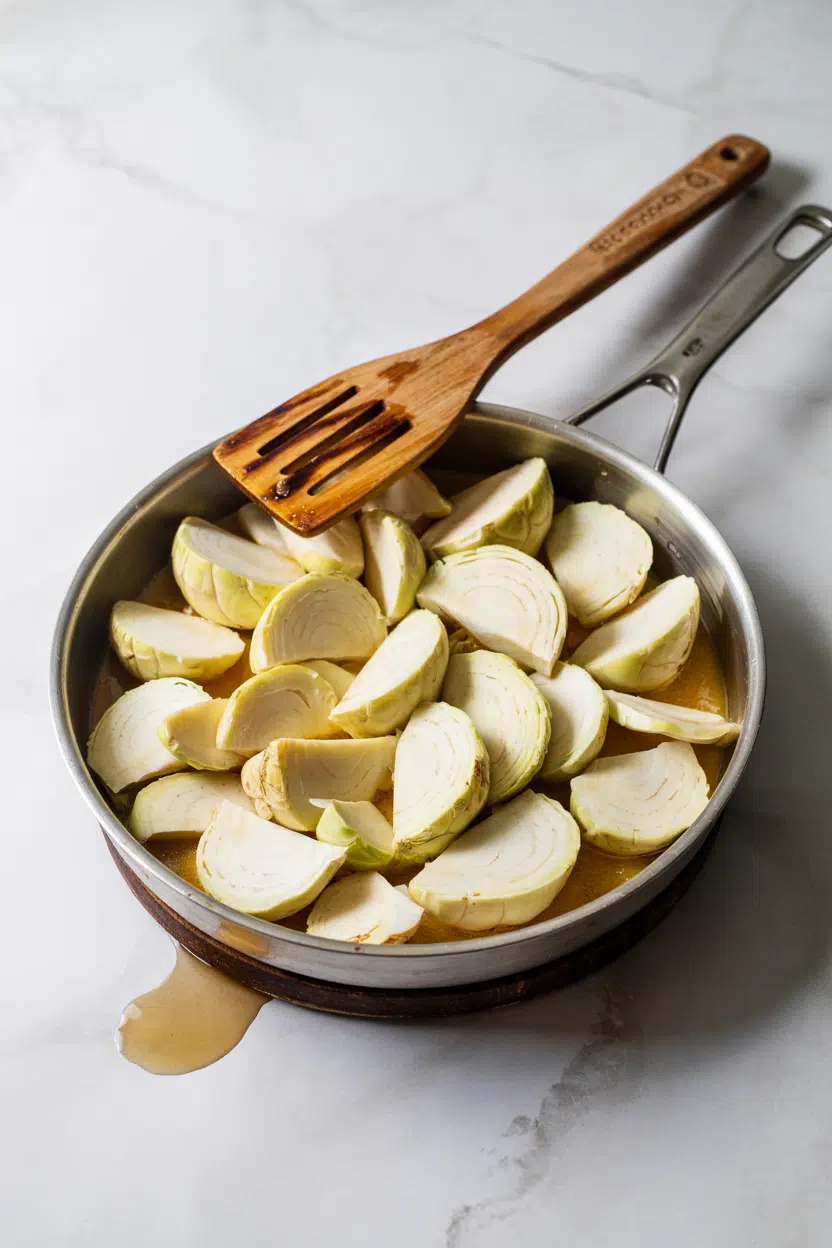
Raw celeriac tastes like a calmer, earthier version of a celery stalk - the celery character is immediately recognizable, but there's no sharp stringy bite.
A nuttiness comes through when you chew, along with a faint peppery warmth that fades quickly.
Heat softens and sweetens the flavor considerably. Roasted or braised, celeriac loses most of its sharpness and becomes mellow, almost buttery - closer to a parsnip in sweetness than to raw celery.
Compared with raw fennel, the bite is noticeably milder, making it easier to use without overpowering a dish.
How to Use celeriac
Celeriac handles raw and cooked applications with equal competence, which puts it ahead of many root vegetables in kitchen utility. The French got there first - celeriac remoulade, shredded raw and dressed with Dijon mustard, lemon, and mayonnaise, is still the most iconic preparation.
Shredding it fine on a box grater or mandoline keeps the texture pleasant rather than woody.
Cooked, the options expand significantly.
Boiled and mashed - often combined with potato for a lighter, more aromatic result than a sweet potato mash recipe would give - it produces a silky puree that pairs well with pork, butter, and cream.
Roasted in wedges, it takes on caramelized edges and a denser, nuttier character.
If you don't have a rack handy, notes on swapping out roasting rack equipment apply here too when you want airflow under the wedges.
Celeriac also works finely diced as an aromatic base - it adds celery aroma to mirepoix-style foundations without the stringy texture that stalks can leave behind.
For context on how that fits into broader base-building, comparing mirepoix vs trinity options shows where the flavors diverge.
French and Central European kitchens lean on celeriac heavily in winter soups and gratins; British cooking uses it layered with cream and cheese or alongside other roasted roots.
| Method | Best For | Tip |
|---|---|---|
| 🥗 Raw (shredded) | Remoulade, slaws, salads | Toss immediately in lemon juice to prevent browning |
| 🥣 Boiled and mashed | Purees, blended potato mash | Drain thoroughly before mashing to avoid wateriness |
| 🔥 Roasted | Wedges, caramelized sides | Cut to even thickness; oil generously for browning |
| 🍲 Braised | Hearty mains, winter soups | Use stock with aromatics to deepen the celery flavor |
| 🍟 Pan-fried (sliced thin) | Crisp chips, textural garnish | Slice on a mandoline and pat dry before frying |
Strong anise flavors tend to compete with celeriac's celery character rather than complement it - keep pairing partners in the mustard, parsley, lemon, and cream range for best results.
How to Buy and Store celeriac
At the market, weight is the most reliable indicator of quality. A good celeriac feels dense and heavy for its size, with firm, dry skin and no soft patches or deep fissures.
Avoid any bulb with a damp, discolored surface - that's mold working inward. Smaller bulbs, roughly fist-sized, tend to have fewer woody fibers and a cleaner flavor.
Store whole, unwashed celeriac in the fridge crisper, loosely wrapped in a perforated bag or damp towel.
It holds well for 2-4 weeks under those conditions.
Once peeled or cut, keep pieces submerged in acidulated water and use within 2-3 days.
For a full checklist of what to watch for as it ages, the guide on celeriac spoilage signs covers the specifics.
If celeriac isn't available and you need a similar aromatic root, the alternatives to celeriac page lays out workable options, as do parsnip swaps that work for similar earthy root profiles.
Where to Start With Celeriac
New to it?
Buy a small, firm bulb and shred it raw into a remoulade - that one dish shows you both its flavor and its raw texture without any cooking skill required.
If you're already comfortable with root vegetables and want something more substantial, roast it in wedges alongside pork or blend it into a half-potato mash for a lighter result.
Skip celeriac if the recipe demands a neutral, starchy base with no flavor contribution - potato is a better call there.
Choose it when you want celery aroma built into a dish from the ground up, without adding liquid or strings.
Frequently Asked Questions
No. Both come from the same plant species, but celeriac is a distinct variety grown for its swollen stem base, not its stalks. The flavor is related but earthier and milder, and the two aren't interchangeable in recipes.
Yes - raw celeriac is the foundation of classic French remoulade. Shred or julienne it finely, then dress immediately with an acidic component like lemon juice to prevent browning and soften the texture slightly.
A vegetable peeler won't cut it here - use a sharp chef's knife to slice off the skin in flat panels, following the curve of the bulb. Trim the knobbly root cluster at the base separately with the tip of the knife.
Whole, unwashed celeriac keeps 2-4 weeks in the crisper drawer. Once peeled or cut, it degrades faster - store in acidulated water and use within 2-3 days.
No - there's no anise note in celeriac at all. It's firmly in the celery family, with a grassy, herbaceous flavor and mild earthiness. Fennel's licorice character comes from anethole, a compound celeriac doesn't contain.



