
Mackerel does something in a dish that lean fish simply can't: it holds its own against bold sauces, high heat, and sharp acids without fading into the background.
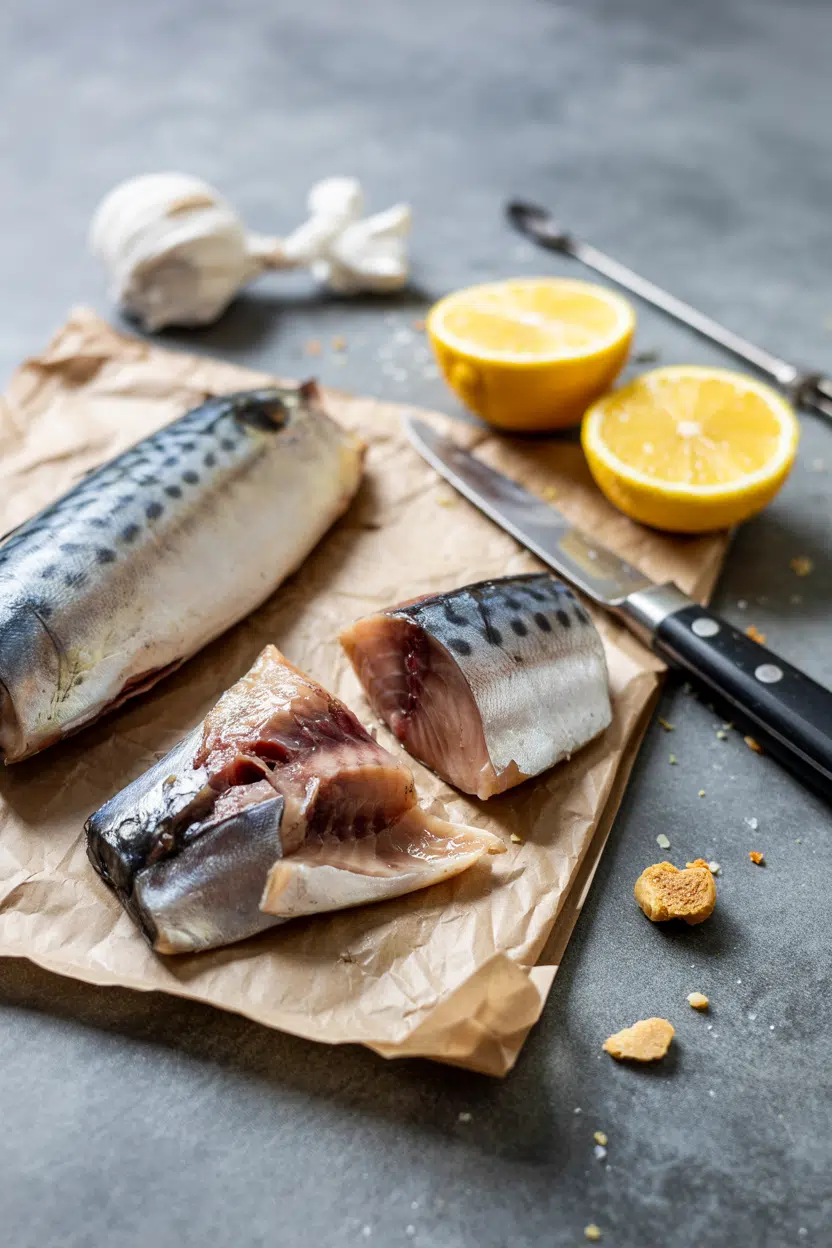
Its high oil content makes it self-basting on the grill and rich enough to anchor a meal without cream or butter.
Cooks who routinely reach for alternatives to tuna or replacements for sardine often find mackerel does the job more robustly than either.
Understanding how this fish behaves - across fresh, smoked, canned, and cured forms - changes how you shop for it, cook it, and pair it.
Mackerel is a bold, oily pelagic fish with rich umami flavor, firm-flaky texture, and a pronounced marine aroma. Sold fresh, smoked, canned, or cured, it shines with bright acids and salty condiments. Smaller species like Atlantic and Pacific mackerel are the everyday choice; king mackerel is best used occasionally.
What Is Mackerel?
Mackerel is an oily pelagic fish - meaning it lives and feeds near the ocean surface - found across the North Atlantic, Mediterranean, and Pacific coasts.
Remember it later
Planning to try this recipe soon? Save it for a quick find later!
It travels in dense schools and is one of the fastest-swimming fish in commercial fisheries.
Several species fall under the mackerel name, and they vary considerably in size and fat content. The main ones worth knowing are listed below.
- 🐟 Atlantic mackerel (Scomber scombrus) - The most common market fish in Europe and North America; moderate size, high oil, strong flavor.
- 🐟 Pacific mackerel (Scomber japonicus) - Similar to Atlantic but slightly leaner; widely used in Asian markets.
- 🐟 Spanish mackerel (Scomberomorus maculatus) - Milder and less oily than Atlantic; popular in the American South.
- 🐟 King mackerel (Scomberomorus cavalla) - Largest of the group, lowest in fat relative to size, highest in mercury; best eaten sparingly.
- 🐟 Saba - The Japanese name for chub mackerel (Pacific mackerel), central to Japanese cuisine.
All share the same visual markers: blue-green striped skin on top, silver-white belly, and dark, oily flesh. The common misspelling "mackeral" doesn't reflect any separate species - it's just one fish with many names.
What Does Mackerel Taste Like?
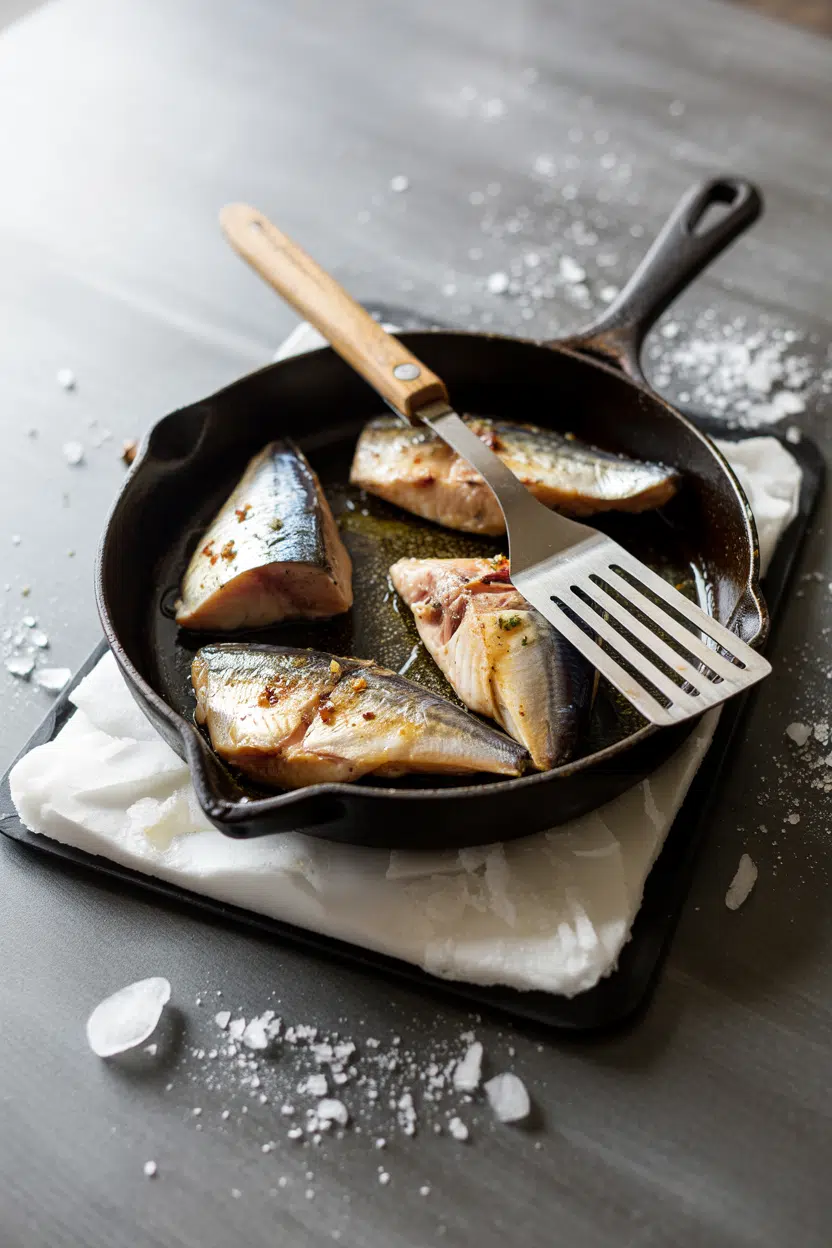
Mackerel has a strong, savory, umami-forward flavor backed by noticeable brininess and a faint sweetness at the finish. The high fat content gives it a silky, coating quality on the palate that milder fish don't produce.
Compared to sardines and anchovies - its closest flavor relatives - mackerel is meatier and less sharply saline. It's more intense than salmon but without salmon's buttery sweetness.
Cooks who regularly handle alternatives to anchovy will recognize the same umami depth here, though mackerel delivers it in a much larger, flakeable fillet rather than a dissolving paste.
Heat changes the texture noticeably. Raw mackerel (as in vinegar-cured saba shime-saba) has a denser, almost translucent bite.
Cooked through, it opens into large, moist flakes.
How to Use Mackerel
Mackerel's high fat content means it can withstand high, direct heat without drying out - a quality lean fish lacks.
It also means it actively needs acid or something sharp to balance its richness on the plate.
Knowing what to serve alongside matters: a good acid component lifts the whole dish, and you'll find plenty of tested ideas for dishes alongside mackerel worth bookmarking.
| Method | Best For | Tip |
|---|---|---|
| 🔥 Grilling | Whole fish or skin-on fillets; Japanese saba shioyaki | Score the skin before grilling to prevent curling |
| 🍳 Pan-searing | Crispy-skin fillets with lemon and capers | Dry the skin thoroughly and press flat for the first 30 seconds |
| 💨 Smoking | Flaking into salads, pâtés, or spreading on bread | Hot-smoked fillets hold together; cold-smoked slices thinner |
| 🧪 Curing/pickling | Saba shime-saba (vinegar cure) for sushi; escabeche for tapas | Use very fresh fish only - acidity doesn't kill all pathogens |
| 🫕 Braising | Tomato or mustard sauces; canned mackerel in stews | Don't overcook - the flesh breaks apart quickly in liquid |
Across cuisines, mackerel shows up differently but consistently. Japanese cooking uses it as saba in shioyaki (salt-grilled with grated daikon) and shime-saba (vinegar-cured for sushi). Scandinavian and British traditions lean on smoking and pickling, while Mediterranean cuisines - Spanish and Portuguese especially - preserve it in olive oil or work it into escabeche.
Korean cooks typically salt-grill or braise it with gochujang.
Pairings follow a clear logic: bright acids first (lemon, rice vinegar, pickled ginger), then something salty and pungent (soy sauce, mustard, capers), then a neutral starch to carry it (boiled potatoes, crusty bread, steamed rice).
Delicate floral wines and mild neutral herbs get overwhelmed; go with dill, parsley, or chives instead.
How to Buy and Store Mackerel
Fresh mackerel spoils fast. Buy it the day you plan to cook it, and look for these signals at the counter:
- Skin - Glossy, unbroken, and tightly striped. Dull or slipping skin is a red flag.
- Eyes - Clear and bulging. Sunken, cloudy eyes mean age.
- Flesh - Deep pink to reddish and springy to the touch, not mushy.
- Smell - Strong and marine, never sour or ammonia-sharp.
- Species label - Buy fish labeled by species (Atlantic, Pacific, Spanish) to know what fat level and size you're getting.
For canned mackerel, check the can for dents or bulging and verify the expiry.
At home, keep fresh mackerel on ice or in the coldest part of the fridge - proper guidance on keeping mackerel fresh is worth reviewing before you shop.
Opened canned mackerel moves to a sealed container and keeps for two days refrigerated.
For smoked mackerel, expect 5-7 days in the fridge.
If you know you won't cook it same-day, freeze fillets immediately; quality holds for 2-3 months frozen.
Where to Start With Mackerel
Mackerel rewards cooks who lean into its intensity rather than fight it.
If the strong flavor is unfamiliar, start with smoked mackerel flaked into a potato salad with lemon and dill - the acid and starch do the balancing work for you.
From there, try a pan-seared skin-on fillet.
Grilling whole and vinegar-curing for suba shime-saba are worth attempting once you're confident with the fish's behavior.
If mackerel still isn't your match, a guide to alternatives to mackerel covers the closest options by flavor and fat level.
Frequently Asked Questions
Yes. Atlantic and Pacific mackerel have among the highest fat levels of any commonly eaten fish. That fat is predominantly omega-3 fatty acids (EPA and DHA), which is why mackerel appears frequently in nutrition guidance for heart health.
Use it very fresh and pair it with sharp acid - lemon juice, rice vinegar, or capers. Cooking the skin crispy also helps, since rendering the fat reduces the raw marine intensity. Avoid low-heat, slow methods, which can amplify the smell.
King mackerel is significantly larger and carries higher mercury levels, making frequent consumption inadvisable. Atlantic mackerel is smaller, oilier relative to its size, and lower in mercury - the better everyday choice for most people.
Only if it has been commercially frozen first, which kills parasites. The vinegar cure in shime-saba changes the texture but does not eliminate parasites on its own. Sushi-grade saba at reputable Japanese restaurants has been properly frozen before service.
Mostly, though smoked mackerel is significantly higher in sodium. The omega-3 content and protein remain largely intact after smoking. Check labels on commercial smoked mackerel - salt levels vary widely by brand and style.



