
Manchego does something few cheeses manage - it holds its shape on a tapas board, melts cleanly into warm grains, and shaves neatly over pasta, all without losing its distinct sheep's milk character.
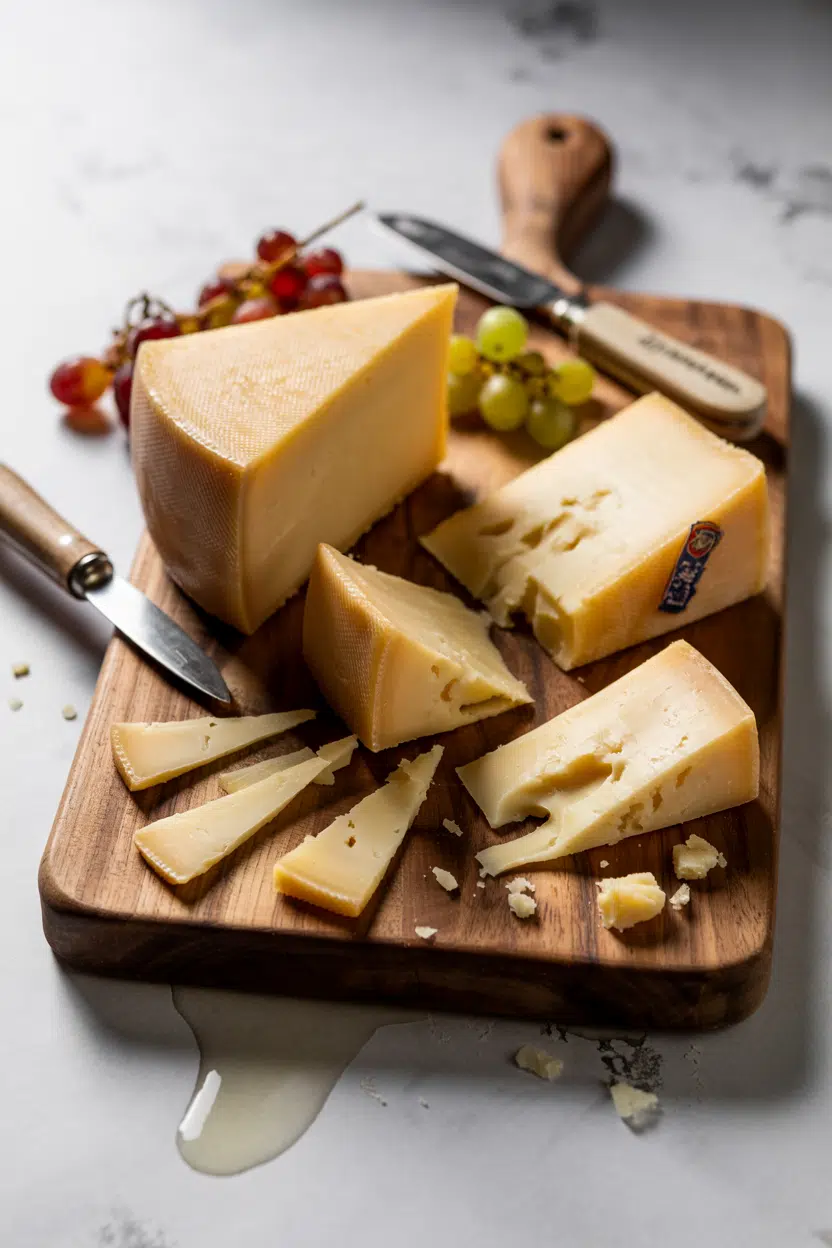
That range comes from how it ages, where it's made, and the specific breed behind every wheel.
If you've been reaching for it out of habit, understanding what makes PDO Manchego work will help you use it with intention.
Manchego is a Spanish sheep's milk cheese from La Mancha with a buttery, nutty flavor and firm texture. Aged versions grow saltier and more crumbly. It's a staple on tapas boards, works well grated over pasta, and pairs closely with membrillo and jamón ibérico.
What Is Manchego Cheese?
Manchego is produced exclusively from the milk of Manchega sheep raised on the central plateau of La Mancha, Spain.
Remember it later
Planning to try this recipe soon? Save it for a quick find later!
PDO certification means the name is legally protected - any cheese labeled Manchego must come from that region and meet strict production standards.
The rind carries a distinctive zigzag or crosshatch pattern, originally pressed in using esparto grass molds, now typically replicated with modern food-grade molds. That pattern is one of the most recognizable markers of authenticity.
Aging stage shapes everything about how Manchego behaves in cooking:
- 🧀 Joven (fresco) - Aged up to 2 months; pale, springy, mild flavor with more moisture
- 🧀 Curado - Aged 3-6 months; the most common style, firmer with developing nuttiness
- 🧀 Viejo - Aged over 1 year; deep yellow paste, crumbly texture, visible salt crystals, and an intensified savory bite
Outside Spain, it sometimes appears labeled as Queso Manchego or informally as manchego sheep cheese. Misspellings like "manchengo" are common in online searches but refer to the same cheese.
What Does Manchego Cheese Taste Like?
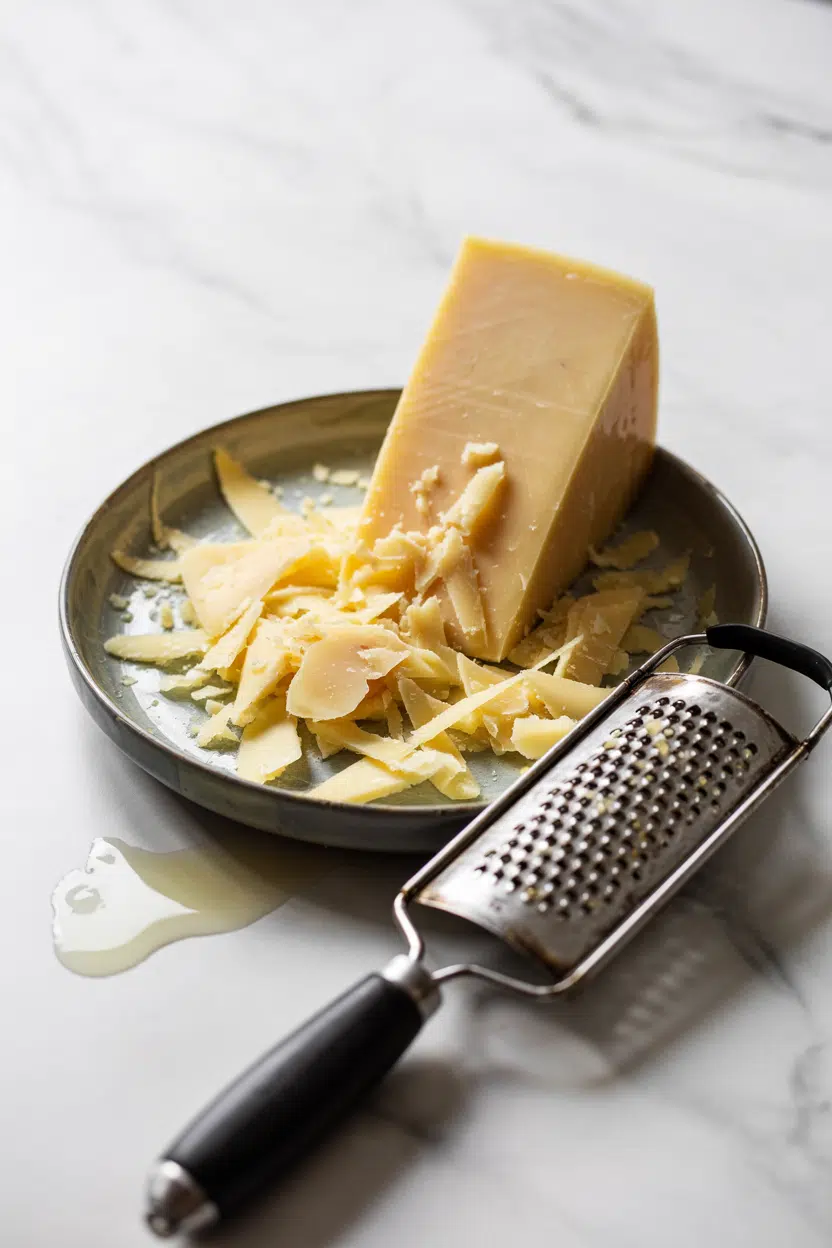
Young Manchego is buttery and mild, with just enough tang to remind you it's sheep's milk.
As aging progresses through curado and into viejo, that butter note stays but gets layered with toasted nuttiness, a clean saltiness, and a faintly earthy finish.
Compared to pecorino romano, Manchego is noticeably softer in sharpness - less aggressive salt, rounder fat, and a gentler tang.
The sheep's milk fat content gives it a richness that cow's milk cheeses at the same age rarely match.
Heat deepens the nuttiness, which is why even a brief melt makes it taste more complex than it does straight from the block.
How to Use Manchego Cheese
Manchego's natural home is a Spanish tapas spread, sliced thin alongside membrillo (quince paste), jamón ibérico, and a small pile of Marcona almonds.
The contrast between the cheese's savory salt and the sweet, dense quince paste is one of the defining flavor pairings in Castilian cooking.
Beyond the board, it works hard in warm applications.
Shaved over pasta dressed with good olive oil and black pepper, it behaves similarly to pecorino but with less sharpness.
Stirring it into risotto or warm chickpea dishes just off the heat lets it melt without breaking.
For a quick starter, pan-sear thin slices briefly until the edges brown - the fat caramelizes and the flavor shifts noticeably.
| Method | Best For | Tip |
|---|---|---|
| 🥗 Shaved/Sliced Raw | Tapas boards, pasta, salads | Use a vegetable peeler for thin curls that melt on contact with warm food |
| 🍳 Stirred In Off-Heat | Risotto, warm grain dishes, chickpea stew | Remove pan from heat first - keeps texture smooth, not grainy |
| 🔥 Light Melt / Gratination | Crostini, open-faced toasts | Watch closely - Manchego browns faster than cow's milk cheeses |
| 🍳 Pan-Seared Slices | Warm tapas, quick starters | Use a very hot dry pan; sear quickly on each side for a caramelized crust |
Good pairings extend beyond the tapas board - dry fino sherry, fresh pears or apples, and smoky pimentón all work with Manchego's profile.
If you're looking for manchego cheese in dairy recipes that move beyond snacking, there are solid options across warm dishes and entertaining spreads.
How to Buy and Store Manchego Cheese
At a cheese counter or specialty shop, ask for curado if you want the most adaptable style - it slices cleanly, shaves well, and melts without fuss.
Joven suits mild palates; viejo suits anyone who wants the cheese to carry a dish on its own.
A healthy wedge has a firm, slightly waxy paste - avoid anything sticky or dried out at the cut edge.
Shelf life depends on whether the wedge is cut or whole. For guidance on using manchego cheese for creaminess without waste, understanding its fridge timeline matters:
- Unopened / vacuum-sealed - Up to 4-6 weeks refrigerated
- Opened wedge, wrapped properly - 2-4 weeks in the fridge
- Grated or shredded - Use within 1-2 weeks; dries out quickly
Manchego freezes reasonably well but loses some texture. Freeze in small portions and use directly from frozen in cooked applications - not for boards or raw serving.
Where to Start With Manchego
Start with a curado wedge, a jar of membrillo, and whatever cured ham you can find. That combination alone shows you what Manchego actually does - salt, fat, tang, and contrast in a single bite.
Once you have that baseline, moving into warm dishes makes sense.
Manchego's moderate intensity means it rarely overwhelms, but it does need a counterpart. The nuttiness of the taste of almonds mirrors what's already in aged Manchego, which is why Marcona almonds appear on nearly every Spanish cheese board.
If Manchego isn't available, manchego cheese swaps that work in a pinch include aged Roncal or younger pecorino.
Frequently Asked Questions
Manchego is pressed from Manchega sheep's milk, then aged in humidity-controlled cellars. The distinctive rind pattern comes from molds that replicate traditional esparto grass baskets. PDO rules govern every step, from the sheep's diet to minimum aging time.
Not especially - it sits at moderate intensity. Viejo aged over a year is the sharpest style, with noticeable salt crystals and a longer finish, but it won't hit as hard as aged pecorino or a sharp cheddar.
Yes, but it needs gentle heat. Joven and curado melt better than viejo, which can turn oily under direct heat. Stir it into hot dishes off the burner, or use low oven heat for gratination.
Yes. Manchego contains no wheat or gluten-containing ingredients. Always check the label on pre-sliced or processed versions, where cross-contamination in packaging facilities is occasionally a concern.
An opened wedge keeps 2-4 weeks when wrapped in cheese paper and stored in a loosely sealed container. Grated Manchego degrades faster - use it within 1-2 weeks before it dries out and loses flavor.



