
Most cooks assume flounder is just another neutral white fish - easy to overlook, hard to get excited about.
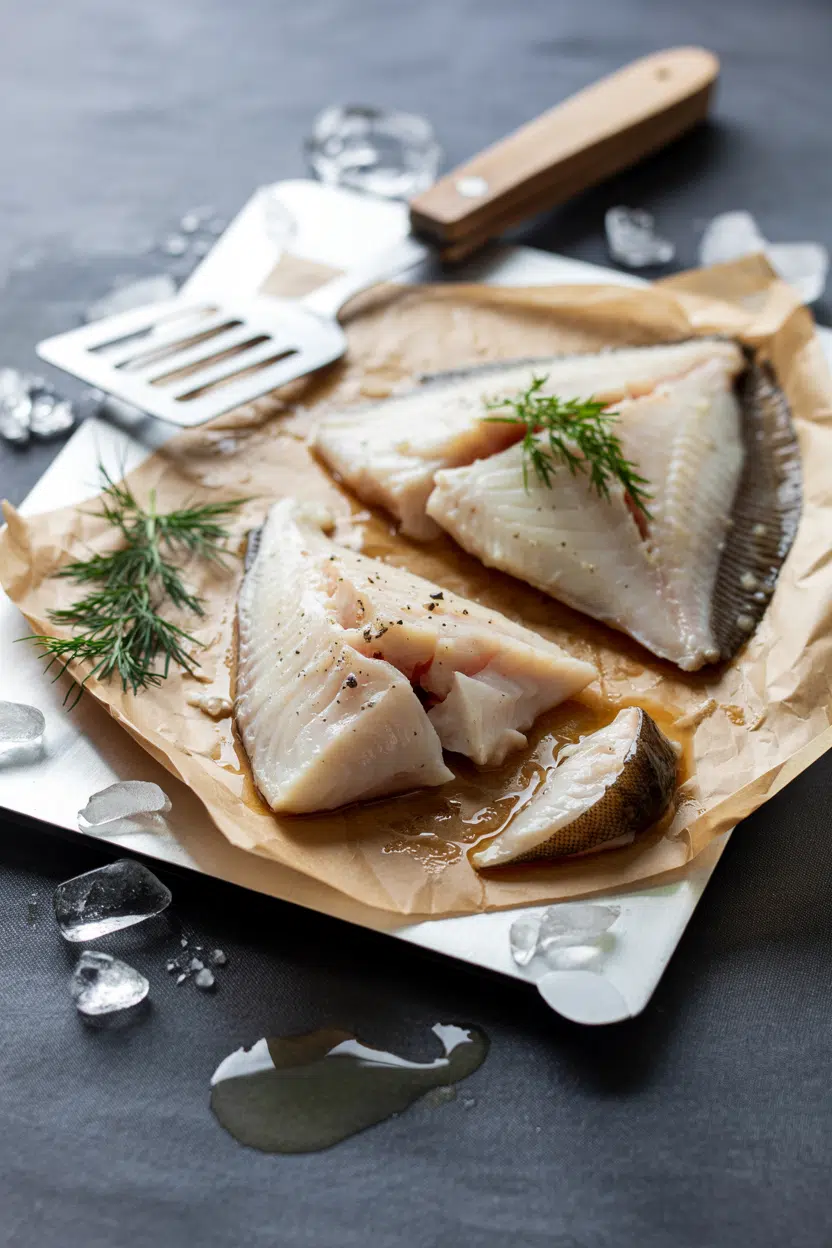
That assumption costs them one of the most forgiving fillets in the seafood case.
Flounder's mild, clean flavor is a feature, not a flaw, and understanding fish and its flavor helps explain why delicate white fish like this responds so well to acid, fat, and fast heat.
If you've been defaulting to alternatives to cod every time you want a simple weeknight fillet, flounder deserves a closer look.
Flounder is a mild, flaky flatfish with sweet, clean flavor and a delicate texture that cooks fast. It suits pan-searing, baking, and light frying. Fresh fillets last 1-2 days on ice; frozen keeps 3-6 months.
What Is Flounder?
Flounder belongs to a large family of flatfish found in coastal waters across the North Atlantic, North Pacific, and coastal Europe and Asia.
Remember it later
Planning to try this recipe soon? Save it for a quick find later!
Both eyes migrate to the same side of the head as the fish matures - a distinctive feature that makes it instantly recognizable at the fishmonger.
Several species travel under the flounder name. Summer flounder, widely sold as fluke, is the most common on the U.S. East Coast.
Winter flounder is slightly smaller and firmer. European flounder appears across British and northern European markets.
The flesh is pale white, thin, and always sold as fillets or occasionally whole for smaller specimens. Fillets are typically narrower and more delicate than those of thicker white fish like cod or haddock.
Knowing the species on the label matters - swapping out flounder works well with sole or fluke, since both share similar thickness and cook times.
- 🐠 Summer flounder (fluke) - mild, slightly sweet; most widely available in the U.S.
- 🐠 Winter flounder - firmer texture, slightly denser fillet than fluke
- 🐠 European flounder - found in British and Scandinavian markets; leaner profile
What Does Flounder Taste Like?
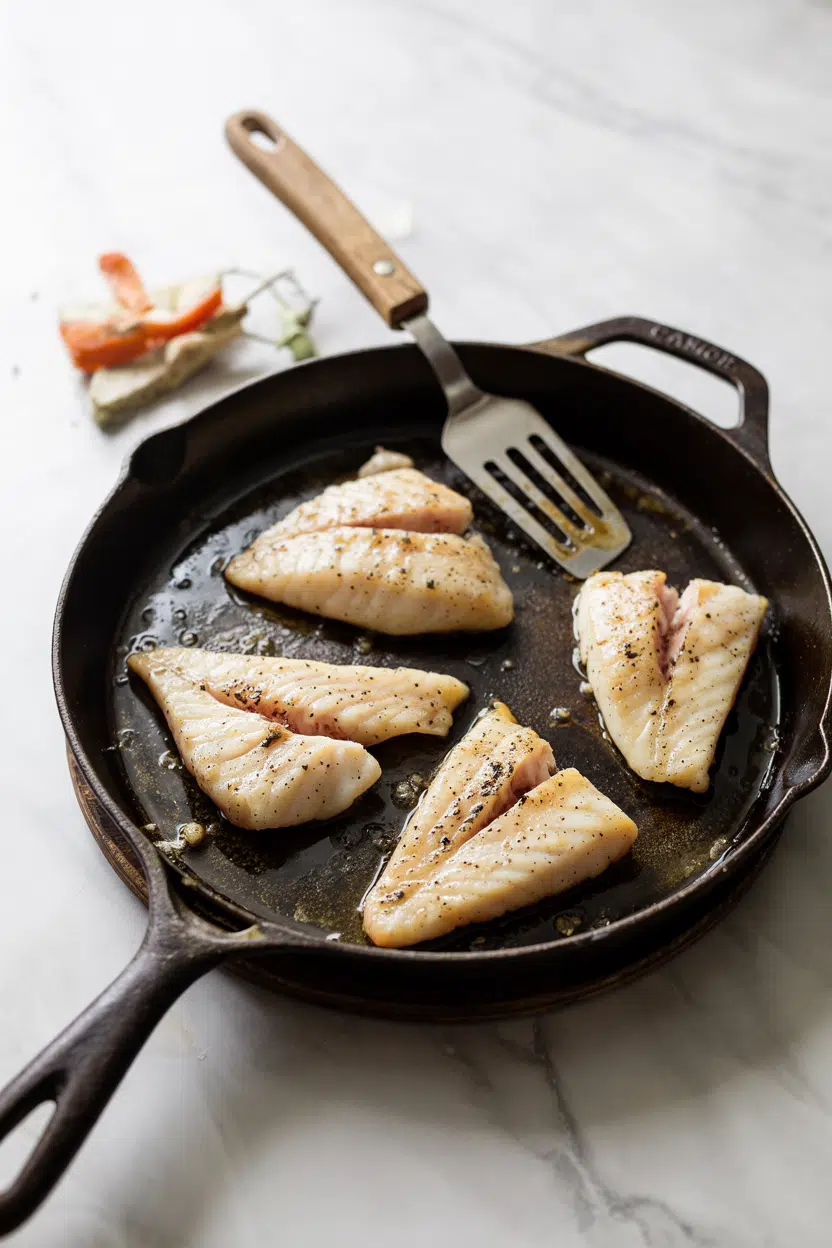
Flounder is genuinely mild - not in a disappointing way, but in the way that leaves room for everything else on the plate.
The raw flesh smells faintly oceanic, clean rather than pungent, which is one of the first signs you have a fresh specimen.
Cooked, the flavor opens up slightly: sweet and buttery, with just enough brininess to remind you it's seafood. It's softer and more subtle than sole and considerably more delicate than cod.
Heat firms the flake quickly, so the texture window between perfectly cooked and overdone is narrow.
How to Use Flounder
Flounder rewards simple, fast cooking. The thin fillet gives you very little margin for low-and-slow methods, but that same thinness means dinner is on the table in under ten minutes when the technique is right.
For wider inspiration on what to pair alongside it, dishes alongside white fish covers a broad range of sides that work.
Pan-searing is the most practical approach for weeknight cooking. A hot pan, a small amount of butter or oil, and two to three minutes per side is all it takes. The flesh picks up a light golden crust while staying moist inside.
| Method | Best For | Tip |
|---|---|---|
| 🍳 Pan-Seared | Weeknight fillets with lemon and herbs | Pat completely dry before the pan; moisture kills the crust |
| 🫙 En Papillote | Retaining moisture with white wine and capers | Seal the parcel tightly; steam does the work |
| 🍟 Light Fry | Fish and chips, breaded fillets, tacos | Use fine breadcrumbs or light batter; thick coatings overpower the fish |
| 🫗 Poached | Chowders, delicate fish stews, stuffed preparations | Use a court-bouillon; plain water leaves the flesh flat |
Flounder is central to New England seafood cooking, British seaside frying, and Japanese preparations - lightly grilled or as tempura, where its clean flavor handles light batters without disappearing.
Good pairing ideas for flounder extend from classic lemon and dill to brown butter with toasted almonds.
Note that brown butter itself is a deeply useful finish - though if you have extra on hand, a brown butter blondies recipe shows how well it translates into baking.
Avoid heavy, strongly spiced sauces; they erase everything the fish brings.
How to Buy and Store Flounder
Fresh flounder signals quality clearly. Whole fish should have shiny, moist skin, red-pink gills, and clear eyes. Fillets should be glossy, firm, and free of brown edges - any yellowing or dull surface means it's past its window.
Buy from fishmongers who label by species. "Flounder" on its own is vague; summer flounder and winter flounder are distinct fish with different textures, so knowing which one you're getting matters for cooking.
Frozen fillets are a reliable backup when fresh isn't available - storing flounder correctly covers how to freeze and thaw without wrecking the delicate texture.
- 🧊 Fresh on ice - use within 1-2 days; keep in the coldest fridge zone
- ❄️ Frozen fillets - vacuum-seal or wrap tightly in foil and a freezer bag; best within 3-6 months
- 🐟 Sole as a backup - thin fillets of sole behave almost identically; check [alternatives to sole fish](https://forkliftkitchen.com/sole-fish-substitutes/) if your fishmonger is out of flounder
Start Here With Flounder
Flounder is the right fish for cooks who want results without fuss. The narrow flavor profile is an asset - it adapts to whatever acid, fat, or herb you build around it, rather than fighting the dish.
Cook it quickly, season it simply, and don't overthink the sides. Flounder does its job the moment you stop trying to make it something bigger than it is.
Frequently Asked Questions
Flounder is mild - one of the mildest white fish available. The flavor is lightly sweet and clean with minimal brininess, making it a reliable choice for people who find stronger fish off-putting.
Both are flatfish with mild white flesh, however sole tends to have a slightly firmer texture and a more pronounced sweetness. Flounder is thinner and more delicate, making it even more sensitive to overcooking.
Yes. Flounder is lean, low in calories, and a solid source of protein, vitamin B12, and selenium. Omega-3 content is lower than oily fish like salmon, however it still contributes to a balanced diet.
Fresh flounder fillets last 1-2 days refrigerated, stored on ice in the coldest section. Don't push past that window - the texture and smell deteriorate quickly once the fillet starts to age.
Yes, and it works well. Lightly bread and pan-fry the fillets, then break into chunks for tacos with a bright slaw and a squeeze of lime. The mild flesh holds up without overpowering the other toppings.



