
Crack open a can of tomato puree and the smell hits you first - warm, faintly sweet, with that unmistakable cooked-tomato depth that fresh fruit can't match.

It's thicker than water but still pourable, a smooth concentrate that sits squarely between thin sauce and stubborn paste.
If you've ever wondered why some tomato sauces have real body without tasting pasty, tomato puree is usually the reason.
Tomato puree is a cooked, strained tomato concentrate - smoother than crushed tomatoes, thinner than paste, with bright acidity and mild umami. Use it as a ready-made tomato base for sauces, soups, braises, and stews without a long simmer.
What Is Tomato Puree?
Tomato puree is a cooked tomato concentrate made by briefly cooking ripe tomatoes, then straining and blending them into a smooth, pourable liquid.
Remember it later
Planning to try this recipe soon? Save it for a quick find later!
It originated in Mediterranean processing traditions and became a pantry staple through Italian-influenced canning methods that spread globally in the twentieth century.
You'll also see it labeled strained tomatoes or canned tomato puree, and it overlaps significantly with Italian passata - though the differences between tomato passata vs paste are worth understanding before you substitute one for the other.
The alternate spelling "tomato purée" refers to the same product.
In the tomato-product spectrum, puree sits between whole or crushed canned tomatoes and thick tomato paste. It has more body than tomato sauce but pours freely, making it the mid-strength option when you need tomato presence without fighting the consistency.
If canned tomatoes aren't available, you can explore alternatives to canned tomato that cover similar ground.
- 🍅 Cooked concentrate - briefly heat-processed, not raw
- Smooth texture - strained free of seeds and skins
- Mid-strength - more concentrated than sauce, less than paste
- Common formats - cans, cartons, and glass jars all widely available
What Does Tomato Puree Taste Like?
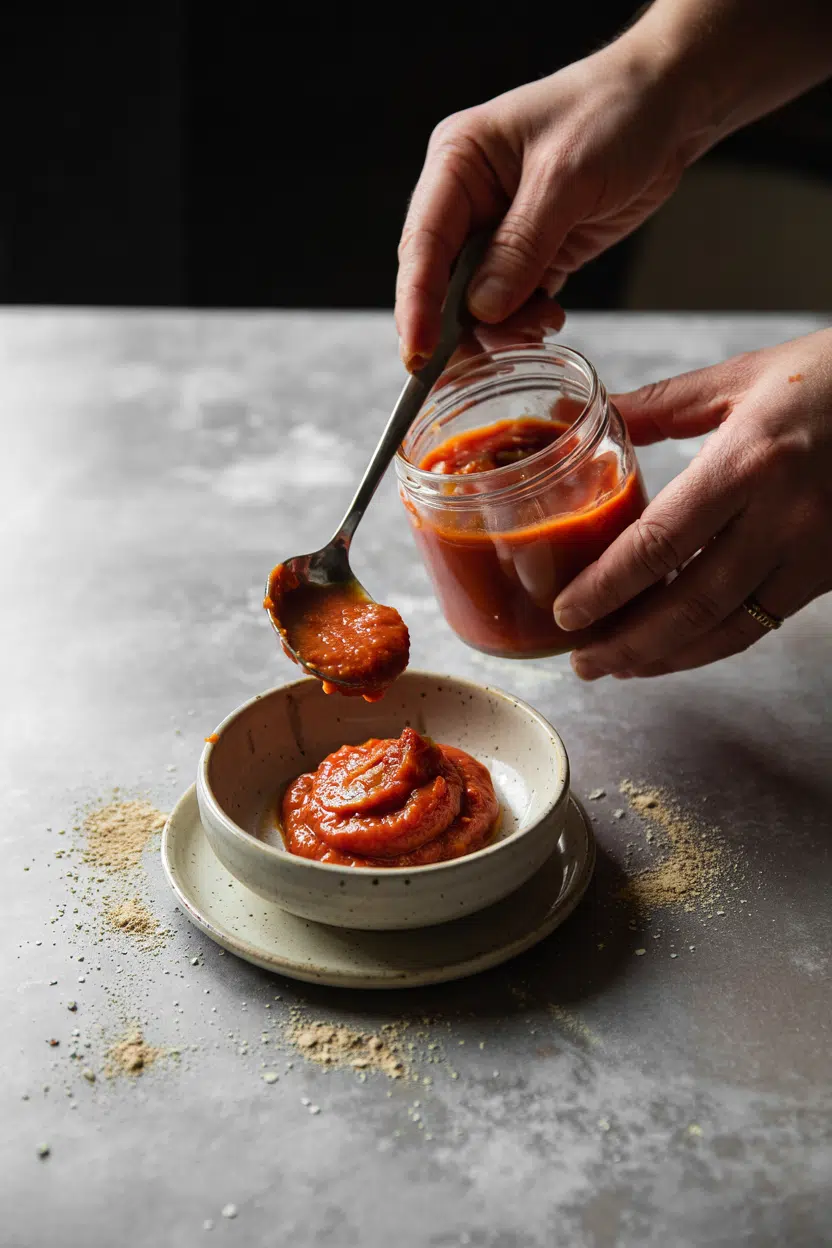
Bright, acidic, and moderately sweet - that's the baseline. The brief cooking mellows raw tomato sharpness without fully cooking off the freshness, so there's a livelier edge here than in paste.
Compared to cooked crushed tomatoes, puree is less chunky but carries similar flavor weight.
It reads lighter on the palate than paste, which has a more intense, sometimes slightly bitter, deeply reduced character.
When you reduce puree over heat, the acidity sharpens and the natural sugars concentrate - a few extra minutes in the pan shifts it noticeably toward a richer, darker profile.
How to Use Tomato Puree
Tomato puree's smooth body makes it a natural starting point for sauces where you want tomato flavor distributed evenly from the first minute.
It's thinner than paste, so it blends into liquids without clumping, and thicker than sauce, so it adds structure without watering down a braise.
| Method | Best For | Tip |
|---|---|---|
| 🍲 Simmered | Marinara, spaghetti sauce, shakshuka base | Simmer with mirepoix - understanding [the differences between mirepoix vs trinity](https://forkliftkitchen.com/mirepoix-vs-trinity/) helps here - for deeper flavor |
| 🔥 Reduced | Pizza sauce, concentrated tomato cream sauce | Stir frequently; puree scorches faster than chunkier tomato products |
| 🥣 Stirred in | Chili, stews, soups, Bloody Mary mix | Add near the midpoint of cooking so acidity can mellow |
| 🍶 Blended raw | Dressings, cold tomato-based sauces | Balance with a fat - olive oil or cream - to soften the raw acidity |
Italian and Mediterranean cooking lean on puree most heavily - it's foundational to marinara and chicken cacciatore. Middle Eastern cooks use it as the tomato base in shakshuka before the eggs go in.
Mexican-style stews and American casseroles also reach for it when they need smooth tomato body without a separate reduction step.
Olive oil and garlic are the most natural pairing, building an aromatic base before the puree hits the pan. Adding anchovy or a splash of soy sauce introduces extra umami that amplifies the tomato's own savory notes. For richness, stir in butter or cream at the end - that combination works particularly well in a quick tomato cream sauce served over pasta. Red wine deglazes a pan beautifully before puree goes in, and the acidity of each complements the other. If you need to swap it out mid-recipe, tomato puree swaps that work covers the most practical options, and swapping out tomato sauce is worth a read if you're moving in the other direction.
How to Buy and Store Tomato Puree
Look for cans or cartons labeled "tomato puree" specifically - not "tomato sauce," which is thinner and usually pre-seasoned.
A good can shows a deep, uniform red with no watery separation on opening, and the smell should be clean and fruity, not metallic.
Prefer ingredient lists that read only tomatoes, salt, and citric acid - the citric acid preserves color and acidity without affecting flavor.
If you're curious about what citric acid actually does here, preparing fruit fresh vs citric acid properly explains the preservation chemistry.
- Pantry storage - unopened cans keep up to a year in a cool, dark spot
- Refrigerate after opening - transfer to a nonreactive container; use within 5-7 days
- Freeze for longer storage - portion into an ice cube tray; frozen puree keeps 3-4 months
Where to Start with Tomato Puree
New to it? Open a can, warm two tablespoons of olive oil in a pan, add minced garlic, then pour in the puree and let it simmer for five minutes.
That alone is a usable pasta sauce.
If you cook soups or braises regularly, keep two or three cans stocked. Puree adds tomato body without the effort of processing whole tomatoes, and it integrates faster than paste.
Start with marinara or shakshuka - both are forgiving and show off what puree does at its best.
Frequently Asked Questions
Nearly, but not exactly. Both are strained, smooth, uncooked or lightly cooked tomato products, however Italian passata is traditionally uncooked or very briefly heated, giving it a slightly fresher flavor. American canned tomato puree is usually cooked a bit longer and may contain added salt or citric acid.
Yes, with adjustments. Puree is much thinner, so reduce it in a dry pan for 8-10 minutes to approximate paste's concentration. Use roughly three tablespoons of reduced puree for every one tablespoon of paste the recipe requires.
Tomato sauce is thinner and almost always pre-seasoned with herbs, garlic, or salt. Puree is unseasoned and thicker, giving you more control over flavor - it's a base ingredient, not a finished sauce.
No - it's already heat-processed and safe to eat straight from the can. However, a brief simmer noticeably improves the flavor by mellowing acidity and developing the umami compounds further.
Add water, broth, or wine a tablespoon at a time until you reach the consistency you need. Broth adds a savory note; water keeps the flavor neutral; wine introduces acidity that complements the tomato.



