Most people treat soy sauce like a one-note salt delivery system, splashing it on fried rice and calling it done.
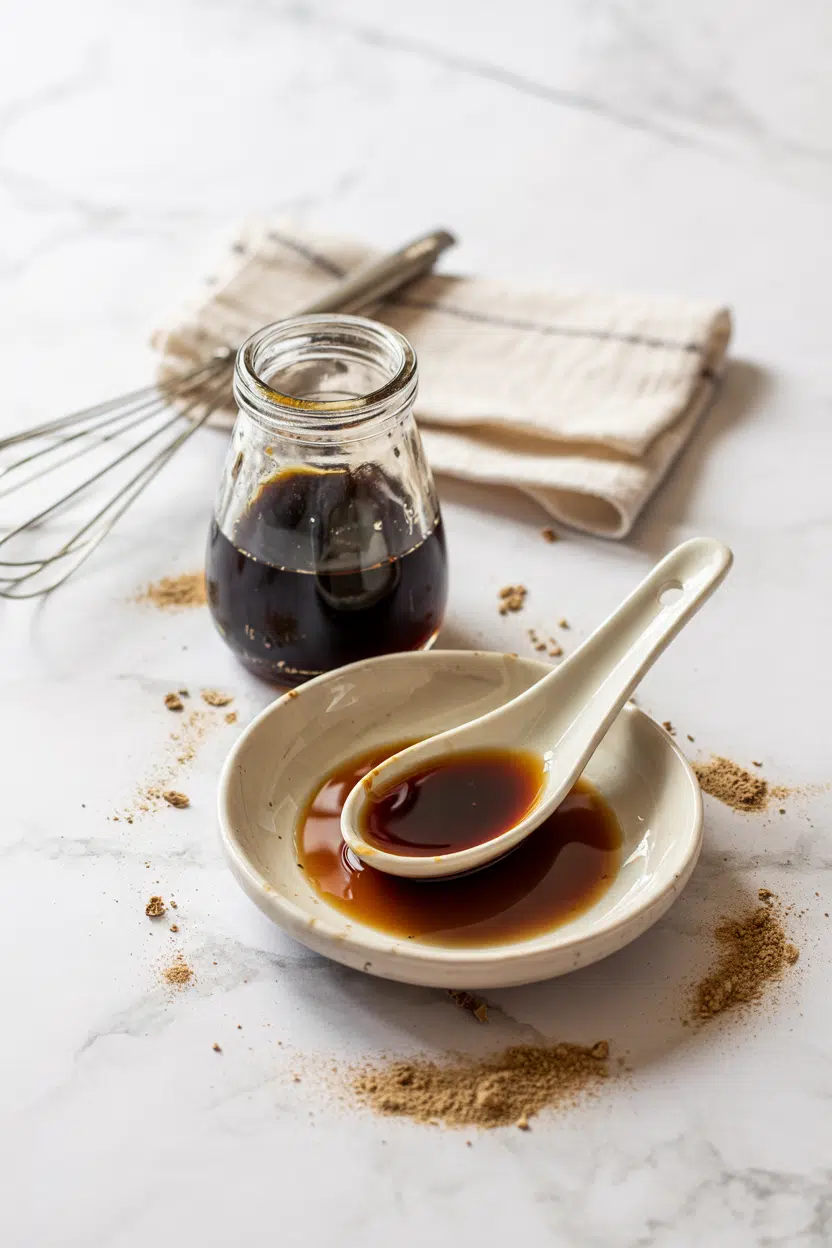
That misses what makes it genuinely hard to replace - the fermented depth that behaves differently from table salt, from the taste of fish-forward sauces, from oyster sauce swaps that work in stir-fry contexts. Soy sauce contributes umami, not just salinity, and understanding that distinction changes how you cook with it.
Soy sauce is a fermented liquid seasoning made from soybeans, wheat, salt, and koji cultures. It delivers strong umami, salt, and faint sweetness in one ingredient. Use it raw as a finisher, in marinades, or reduced into glazes. High in sodium.
What Is Soy Sauce?
Soy sauce is a fermented liquid condiment produced from soybeans, roasted grain (usually wheat), water, and salt, inoculated with koji - a mold culture that drives the enzymatic breakdown of proteins and starches.
Remember it later
Planning to try this recipe soon? Save it for a quick find later!
The result is a dark, slightly viscous liquid loaded with free amino acids, which is exactly why it tastes more complex than plain salt.
It originates from China, where early versions date back over two millennia, later spreading through Japan and Korea into distinct regional styles.
The Japanese term shoyu covers the broad category; koikuchi (dark soy sauce) is the everyday standard most bottles sold in Western markets contain.
Tamari, a wheat-reduced or wheat-free variant, has its own distinct character - for a closer look, tamari's flavor and uses explains where it diverges from standard shoyu.
- 🇯🇵 Koikuchi shoyu - the most common dark variety, balanced salt and umami
- 🇯🇵 Usukuchi - lighter in color but actually saltier, used in delicate Japanese dishes
- 🇨🇳 Dark Chinese soy sauce - thicker, slightly sweeter, used in braises and color
- Tamari - little to no wheat, richer body, often gluten-free
- Sweet soy sauce (kecap manis) - a Southeast Asian variant, heavily sweetened with palm sugar
What Does Soy Sauce Taste Like?
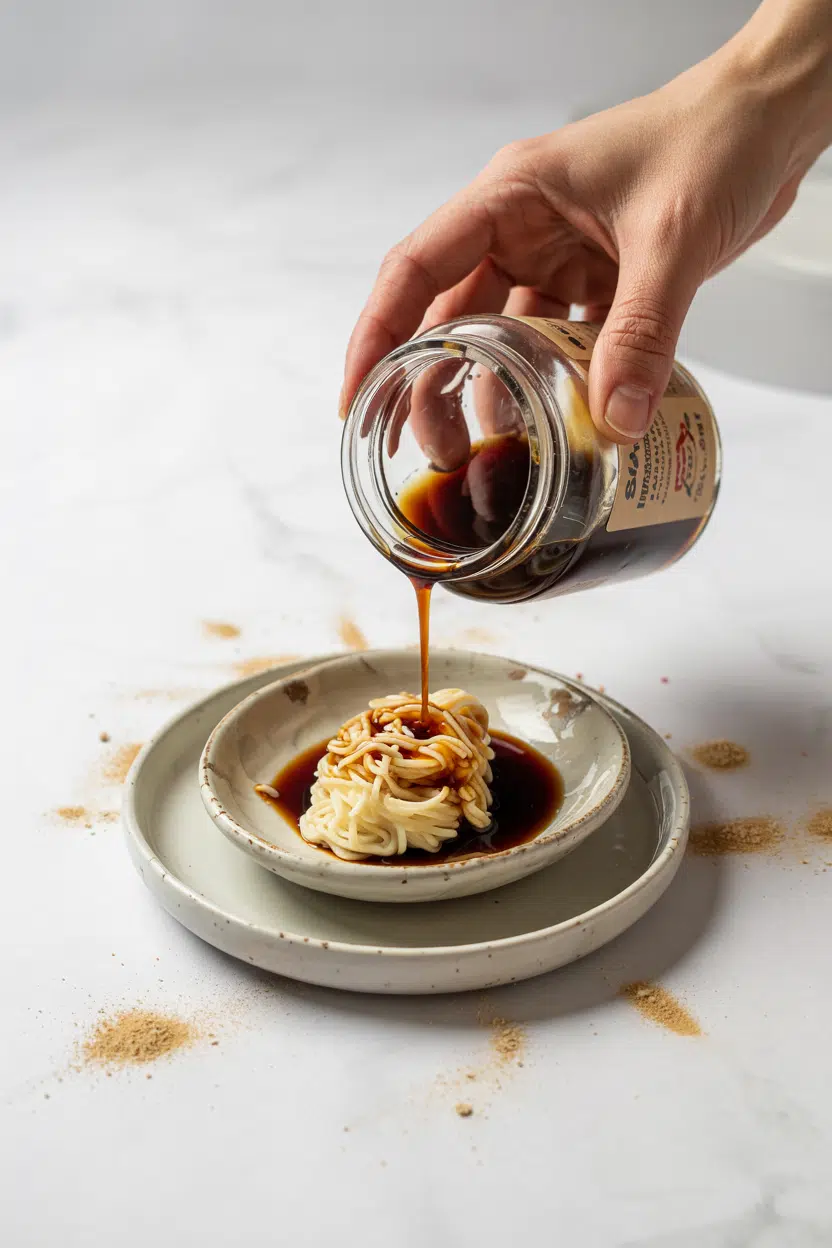
Soy sauce tastes like a concentrated savory broth with toasted grain underneath. The salt hits first, followed by a deep umami wave - that glutamate richness that coats the palate and lingers.
There's a faint sweetness from the grain fermentation, and a subtle roasted note from the wheat, which some describe as close to a very mild soy-forward miso.
Heat intensifies the salt and caramelizes the sugars, which is why a splash into a hot pan smells darker and more complex than soy sauce straight from the bottle. Raw and reduced, it behaves like two different ingredients.
If you're out and need a quick swap, soy sauce swaps that work covers what holds up and what doesn't.
How to Use Soy Sauce
Soy sauce works across a wider range of techniques than most people use it for. Marinades are the obvious entry point - mixing soy sauce with mirin and sugar for a teriyaki base is a three-ingredient formula that works on chicken, salmon, or tofu.
Beyond that, the ingredient earns its place in every cooking stage.
| Method | Best For | Tip |
|---|---|---|
| 🥗 Raw / Finishing | Sushi dipping, dressing noodles, seasoning ramen | Use light shoyu raw - koikuchi can overpower delicate fish |
| 🍳 Stir-fry | Seasoning vegetables, proteins during high-heat toss | Add with oyster sauce near the end; don't let it scorch |
| 🧂 Marinade | Chicken, beef, tofu - overnight infusion | Balance salt with mirin or citrus to avoid over-curing |
| 🔥 Glaze / Reduction | Roasted vegetables, grilled meats | Reduce over medium heat - high heat burns sugars fast |
| 🥣 Dressing | Vinaigrettes, grain bowls, slaws | Small amounts only - it dominates light dressings quickly |
Soy sauce pairs well with ginger, garlic, sesame oil, and mirin - these four together form the backbone of most Japanese and Chinese sauces.
Mushrooms and tofu absorb it particularly well because of their neutral, porous character.
A small amount also works in vinaigrettes alongside rice vinegar and a drop of sesame oil, bringing savory depth to salads without announcing itself.
Note that soy sauce clashes with delicate dairy sauces and can curdle cream-based preparations, so keep it away from those contexts.
The connection between soy sauce and fermented relatives like miso is worth knowing - if a recipe calls for miso and you're out, swapping out miso paste covers your options without losing that fermented backbone.
How to Buy and Store Soy Sauce
Look for bottles labeled naturally brewed or traditionally fermented - these have more amino acid complexity than chemically produced versions, which are made faster via acid hydrolysis and taste sharper and flatter.
Check the ingredient list: a good soy sauce needs only soybeans, wheat, salt, and water.
If wheat allergies are a concern, look for tamari specifically labeled gluten-free, since standard wheat used in soy sauce production behaves differently from what you'd find checking wheat spoilage signs in raw grain storage.
Store unopened bottles in a cool, dark pantry. After opening, a tight cap and refrigeration are non-negotiable for preserving the fermented character.
Full guidance on keeping soy sauce fresh covers both opened and unopened timelines in detail.
Start Here
Soy sauce rewards anyone who moves past the "just add more" approach. Start with naturally brewed koikuchi if you cook Japanese or Chinese food regularly - it handles everything from raw dipping to hot pan sauces.
Switch to tamari if gluten is a concern or you want a richer, slightly thicker result.
For Southeast Asian cooking, kecap manis is its own category and shouldn't be substituted directly.
Use less than you think you need. Season, taste, adjust - soy sauce is strong enough that a teaspoon often does what a tablespoon seems to promise.
Frequently Asked Questions
Both terms describe the same process. Naturally brewed soy sauce ferments soybeans and wheat with koji cultures over months. "Brewed" is simply the commercial label for traditionally fermented soy sauce, distinguishing it from chemically produced versions.
Light soy sauce is thinner and saltier, used for seasoning without coloring a dish. Dark soy sauce is thicker, slightly sweeter, and adds deep color to braises and noodles - but it's lower in sodium than the light version.
Not automatically. Traditional tamari uses little or no wheat, but only bottles explicitly labeled gluten-free are certified safe. Check labels carefully - some tamari products still include small amounts of wheat, and [about what happens to gluten during fermentation](https://forkliftkitchen.com/what-happens-to-gluten-during-fermentation/) explains why trace amounts can persist.
Yes, with caveats. Soy sauce replaces fish sauce's salt and umami but lacks its briny, fermented seafood character. In cooked dishes the gap is small; in raw dipping sauces or Thai applications, the flavor difference is more noticeable.
By weight, table salt is far saltier - roughly 40% sodium versus about 6-8% in soy sauce. However, soy sauce's umami amplifies the perception of saltiness, so food seasoned with it tastes saltier than the sodium numbers alone suggest.