
Most cooks assume harissa paste is just another hot sauce - something to shake onto food and forget.
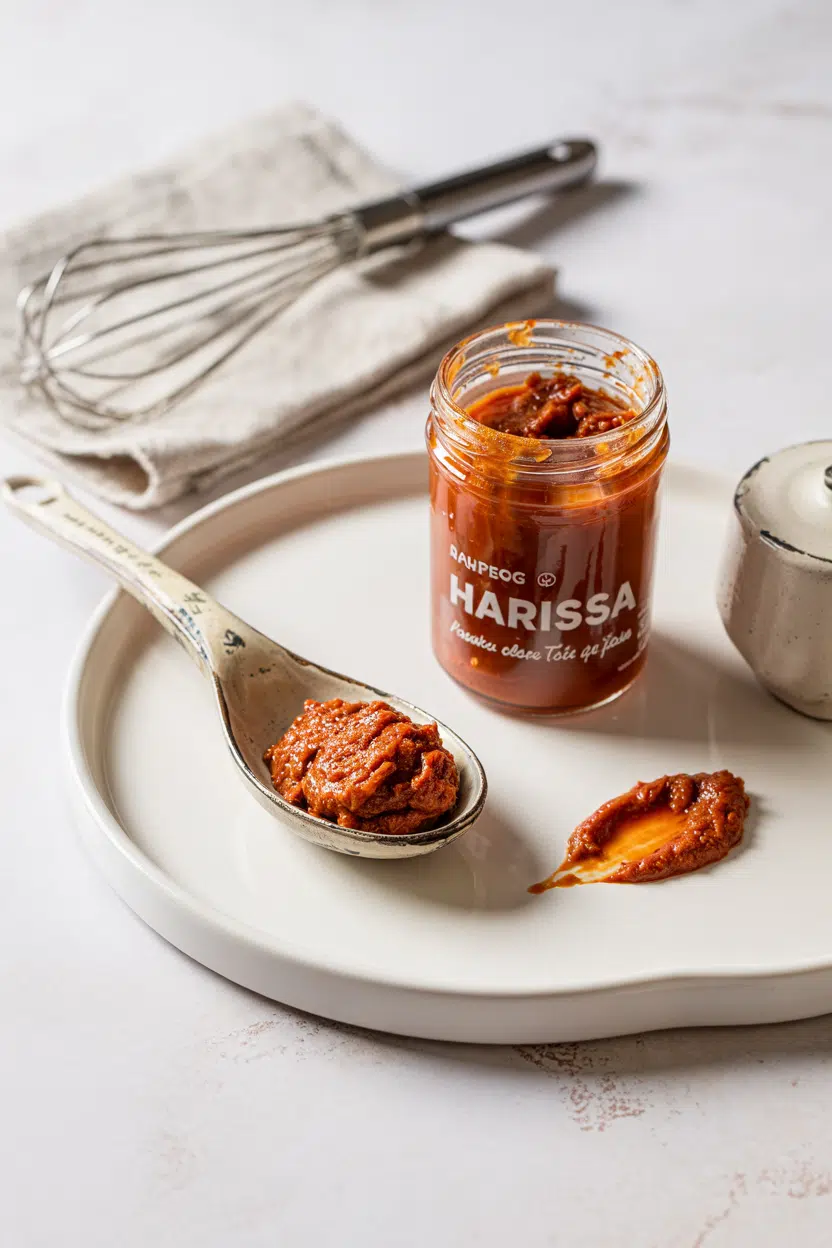
That assumption sells it short. Harissa paste is a concentrated, oil-rich chili paste from North Africa, and it behaves more like a spice blend than a condiment, adding smoke, depth, and layered heat that alternatives to sambal oelek or generic chili sauces rarely match.
Understanding what it actually does - and what it contains - changes how you cook with it.
Harissa paste is a North African chili paste built on roasted chilies, garlic, olive oil, and spices like cumin and caraway. It delivers smoky, spicy, and earthy flavor - used as a marinade base, stirred into stews, or swirled into dips. Strong heat, dense texture, long shelf life.
What Is harissa paste?
Harissa paste (هريسة) originated in Tunisia and spread across North Africa through Algeria and Morocco, where each region developed its own version.
Remember it later
Planning to try this recipe soon? Save it for a quick find later!
At its core, it's a blend of roasted or dried red chilies, garlic, olive oil, and a specific spice trio: cumin, coriander, and caraway. Some versions include preserved lemon or a splash of vinegar for acidity.
It belongs to the chili-based paste category alongside condiments like gochujang and sambal, though harissa skews drier and more spice-forward than either. You'll also see it spelled harrisa or labeled simply as Tunisian chili paste on imports.
Commercially, harissa comes in two main formats:
- 🫙 Jarred or canned paste - the most widely available form; ranges from coarse and chunky to smooth depending on the brand
- 🥫 Tube-packaged harissa - more concentrated, popular in European markets, and easier to dispense in small amounts
- 🌶️ Rose harissa - a milder Tunisian variant made with rose petals that softens the heat and adds floral notes
Tunisian harissa tends to be the hottest and most straightforward; Moroccan versions are often milder and sweeter from roasted pepper-forward recipes.
What Does harissa paste Taste Like?
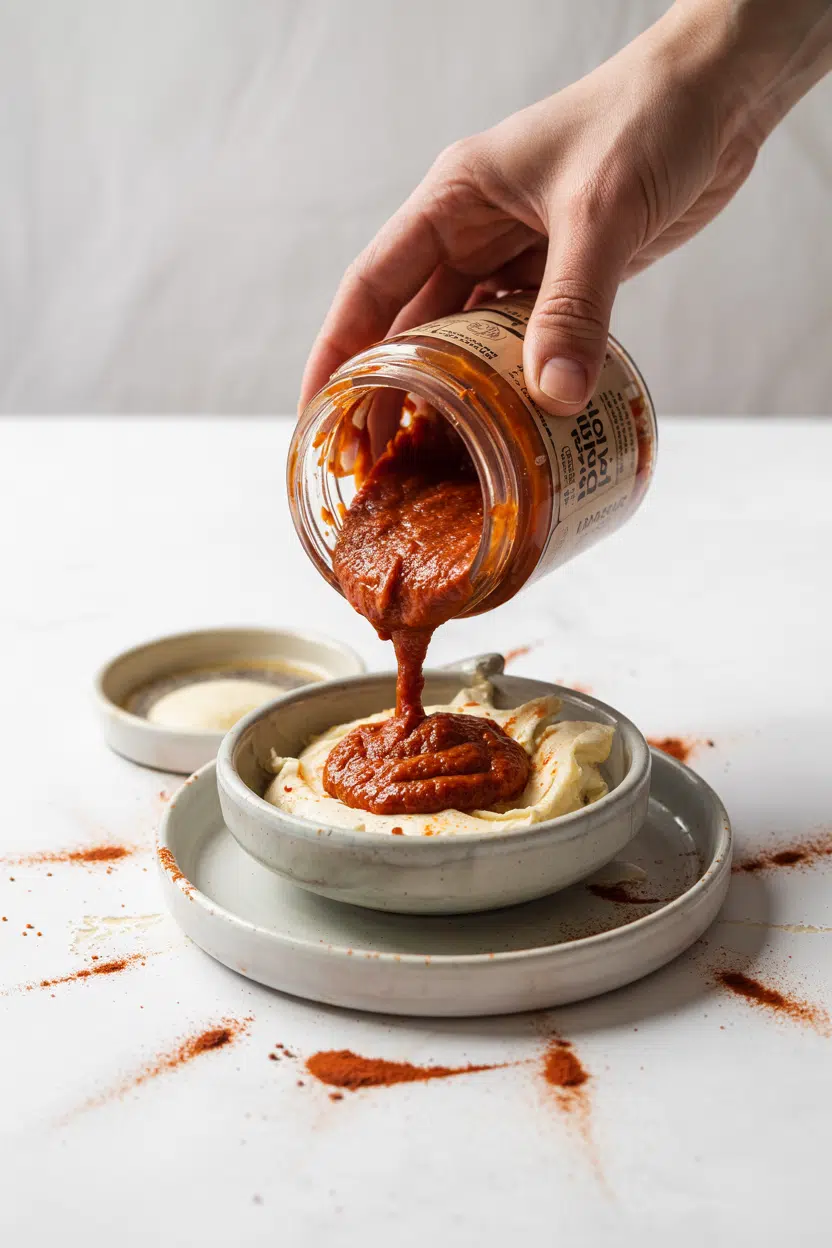
Harissa hits with layered intensity - not just heat, but smoke from the dried chilies, earthiness from cumin and caraway, and a trailing warmth that builds rather than spikes. The olive oil carries those spice oils across the palate, making the heat feel full-bodied rather than sharp.
Compared to other chili pastes, harissa tastes like a garlicky, smokier sambal or a drier alternative to gochujang - minus the fermented sweetness. When used sparingly, the tang from preserved lemon or vinegar comes forward; in larger amounts, the chili and cumin dominate.
Heat level varies by brand, however, so a small taste test before cooking saves you from overshooting.
How to Use harissa paste
Harissa works across a wider range of cooking roles than most single-ingredient condiments. It functions as a raw finishing paste, a marinade base, and a stew ingredient - each method pulling out a different aspect of its flavor.
| Method | Best For | Tip |
|---|---|---|
| 🥗 Raw / Finishing | Bread dip, swirled into hummus, dolloped on eggs | Mix with olive oil and lemon to mellow the raw garlic edge |
| 🍳 Simmered | Tomato stews, shakshuka base, soup enrichment | Fry the paste in oil for 60 seconds first to bloom the spices |
| 🔥 Marinade / Rub | Lamb chops, chicken thighs, fish fillets before grilling or broiling | Add yogurt to the marinade to balance heat and help browning |
| 🫕 Roasting | Carrots, potatoes, chickpeas tossed before oven roasting | Coat evenly and roast at high heat - the paste chars slightly and concentrates |
In Tunisian cooking, harissa folds into couscous and grain bowls to add heat and color - if you're exploring grain swaps, note that replacements for couscous carry harissa just as well as the original.
Mixed with plain yogurt, it becomes a cooling dipping sauce for roasted vegetables or a drizzle for grilled lamb.
Folded into tomato stews, it deepens the base; keeping shakshuka fresh is worth knowing if you make a big batch with harissa already stirred in.
Swirled into plain hummus and its flavor shifts dramatically with just a tablespoon of paste.
Harissa pairs tightly with lamb, chickpeas, tomatoes, eggs, and roasted vegetables. It fits comfortably into Tunisian, Moroccan, Algerian, and Levantine cooking, and has been adopted heavily in modern fusion menus.
How to Buy and Store harissa paste
Look for a deep, brick-red color with visible chili flecks and a glossy olive oil sheen on the surface. A good jar smells of toasted pepper and garlic - sharp but not sour. Avoid anything with a metallic odor or an aggressively vinegary smell, which usually signals low-quality additives rather than preserved lemon.
Storage is straightforward:
- Unopened jars - shelf-stable for several months to a year; store in a cool, dark place
- Opened and refrigerated - lasts about 2-3 months with the oil-seal method; always use a clean spoon
- Freezing - [freezing harissa paste](https://forkliftkitchen.com/harissa-paste-shelf-life/) in ice cube trays works well for long-term storage; thaw only what you need
If you're monitoring chili freshness more broadly, the same principles behind keeping chili fresh apply to any open jar of harissa.
Start Here If You're New to Harissa
If you've never cooked with harissa, start with a yogurt dip: one tablespoon of paste stirred into half a cup of plain yogurt, served alongside roasted vegetables or flatbread.
That ratio lets you taste what the paste actually does - heat, smoke, earthiness - without overwhelming a dish.
From there, work it into a marinade for chicken thighs or smear it onto lamb before grilling.
For cooks swapping between chili pastes, the harissa paste swaps that work are more nuanced than a simple 1:1 ratio - heat levels and texture differ.
Similarly, if a recipe calls for gochujang and you're reaching for harissa, check replacements for gochujang first to calibrate amounts correctly.
Frequently Asked Questions
Heat level varies significantly by brand and region. Tunisian harissa tends to be the hottest; rose harissa is noticeably milder. Always taste before using - a small spoonful tells you where a jar sits on the heat scale.
Yes, but harissa brings cumin, caraway, and garlic that most generic chili pastes don't have. Use slightly less than the recipe calls for and taste as you go - the spice profile shifts the dish noticeably.
Most harissa paste is vegan - standard ingredients are chilies, garlic, olive oil, and spices. Check labels on flavored or specialty versions, which occasionally add honey or dairy-based ingredients.
About 2-3 months in the refrigerator when kept sealed with an olive oil layer on top. Signs it's gone off: off-smell, mold, or a color that's shifted from brick-red to dull brown.
Tunisian harissa is typically hotter and more chili-forward, often made with bird's eye or baklouti peppers. Moroccan versions lean sweeter and milder, with a higher ratio of roasted red pepper and sometimes added tomato.



