Challah turns up at the breakfast table as French toast more often than at a Shabbat dinner, which says everything about how far this bread has traveled from its origins - knowing how long french toast keeps after you make it matters precisely because challah soaks custard so well it produces something closer to a pudding than a toast.

That absorbency is the whole story: an egg-enriched dough braided into a loaf that holds its shape while remaining pillowy inside, finished with a glossy egg wash that signals quality before you've even cut a slice.
Understanding bread spoilage signs keeps the loaf useful longer - challah is best in its first two days, but knowing what to watch for changes how you shop for it.
Challah is a mildly sweet, egg-enriched braided bread from Ashkenazi Jewish tradition. Its open, pillowy crumb and golden crust suit everything from a Shabbat table to French toast to bread pudding. Fresh at room temperature for 2-3 days; freezes well for up to 3 months.
What Is Challah Bread?
Challah is a braided egg bread rooted in Ashkenazi Jewish communities across Eastern Europe, traditionally served on Shabbat and major holidays like Rosh Hashanah.
Remember it later
Planning to try this recipe soon? Save it for a quick find later!
The word itself is Hebrew, referring to the portion of dough separated as an offering - the bread carries that ritual significance into every modern loaf.
It's also spelled hallah or challa, though challah is the most widely used form in English.
The defining structure is the braid, typically three to six strands of dough twisted together before baking.
That braid isn't decorative for its own sake - the tension it creates gives the crust a slightly chewier pull than a standard sandwich loaf.
Inside, the crumb is open and airy, built from a dough enriched with eggs, oil (sometimes butter), and a small measure of sugar or honey.
Two common variations appear at the holiday table. The standard loaf is an elongated braid, while round challah - coiled into a spiral - is served at Rosh Hashanah to symbolize the cycle of the year.
Raisin challah, sweetened further with honey and studded with dried fruit, sits closer to a dessert-style bread and is common at sweet holiday meals.
What Does Challah Bread Taste Like?
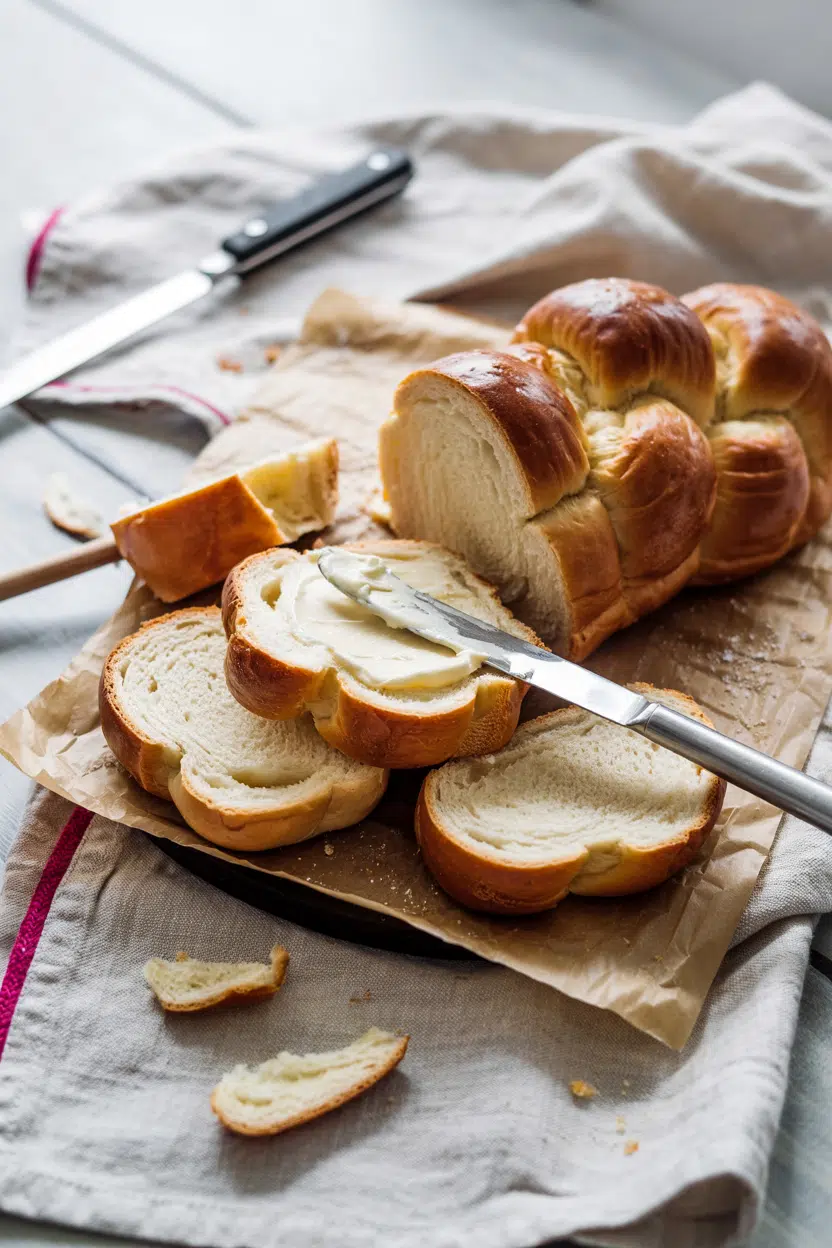
Challah reads as mildly sweet with a clean egg richness - not sugary, but with enough sweetness that it reads as a distinct background note against the yeasty dough.
The eggs contribute a buttery depth without the bread actually needing much butter in the dough itself. That subtle layering is what makes it interesting.
The closest comparison is brioche, however challah is less buttery and slightly less sweet - where brioche leans into fat, challah holds back just enough to stay versatile.
Toasting a slice deepens the egg notes and adds a faint caramel edge at the crust where the egg wash has crisped.
Day-old challah loses some of its springiness but gains in density, which is exactly why it absorbs custard so efficiently for French toast or pudding.
How to Use Challah Bread
Fresh challah needs little beyond the table.
At a Shabbat or holiday meal, it's sliced and served with honey or good olive oil for dipping, often as part of a larger spread alongside smoked fish, soft cheeses like ricotta or cream cheese, and cured meats.
If you're extending the spread further, exploring challah bread in grain dishes opens up a wider menu around it.
The bread's custard-soaking ability is where it earns most of its weekday work.
French toast made with challah is thicker and richer than versions made with sandwich bread - the open crumb pulls the egg-and-milk mixture deep into the slice. Bread pudding is another natural fit; torn challah pieces soak in a sweetened custard before baking into something dense and custardy, and there are solid ideas for dishes alongside bread pudding if you're building a full brunch spread.
Even a belgian yeast waffles recipe shares that same yeast-risen richness that makes challah so at home on the breakfast table.
Beyond sweet applications, challah holds up well as a sandwich base - its mild sweetness works with egg salad, smoked salmon, or deli-style fillings without competing. Cubed and toasted, it becomes rich croutons or absorbent stuffing for savory bakes.
Strongly acidic sauces or very spicy fillings tend to overwhelm its subtle profile, so keep pairings on the gentler side.
| Method | Best For | Tip |
|---|---|---|
| 🍽️ Fresh-sliced | Shabbat table, dipping in honey or oil | Serve within 24 hours for peak crust gloss |
| 🍳 Soaked & baked | French toast, bread pudding | Use day-old loaf for better custard absorption |
| 🥪 Sliced for sandwiches | Egg salad, smoked fish, deli fillings | Toast lightly to firm up the crumb |
| 🧊 Cubed & toasted | Croutons, stuffing for savory bakes | Dry cubes in a low oven before using |
How to Buy and Store Challah Bread
A well-made loaf has a deep golden, glossy braid - that shine comes from egg wash applied before baking, and it's a reliable indicator of technique.
Squeeze the loaf gently at the bakery; the crumb should spring back firmly without feeling gummy or dense.
Skip anything with a dry, cracked crust or a faint sour smell.
When a substitute is needed, swapping out challah bread for brioche or milk bread works in most applications.
Store challah loosely wrapped in a paper bag or linen bread bag at room temperature for up to three days.
Pre-sliced portions can go in the fridge for up to a week, though the crumb will firm.
Freeze whole or sliced in a zip-seal bag for up to three months - slice before freezing for easier portioning.
Watch for challah bread spoilage signs like mold at the braid seams or a stale, off smell before using older loaves.
The egg wash gloss fades after day two, which is a useful visual cue that freshness is slipping.
For loaves made with butter rather than oil, also check whether the comparing milk wash vs egg wash options matters for the recipe you're baking - it affects final gloss and crust color.
Start With the Loaf, Then Decide
If you've never baked with challah, buy a fresh loaf and slice it plain first - the egg richness and mild sweetness tell you exactly what every recipe using it is working with.
Day-old loaves point you directly toward French toast or bread pudding.
- 🛒 Buying fresh - look for a glossy braid, springy crumb, and no sour smell
- 🍳 For French toast or pudding - use a day-old loaf and let it absorb fully before cooking
- 🥪 For sandwiches - toast lightly to stabilize the crumb under wet fillings
- ❄️ For longer storage - slice and freeze immediately rather than refrigerating the whole loaf
Frequently Asked Questions
No. Both are enriched breads, however brioche relies heavily on butter for richness while challah uses oil and eggs. Challah is less fatty, slightly less sweet, and traditionally dairy-free in kosher kitchens where meat is also served.
Yes - challah freezes well for up to three months. Slice it before freezing so you can thaw individual pieces without defrosting the whole loaf.
The braid carries symbolic meaning in Jewish tradition, representing intertwined themes like love and unity on Shabbat. It also creates extra surface area for the egg wash, producing a more pronounced golden crust than a plain loaf would.
Stale challah is ideal for bread pudding, French toast, and stuffing because its firmer crumb absorbs custard or broth without falling apart. It also cubes well for croutons - dry the pieces in a low oven for 15 minutes first.
Often, yes. Traditional challah uses oil rather than butter, making it pareve under kosher dietary law and suitable for meals that include meat. Check the label on store-bought loaves, since some bakeries add butter for richness.