
Most people spot kohlrabi at a farmers' market, assume it's some kind of alien turnip, and walk right past it.
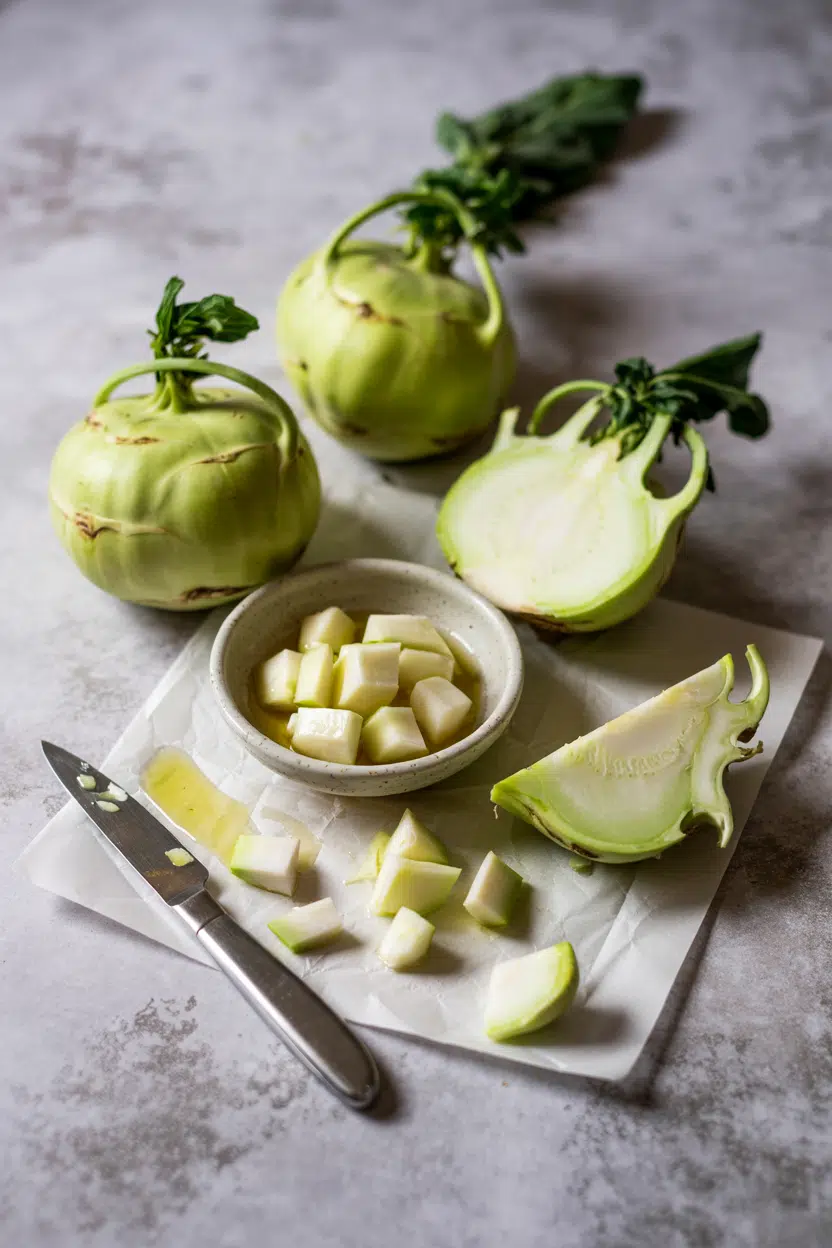
That's the wrong call - kohlrabi isn't a root at all, but a swollen stem that sits above the soil, and its flavor is far gentler than its strange silhouette suggests.
If you've ever swapped in radish swaps that work or experimented with swapping out broccoli in a recipe, kohlrabi deserves the same attention.
Kohlrabi is a mild, crisp stem vegetable in the cabbage family with a lightly sweet, peppery flavor. It works raw in slaws, roasted until creamy, or braised as a potato stand-in. Small bulbs are sweetest. Leaves are edible and cook like greens.
What Is kohlrabi?
Kohlrabi (Brassica oleracea var. gongylodes) is a crucifer in the cabbage family, cultivated for its enlarged above-ground stem rather than its roots or florets.
Remember it later
Planning to try this recipe soon? Save it for a quick find later!
It originated in Central Europe - most likely northern Germany and the Balkans - and remains a fixture in German and Eastern European cooking.
The name comes from the German Kohl (cabbage) and Rabi (turnip), which explains the common alias "German turnip."
Other names include knoll-kohl and kohl rabi, though the single-word spelling is now standard.
Two main varieties exist: pale green and purple. The purple skin is striking, however both have the same ivory-white flesh inside with nearly identical flavor.
Bulbs range from golf-ball to softball size; the smaller ones (roughly 2-3 inches across) are consistently more tender and sweet. Older, larger bulbs can turn woody at the core.
The entire plant is edible.
Leaves cook like collards or kale, and the swollen bulb is the main event - peeled and used raw or cooked.
Unlike turnip, which is a true root, kohlrabi's bulb is botanically a stem, which matters for texture: it's denser and less fibrous than turnip flesh.
If you're weighing options, our guide to replacements for green cabbage covers several related brassicas worth knowing.
What Does kohlrabi Taste Like?
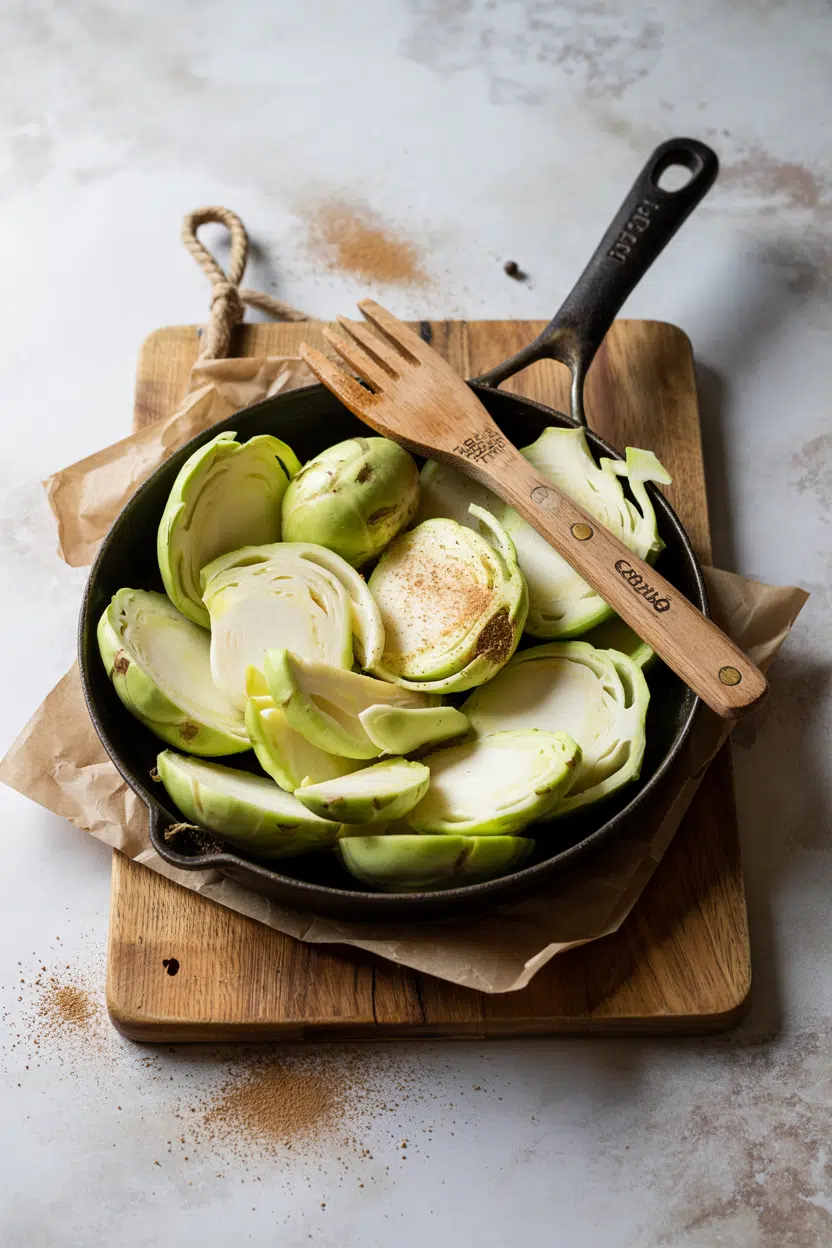
Kohlrabi sits at the mild end of the brassica spectrum. Raw, it tastes like a cross between a cabbage heart, a young broccoli stem, and a mild radish - green, faintly peppery, with a quiet sweetness underneath.
There's a slight nuttiness that comes through when you eat it fresh and cold.
Heat changes it noticeably.
Roasting concentrates the natural sugars and softens the pepper notes, producing a tender, slightly creamy interior with caramelized edges.
Braising takes it further toward mellow and starchy - closer in feel to a soft potato than a crunchy crudité.
It doesn't develop the sharp bitterness that cabbage or turnip can under prolonged heat, which makes it more forgiving in the oven.
How to Use kohlrabi
Raw kohlrabi is the fastest route in.
Peel the bulb, slice or julienne it thinly, and it's ready for slaws - it pairs naturally with apple and carrot for crunch and bright contrast, plus a splash of lemon or vinegar to lift the green notes.
Understanding what pairs with broccoli gives useful crossover ideas, since many of the same partners (acid, butter, mustard) work equally well here.
Roasting is where most cooks become converts. Cut the bulb into cubes or wedges, toss with oil and salt, and roast at high heat until the edges brown.
The interior turns soft and slightly creamy while the outside crisps - caraway or dill alongside pork fat is a classic northern European combination worth trying.
| Method | Best For | Tip |
|---|---|---|
| 🥗 Raw | Slaws, salads, crudités | Julienne thin; dress just before serving to keep crunch |
| 🔥 Roasted | Side dishes, sheet-pan meals | High heat (425°F/220°C); don't crowd the pan |
| 🍲 Braised | Mash, potato substitute sides | Finish with butter or cream to round the flavor |
| 🥘 Sautéed | Sabzi, hash with leaves and bulb | Add leaves last - they cook faster than the bulb |
| 🧇 Fritters | Lighter latke-style starch substitute | Squeeze out moisture after grating before mixing |
| 🫙 Pickled | Condiment, sandwich topping | Quick-pickle in vinegar brine; ready in 30 minutes |
Don't discard the kohlrabi leaves. Sautéed with bacon or pancetta, they cook like sturdy greens - slightly chewy, mildly bitter, and good alongside the bulb.
In Indian cooking, both bulb and leaves go into a spiced sabzi with mustard seeds and cumin, a regional preparation common in parts of northern India.
How to Buy and Store kohlrabi
At the market, size is your best guide. Choose bulbs that are firm and smooth-skinned, roughly 2-3 inches in diameter - these will be sweeter and less likely to have a woody core.
Avoid bulbs with deep cracks, soft spots, or shriveled skin. If the leaves are still attached, check them: bright, upright greens mean the kohlrabi was harvested recently.
Store the unwashed bulb in a perforated plastic bag or your crisper drawer. Keep the leaves separate - they wilt faster than the bulb and should be used within 2-4 days.
Our full guide on how long kohlrabi keeps breaks down fridge and freezer windows in detail.
- 🥬 Whole bulb - up to 1-3 weeks refrigerated, unwashed
- 🔪 Cut or sliced - 3-5 days in an airtight container
- 🌿 Leaves - 2-4 days; store wrapped in a damp paper towel
Start Here With Kohlrabi
New to it? Buy one small green bulb and eat half raw - thinly sliced with salt, lemon, and olive oil.
Roast the other half at high heat with a little butter. Those two preparations reveal everything this vegetable does well, and they take under 30 minutes combined.
If you can't find it, check our list of replacements for kohlrabi - several brassica neighbors get close. For readers coming from turnip territory, the guide to alternatives to turnip explains where kohlrabi fits in that swap.
And if you want a sharper flavor reference point, what makes radish distinct puts kohlrabi's milder pepper notes in useful context.
Frequently Asked Questions
Yes - raw is one of its best formats. Peel the outer skin, then slice or grate directly into salads and slaws. The crunch holds well for several hours after dressing.
Kohlrabi is noticeably milder and sweeter than turnip. Turnip has a sharper, more bitter edge - especially when raw - while kohlrabi stays gentle and green-tasting at any size.
Sauté them in oil or butter over medium-high heat for 3-5 minutes, like you would kale or collards. They're slightly more tender than kale, so they need less time.
It's a solid source of vitamin C, dietary fiber, and potassium with very few calories. As a crucifer, it also contains glucosinolates - phytochemicals studied for their health associations.
Peel the bulb with a sharp knife or vegetable peeler, then cut into 1-inch cubes or wedges. Toss with oil, salt, and any spice, then roast at 425°F (220°C) for 25-30 minutes.



