
Beef tenderloin hits the plate with a softness that stops you mid-bite. It's not the loudest cut on the table - no heavy fat cap, no chewy connective tissue - just a clean, mild beefy flavor and a texture so fine-grained it almost dissolves.

If you've eaten filet mignon at a steakhouse or carved a whole roast at a holiday dinner, you already know what this muscle can do.
Beef tenderloin is the psoas major muscle from along the spine - prized for extreme tenderness and a mild, clean beefy flavor. It's lean, fine-grained, and suited to high-heat cooking. Best used whole for roasting or sliced into filet mignon steaks for pan-searing.
What Is Beef Tenderloin?
Beef tenderloin is the psoas major, a long, narrow muscle that runs along either side of the cow's lumbar spine.
Remember it later
Planning to try this recipe soon? Save it for a quick find later!
Because the animal rarely uses this muscle for movement, it develops almost no connective tissue - which is exactly why it's the most tender cut on the whole carcass.
Butchers sell it whole, trimmed of silverskin and external fat, or pre-portioned. The whole loin has three sections: the thick butt end, the center (the most uniform for slicing), and the tapered tip.
You may also see it labeled as filet, eye of tenderloin, or psoas major at specialty butchers.
When butchers cut the center into individual steaks, those become filet mignon. Thicker center-cut rounds tied with butcher's twine are called tournedos, a classic of French service.
Understanding this structure helps when buying - center-cut portions cook more evenly than tip sections. Unlike a flank steak, which has long muscle fibers and benefits from marinating, tenderloin needs no such treatment to stay tender.
What Does Beef Tenderloin Taste Like?
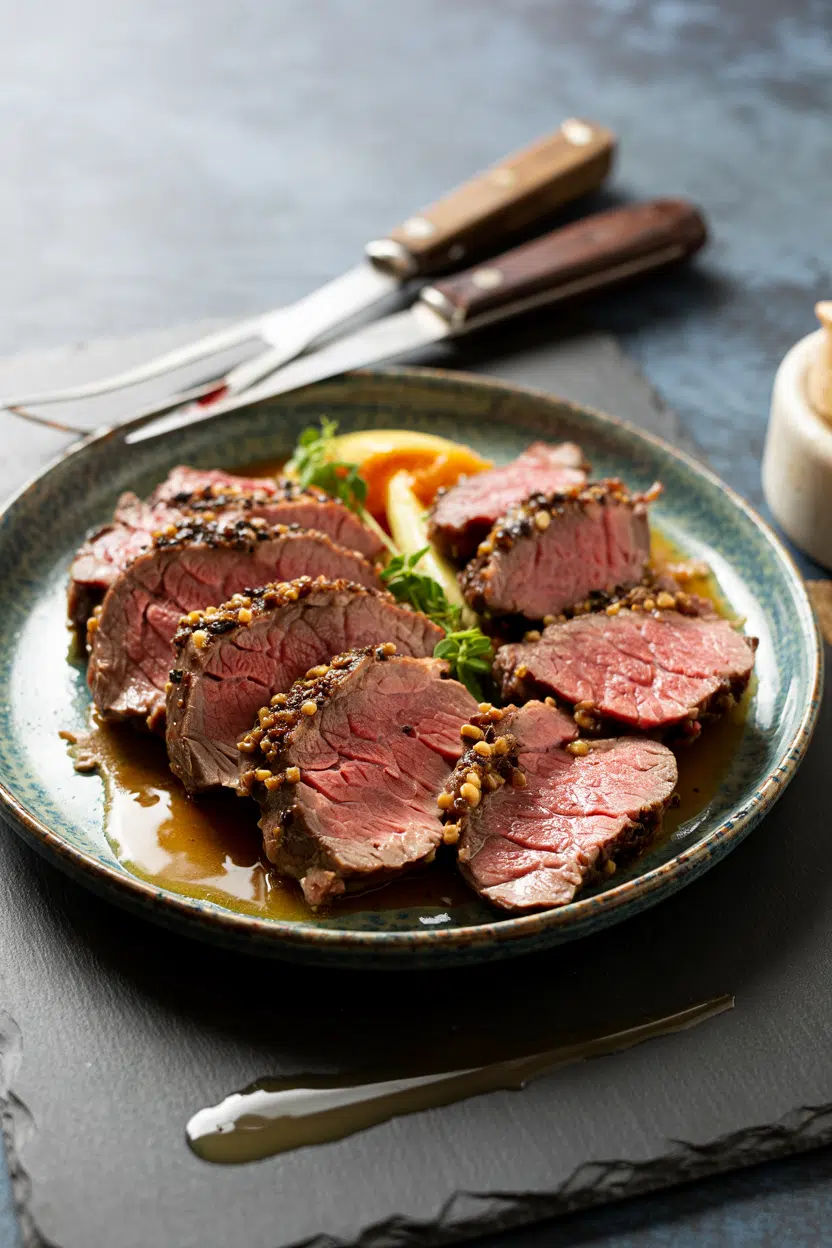
The flavor is mild - noticeably less beefy than a hanger steak or chuck, and leaner than a ribeye. Think of it as a clean umami foundation: gentle, slightly buttery, and without any gaminess or pronounced fat flavor.
Heat transforms the surface while leaving the interior soft. A hard sear creates a Maillard crust with a lightly nutty, roasted aroma - this exterior contrast is what makes a well-cooked filet mignon memorable, since the interior alone is quiet in flavor.
Without sauce or seasoning, tenderloin reads as elegant but understated.
How to Use Beef Tenderloin
This is a cut that responds best to high, fast heat - searing, roasting, or grilling - then a proper rest. Long, slow braises waste it entirely; the muscle has no collagen to break down, so extended heat only dries it out.
| Method | Best For | Tip |
|---|---|---|
| 🔥 Whole Roast | Holiday centerpiece, dinner service portions | Tie with twine for even shape; rest 10-15 min before carving |
| 🍳 Pan-Sear | Filet mignon steaks, medallions with pan jus | Pat completely dry; finish with compound butter in the pan |
| 🥐 Pastry-Wrapped | Beef Wellington, bacon-wrapped filet | Sear first to build crust; chill before wrapping to prevent soggy pastry |
| 🥩 Raw / Thin-Sliced | Carpaccio, quick-seared thin strips | Use center-cut only; freeze briefly for cleaner slicing |
| 🔆 Reverse Sear | Even doneness edge-to-edge on thick cuts | Roast low (250°F) first, then blast in a screaming-hot pan |
French cuisine built a canon around this muscle - tournedos Rossini, béarnaise-sauced filet mignon, and bordelaise reductions all come from that tradition. American steakhouses rely on it as the centerpiece steak, while British roast service often presents it whole alongside root vegetables and jus.
Pairing it with rich, fatty elements compensates for its leanness: butter and garlic, salty prosciutto or bacon wrapped around the exterior, and creamy peppercorn or béarnaise sauces all do this well.
For what to serve alongside a whole tenderloin roast, pommes Anna and mashed potatoes are the classic calls. Herb sprigs - thyme and rosemary particularly - belong in the roasting pan.
How to Buy and Store Beef Tenderloin
Look for a whole loin with uniform pale-red color and a smooth, slightly moist surface. Avoid any with grey patches, a strong odor, or visible silverskin still attached - silverskin doesn't break down with heat and will shrink, pulling the meat out of shape.
Storage is straightforward but the timeline is short. Keep raw tenderloin in the coldest part of the fridge - vacuum-sealed packaging extends life longer than loose wrapping, for the same reason vacuum-sealed proteins in general resist spoilage better.
Raw whole loin keeps 2-3 days refrigerated; frozen, it holds quality for up to 12 months. For more detail on shelf life across different storage conditions, see our beef tenderloin freshness guide guide.
- Raw, refrigerated - 2-3 days, tightly wrapped or vacuum-sealed
- Raw, frozen - up to 6-12 months in airtight packaging
- Cooked, refrigerated - 3-4 days; reheat gently to avoid toughening
Where to Start With Beef Tenderloin
Start with a center-cut filet mignon if you're new to the muscle. Two inches thick, patted dry, seared hard on both sides in a hot cast-iron pan, finished with butter and thyme.
That single cook shows you everything this cut does well.
Once you're comfortable with doneness control, move to a whole roast. The reverse sear method - low oven first, hot sear at the end - gives you the most even medium-rare edge to edge.
If you want a benchmark for how beef tenderloin alternatives compare in texture and flavor, that whole roast is the best reference point.
Frequently Asked Questions
Filet mignon is a steak cut from the beef tenderloin - specifically from the center or narrow end of the loin. The tenderloin is the whole muscle; filet mignon is one portioned slice of it.
It's one of the leaner premium beef cuts - far less intramuscular fat than ribeye. That's why recipes often wrap it in bacon or finish it with butter, compensating for the lower fat content.
Tenderloin is significantly more tender - it's the least-worked muscle on the animal. Ribeye has more marbling and stronger flavor, however, so the choice depends on whether you prioritize texture or taste.
Yes - butterfly the loin open so it lies flat, or grill it whole over two-zone heat. Start over indirect heat, then sear over direct flame at the end for crust development.
Pull it from the oven at an internal temperature of 125-128°F and rest it - carryover heat will bring it to 130-135°F (medium-rare). A probe thermometer is non-negotiable for accuracy on a whole loin.



