
You spot a small jar labeled "allspice" at the grocery store and reach for it, assuming it's a premixed blend - cinnamon, clove, nutmeg, the works. It isn't. Allspice is a single spice, the dried berry of the Pimenta dioica tree, and it naturally carries those layered warm-spice notes on its own.

Whether you've been avoiding it out of confusion or using it without fully understanding what it does, this guide covers everything worth knowing.
Allspice is a dried Caribbean berry that tastes like clove, cinnamon, and nutmeg combined. Ground or whole, it anchors jerk seasoning, pickling brines, baked goods, and mulled drinks. Whole berries last up to 4 years; ground loses potency within a year.
What Is Allspice?
Allspice berries are the dried, mature fruits of Pimenta dioica, an evergreen tree native to Jamaica and Central America. The berries are harvested while still green, then sun-dried until they turn a deep reddish-brown - resembling large, slightly rough peppercorns.
Remember it later
Planning to try this recipe soon? Save it for a quick find later!
The name "allspice" was coined by 17th-century English traders who believed it captured the essence of several spices at once.
You'll also find it sold under the names pimento, Jamaica pepper, or pimenta - which causes its own confusion, since pimento also refers to a red sweet pepper.
Two main forms exist in most markets:
- Whole berries - preferred for brines, stocks, and long simmers where berries can be fished out
- Ground allspice - used in rubs, batters, and spice blends where even distribution matters
Jamaica produces the majority of the world's supply and is still considered the benchmark for quality.
What Does Allspice Taste Like?
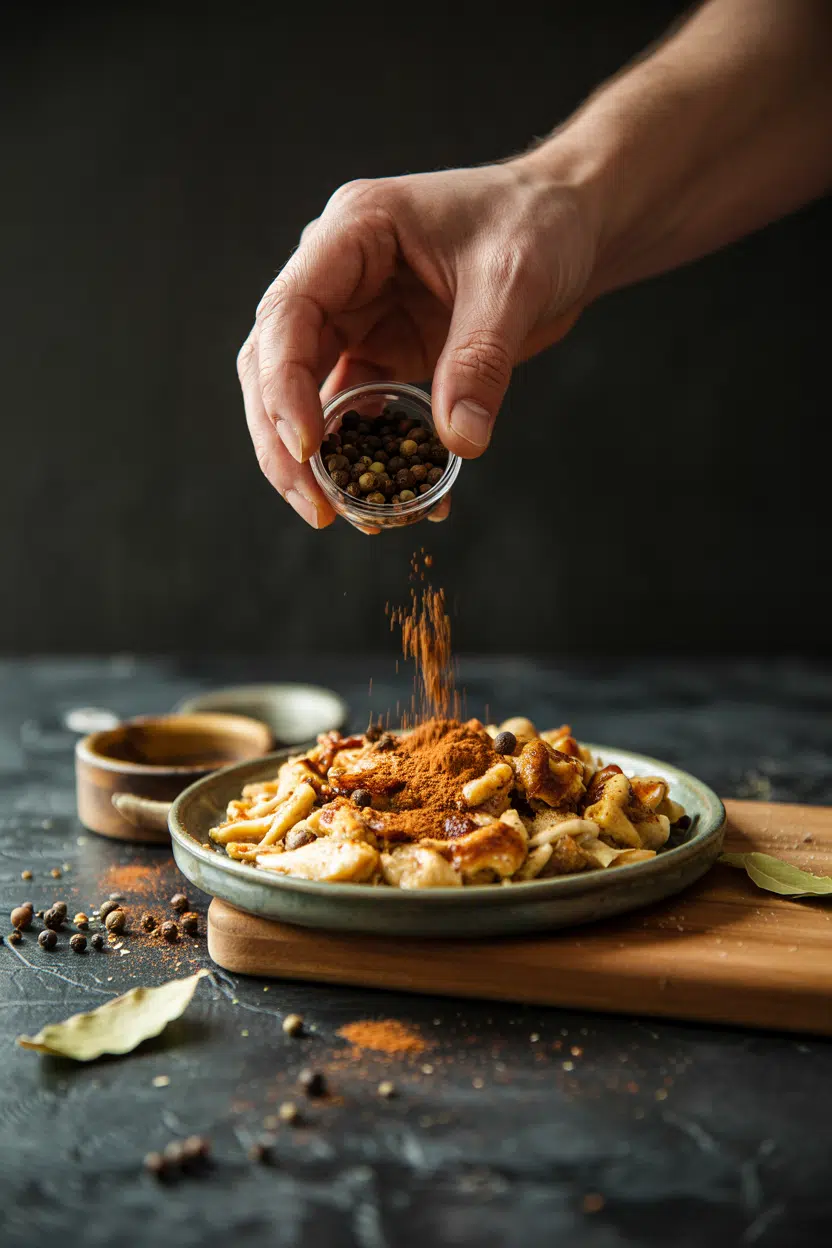
Allspice lands with a clove-forward punch first - warm, slightly sharp, unmistakably spiced. That initial bite softens into a sweeter cinnamon note, followed by a quieter nutmeg-like earthiness underneath.
There's also a faint peppery heat that lingers without dominating.
Heat amplifies allspice's resinous, woody depth - briefly toasting whole berries before grinding pulls volatile oils to the surface and makes the clove character noticeably sharper. In long-simmered dishes, its edges round out and it reads more as background warmth than a dominant note.
How to Use Allspice
Jerk seasoning is the most iconic use, and for good reason. Ground allspice is the backbone of authentic Jamaican jerk - blended with scotch bonnet, garlic, and thyme, then rubbed into pork or chicken before grilling. If you need a swap in a pinch, check our guide to jerk seasoning swaps.
Beyond jerk, allspice works across a wider range than most people expect.
| Method | Best For | Tip |
|---|---|---|
| 🔥 Toasted + Ground | Dry rubs, spice blends, marinades | Toast whole berries 60-90 seconds in a dry pan before grinding |
| 🍲 Simmered Whole | Stocks, pickling brines, bean dishes | Add 4-6 berries per quart of liquid; remove before serving |
| 🍰 Ground in Batter | Spice cakes, gingerbread, cookies | Pair with molasses or brown sugar to reinforce its warmth |
| 🍷 Infused in Liquid | Mulled wine, cider, cocktail syrups | Combine with orange peel and cloves; steep, don't boil |
In Middle Eastern cooking, allspice appears in baharat - a warming blend used in braised lamb and rice dishes. Scandinavian bakers fold it into holiday breads and pepparkakor alongside cardamom.
Caribbean cooks add whole berries to stewed kidney beans and oxtail braises for aromatic depth that clove alone doesn't achieve.
Pork and game meats are naturals here - the spice's resinous character cuts through fat without turning bitter. Citrus zest, particularly orange and lime, brightens the blend and keeps heavier dishes from feeling dense. For a closer look at how allspice compares to one of its flavor neighbors, our clove profile covers the distinction well.
How to Buy and Store Allspice
Buy whole allspice berries whenever possible. They look like small dark brown peppercorns with a slightly roughened surface, and they hold their volatile aromatic oils far longer than pre-ground powder.
For ground allspice, check that the color is a deep, warm brown and that it still smells strongly when the jar is opened. Pale, dusty-smelling powder is past its useful life.
- Whole berries - store in an airtight container away from light and heat; best within 2-4 years
- Ground allspice - use within 6-12 months for full potency; store in an opaque jar in a cool pantry
- Grind fresh - a spice grinder or mortar and pestle before use makes a noticeable difference
Our full breakdown of allspice storage life goes deeper on when to replace your stock.
Start With Whole, Go From There
If you only have room for one format, buy whole berries and grind them yourself. That single choice gives you both options - berries for brines and stocks, fresh-ground powder for rubs and baking.
For recipe substitutions, our guide to allspice replacements maps out the best swaps, and if you need clove swaps for a recipe that calls for both, that's worth a read alongside it.
Frequently Asked Questions
Yes - "pimento" is just another name for allspice, derived from the Spanish word for pepper. The confusion arises because pimento also refers to a type of sweet red pepper, which is an entirely different plant.
Yes, but allspice is less intense than cloves, so use slightly more - about 1¼ teaspoons of allspice for every 1 teaspoon of cloves. It works best in baked goods and braises where the difference is minimal.
Allspice is a single spice; mixed spice is a British blend that typically contains allspice, cinnamon, nutmeg, cloves, and coriander. They're not interchangeable - mixed spice is broader and milder by design.
No. Despite the name "Jamaica pepper," allspice belongs to the myrtle family, not the pepper family. Early European traders named it for its pepper-like appearance, not its botanical relationship.
Yes, and it's one of the few spices that genuinely crosses both lanes without adjustment. Its clove-cinnamon character reads as warm-savory in braises and rubs, and as warm-sweet in cakes and syrups.



