Cracking open a pistachio, you notice the smell first - warm, faintly grassy, with a resinous edge that hints at the flavor to come. The kernel itself is strikingly green, ranging from pale jade to deep emerald, and that color signals something real: a fat profile rich in oleic acid and chlorophyll that makes this nut behave differently from the rest.
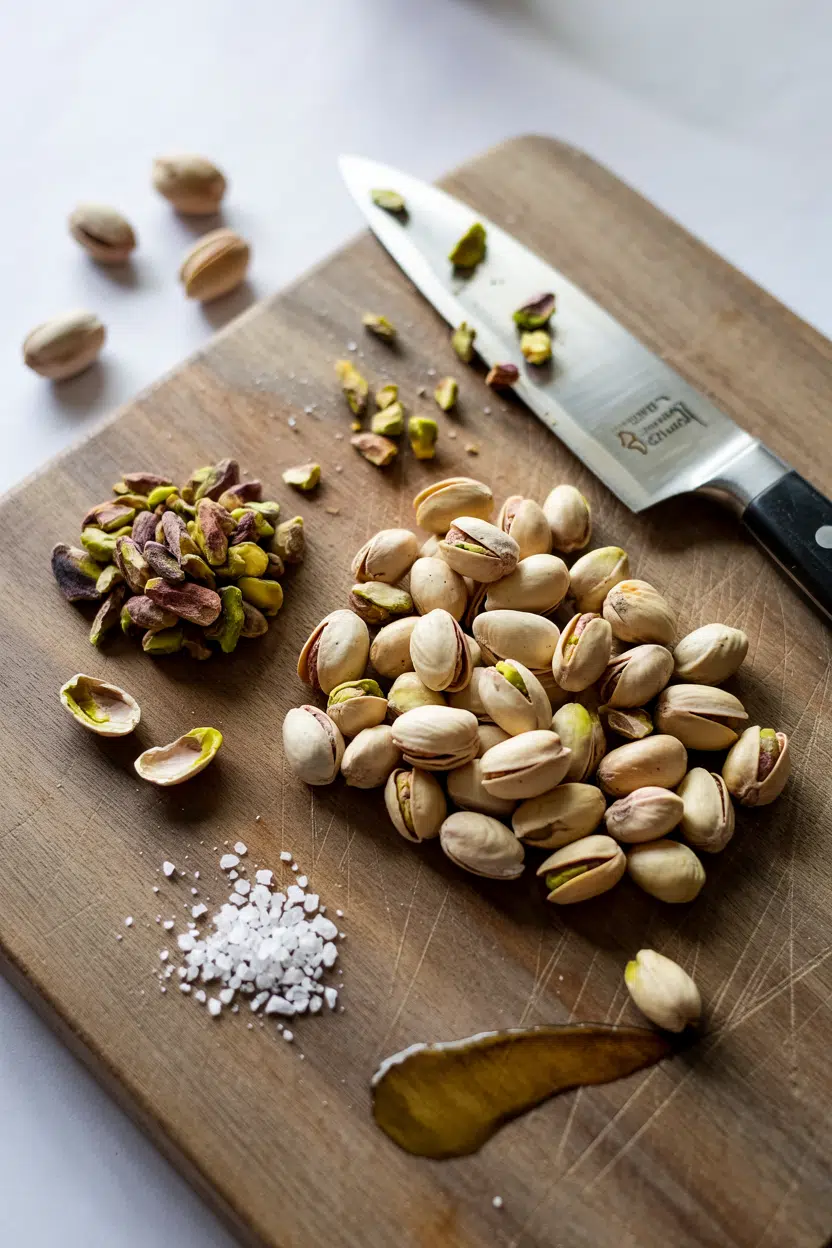
Pistachios land in pistachio gelato and baklava as naturally as they do in lamb crusts and savory rice dishes - a range few other nuts can match.
The pistachio is a tree nut with a buttery, sweet-nutty flavor and a distinctive green kernel. Eaten raw, roasted, or ground into paste, it appears in desserts, savory crusts, pilafs, and confectionery across Middle Eastern, Mediterranean, and Italian cooking traditions.
What Is Pistachio?
Pistachio is the seed of the pistachio tree (Pistacia vera), a small, hardy tree native to Central and Western Asia. Iran and Turkey remain the world's largest producers, though Sicilian and Californian pistachios have carved out distinct regional identities.
Remember it later
Planning to try this recipe soon? Save it for a quick find later!
Botanically speaking, the pistachio is a drupe - the shell is actually the hardened endocarp of the fruit, and the kernel inside is the seed. Most retailers sell them either in-shell or shelled, and further processed into roasted, salted, or ground forms.
The kernel's signature green color comes from chlorophyll in the cotyledons. Deeper green generally means a younger harvest and more pronounced flavor - which is why premium pistachio paste made for confectionery often specifies a high green-pigment grade.
You may also see this nut labeled pista in South Asian markets, pistache in French contexts, or simply "pistachio nut" in packaged goods.
Key forms you'll find at retail:
- 🟢 Raw in-shell - mildest flavor, longest shelf life unshelled
- 🔥 Dry-roasted - nuttiness deepens, color darkens slightly
- 🧴 Pistachio paste - blanched, skinned, and ground; used in gelato and pastry
- 🥄 Pistachio meal/flour - coarser grind, used in batters and crusts
What Does Pistachio Taste Like?
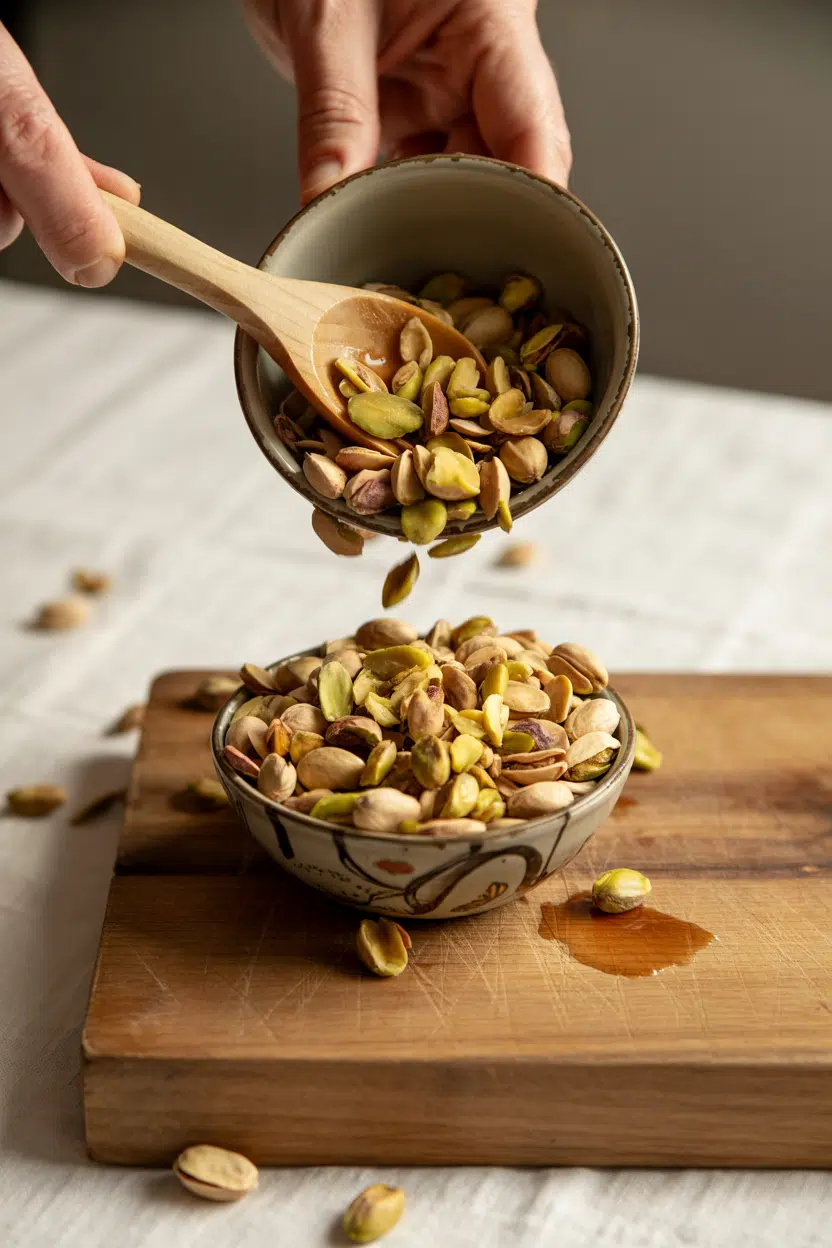
Think of a richer, less astringent almond with a mild pine or green note layered underneath. That resinous, slightly grassy quality is what separates pistachio from other sweet tree nuts - it reads almost herb-like at first, then settles into a clean, buttery finish.
Raw pistachios are subtler. Dry-roasting amplifies the nuttiness considerably and pushes the resinous note into the background, which is why roasted pistachios taste sweeter and more straightforward.
Grinding the nut into paste releases its oils fully, producing a dense, almost creamy richness that carries well in ice cream and ganache.
Compared to hazelnut, pistachio is lighter in roasted depth but more complex in its raw, green character. Walnut carries a notable tannin bite that pistachio simply doesn't have.
How to Use Pistachio
Pistachios cross between sweet and savory more cleanly than almost any other nut. In Middle Eastern and Persian cooking, they're folded into rice pilafs whole, chopped over Turkish baklava, and pressed into confectionery alongside rosewater and cardamom.
In Italian and Sicilian traditions, pistachio paste anchors gelato, financiers, and tart fillings. Roughly chopped pistachios work as a crust for lamb rack or pan-seared fish, pressed on before roasting.
Ground pistachio meal integrates into cookie dough, batters, and savory sauces in ways that add body without overwhelming.
| Method | Best For | Tip |
|---|---|---|
| 🥗 Raw | Pilafs, garnishes, snacking, salads | Use the freshest kernels - staleness shows most when unroasted |
| 🔥 Dry-Roasted | Nut mixes, brittle, chopped toppings for pastry | Watch carefully - pistachios go from toasted to bitter fast |
| 🧴 Ground/Paste | Gelato, financiers, tart fillings, pesto-style sauces | Blanch and skin first for the brightest green and cleanest flavor |
| 🍖 Crust/Coating | Lamb rack, chicken, fish fillets | Combine with breadcrumbs to help the crust bind and brown evenly |
Pistachios pair exceptionally well with honey, cardamom, saffron, and orange blossom on the sweet side. Savory pairings include lamb, rich cheeses, olive oil, and lemon zest.
If you need a swap in a recipe, check pistachio replacements before reaching for a different nut entirely - the green color and fat content matter more than people expect.
How to Buy and Store Pistachio
Green is your guide at the nut counter. Kernels with a pale or yellowed interior are older and will taste flat; vibrant jade to emerald signals freshness and higher oil quality. For in-shell nuts, look for shells that have split naturally along the seam - a closed shell on a mature pistachio is rare, and forced-open shells often indicate immature harvest.
Storage breaks down simply:
- In-shell, pantry - cool, dry spot; use within 2-4 weeks
- Shelled, airtight fridge - up to 3 months; keeps oils fresh
- Shelled, freezer - 6-12 months with no meaningful flavor loss
For a full breakdown of signs of spoilage and freezing tips, the pistachio freshness guide guide covers every scenario in detail.
Where to Start With Pistachio
Start raw if you're new to the nut - a handful of fresh shelled pistachios straight from the fridge tells you exactly what you're working with. Move to dry-roasting next: ten minutes at 325°F sharpens the nuttiness and makes them snackable without masking that resinous character.
From there, pistachio paste opens up gelato, pastry fillings, and savory sauces.
If you only do one thing, chop and scatter roasted pistachios over a dish that already has honey or citrus - the contrast of crunch, color, and that mild pine note will do the rest.
Frequently Asked Questions
Botanically, pistachios are seeds - the kernel inside a drupe fruit. Culinary and legal classification treats them as tree nuts, which is why they appear on allergen labels alongside almonds and cashews.
The green color comes from chlorophyll concentrated in the cotyledons of the seed. Higher chlorophyll levels generally indicate earlier harvest and more pronounced flavor - premium paste grades specify minimum green pigment content.
Yes, raw pistachios are safe and have a milder, grassier flavor than roasted ones. Most commercial in-shell pistachios are already dried post-harvest, so "raw" at retail means unroasted, not truly fresh off the tree.
Authentic pistachio gelato made with real paste tastes buttery and gently sweet with a clean, slightly grassy finish. Artificially flavored versions lean heavily on almond extract, which is why they taste sharper and less complex than the real thing.
Per gram, pistachios are comparable to most tree nuts, but they have fewer calories per nut count than denser nuts like macadamias or pecans. Eating them in-shell also naturally slows consumption, reducing overall intake.