
Ricotta does something no other fresh cheese quite manages: it disappears into a dish without competing with it. It holds lasagna layers together, keeps cannoli cream light, and stretches pasta fillings without overwhelming the other ingredients.

Where mascarpone adds richness and cream cheese alternatives add tang, ricotta adds body while staying neutral - and that restraint is exactly what makes it useful. Knowing ricotta's shelf life and how to handle it well unlocks the most from every tub.
Ricotta is a mild, fresh whey cheese with soft, moist curds and a light milky sweetness. It works in both sweet and savory cooking, from lasagna fillings to dessert spreads, and stays stable when baked or gently heated. Opened tubs keep 5-7 days refrigerated.
What Is Ricotta Cheese?
Ricotta originates in southern Italy - Sicily and Campania in particular - where cheesemakers discovered they could reheat leftover whey from mozzarella or provolone production to yield a second crop of fine, delicate curds.
Remember it later
Planning to try this recipe soon? Save it for a quick find later!
The name itself means "recooked" in Italian, which describes the process precisely.
As a fresh whey cheese, ricotta is unripened and sold within days of production. It has no rind, no aging, and no added cultures to develop sharpness.
Several distinct varieties exist beyond the standard supermarket tub:
- Ricotta di bufala - made from water buffalo whey, richer and creamier than cow's milk versions
- Ricotta di pecora - sheep's milk whey base, slightly more pronounced in flavor
- Ricotta salata - pressed, salted, and dried into a firm block used for grating rather than spreading
- Whole milk vs. part-skim - the most common distinction in American grocery stores, affecting fat content and richness
Standard ricotta sits somewhere between cottage cheese and a very soft, unsalted cream cheese in both texture and flavor intensity.
What Does Ricotta Cheese Taste Like?
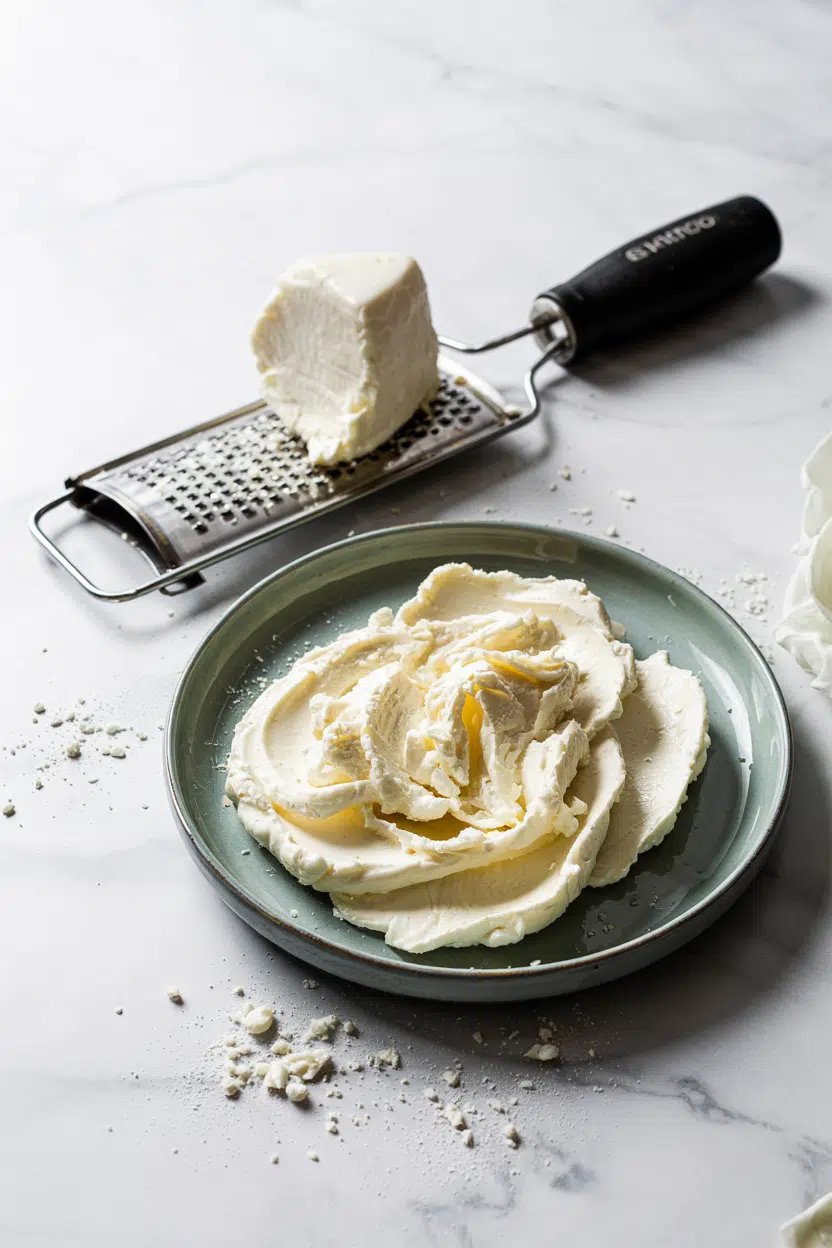
Ricotta leads with mild milky sweetness - not sugary, but the clean, fresh dairy note you get from warm whole milk. A faint lactic tang follows, the kind that signals freshness rather than sourness.
Heat changes ricotta noticeably. Baked into lasagna or manicotti, the curds tighten slightly and the sweetness pulls back, leaving a subtly savory, creamy richness that holds its shape without tasting heavy.
Whipping ricotta - with lemon, honey, or both - smooths the graininess into something closer to a light mousse. The flavor brightens and the tang becomes more present.
Cold ricotta straight from the tub is the mildest expression; everything else builds from there.
How to Use Ricotta Cheese
Ricotta's neutrality is its strength. It absorbs surrounding flavors without fighting them, which makes it functional across a wide range of dishes and preparations.
| Method | Best For | Tip |
|---|---|---|
| 🥗 Cold/Spread | Toast toppings, dips, dessert spreads with lemon and honey | Drain excess whey first for a cleaner spread |
| 🔥 Baked | Lasagna, manicotti, stuffed shells, cheesecake bases | Mix with egg to bind and prevent watery separation |
| 🍳 Stirred into sauces | Cream sauces, mashed potatoes, pasta finishes | Add off-heat or at low temperature to avoid graininess |
| 🌀 Whipped | Cannoli cream, mousse-style desserts, light fillings | Whip with cold ricotta; whole milk version gives best texture |
Savory pairings reward ricotta's restraint. Spinach and nutmeg is the classic filling combination for ravioli and stuffed pasta. Prosciutto, arugula, and a drizzle of olive oil turn a simple spread into something worth eating. Zucchini, garlic, and lemon are a strong supporting cast for a summer pasta or pizza dollop.
Sweet applications are equally straightforward. Dark chocolate and citrus work well in cannoli cream. Lemon zest and honey whipped into ricotta make a fast dessert that needs nothing else.
One underused move: fold ricotta into mashed potatoes instead of cream. It adds body and a mild richness without the heaviness.
How to Buy and Store Ricotta Cheese
Start with the seal. A tight, undamaged lid matters because ricotta degrades quickly once exposed to air.
Inside the container, look for bright white curds sitting in a thin milky whey - not large separated pools of liquid, which signal age or mishandling.
Avoid containers with yellowing curds or any sour smell beyond the normal faint tang. For recipes that need a firm, grating cheese - scattered over roasted vegetables or pasta - buy ricotta salata instead of fresh.
Storage is simple:
- Keep it cold - refrigerate promptly and store below 40°F at all times
- Seal it well - transfer to an airtight container once opened; keep it in its own whey if possible
- Watch the clock - unopened tubs last 2-3 weeks; opened ricotta is best within 5-7 days
For a full breakdown of timelines and signs of spoilage, the ricotta cheese storage life guide covers every scenario. If you're also working with mozzarella - ricotta's frequent kitchen companion - the storage rules differ significantly.
Where to Start With Ricotta
Ricotta rewards even a first-time user. If you've never cooked with it, start cold: spread it on toast with olive oil and chili flakes, or whip it with lemon and honey for a fast dessert.
Once you're comfortable with the texture, move to baked fillings. A simple lasagna layer - ricotta mixed with egg, spinach, and nutmeg - is the most instructive recipe this cheese has.
It shows exactly how ricotta holds together under heat and why it's irreplaceable in that context.
When you need to adjust for dietary needs or availability, ricotta cheese swaps and cottage cheese alternatives both cover the most practical swaps with honest trade-offs.
Frequently Asked Questions
Ricotta is made from whey and has smaller, finer curds with a milder, sweeter flavor. Cottage cheese uses whole or skim milk, has larger curds, and tastes slightly saltier and tangier. In cooking, ricotta holds together better when baked.
Yes, with caveats. Ricotta is wetter and less tangy than cream cheese, so drain it first and expect a lighter, less dense result. It works in cheesecake bases and dips but won't firm up the same way in frostings.
Technically yes, but the texture becomes grainy and watery after thawing. Frozen-then-thawed ricotta is only acceptable in cooked applications like lasagna or baked pasta - never in spreads or whipped desserts.
It's a solid source of protein and calcium with moderate fat, lower than cream cheese. Part-skim ricotta cuts fat further without sacrificing much protein. It's not lactose-free, so those with dairy sensitivity should account for that.
Traditional ricotta is made by reheating whey left over from mozzarella or provolone production - the heat causes remaining proteins to coagulate into fine curds. Many commercial versions now use whole or skim milk directly, which produces a slightly richer result.



