
Smoked wood, juniper, and a faint black pepper warmth - that's the first thing you notice when you unseal a pack of speck. The fat has a creamy, almost silky quality, and the deep-rose meat carries a savory depth that sits somewhere between a mountain cured ham and a lightly smoked charcuterie board anchor.

If you've cooked with prosciutto or pancetta, speck will feel familiar - yet distinct enough to justify keeping both on hand.
Speck is a dry-cured, cold-smoked pork leg from South Tyrol with mild smoke, herbal notes, and savory depth. It slices thin like prosciutto, crisps like pancetta, and adds a smoky, umami backbone to everything from antipasto boards to bean stews.
What Is Speck?
Speck Alto Adige comes from South Tyrol, the German-speaking Alpine province in northern Italy that borders Austria.
Remember it later
Planning to try this recipe soon? Save it for a quick find later!
It's a pork hind leg, cured with a dry rub of salt, juniper berries, black pepper, bay leaf, and rosemary, then cold-smoked over beech or mountain pine wood before an extended air-curing period of at least 22 weeks.
The result sits in a category of its own. Unlike raw prosciutto swaps that skip the smoke, speck gets a brief but decisive cold-smoking step that sets its character early.
Unlike heavily smoked products, the smoke here is restrained.
You'll also see it labeled Tyrolean speck or speck Alto Adige, the latter being a protected designation of origin (IGP) since 1996. Two broad styles exist:
- Boneless sliced packs - the most common retail form; pre-sliced thin for immediate use
- Whole or half legs - sold by specialty shops and worth seeking if you want to slice to order for better texture and flavor retention
What Does Speck Taste Like?
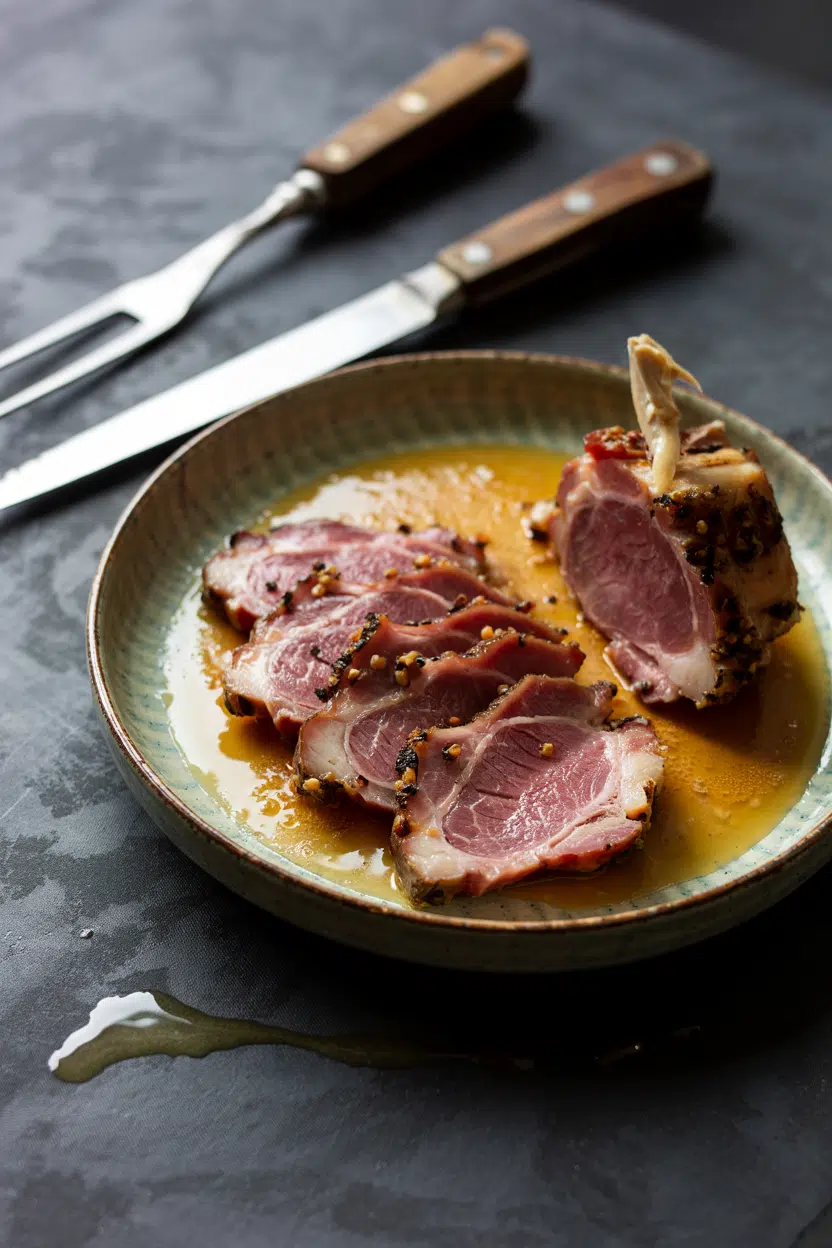
Speck lands at moderate intensity - more assertive than prosciutto, less aggressive than a heavily smoked salami. The smoke is the first thing you register, but it's wood-forward rather than campfire-sharp, with juniper providing a clean, slightly piney lift underneath.
The fat band that runs along the edge is where much of the nutty sweetness lives. When heat hits speck - even briefly in a pan - the smoke mellows and the fat renders into something richer, closer to what you'd get from pancetta swaps used as a flavor base.
Served cold and thin, it's unmistakably a cured ham; cooked low and slow in a stew, it recedes into the background as a savory building block.
How to Use Speck
Speck works across two registers: raw and thin for charcuterie-style service, or cooked as a flavor foundation. Neither approach is wrong - they just produce very different results.
| Method | Best For | Tip |
|---|---|---|
| 🥗 Raw, thinly sliced | Antipasto boards, sandwiches, wrapped around vegetables | Slice as thin as possible; fat should be nearly translucent |
| 🍳 Sautéed or crisped | Rendered fat for greens, pasta, or eggs | Medium-low heat prevents bitterness from the smoke |
| 🥘 Braised or stewed | Bean soups, lentils, braised cabbage | Add early so smoke softens and integrates fully |
| 🔥 Wrapped and roasted | Asparagus, scallops, stuffed canederli | High heat, short time - keep roasting under 10 minutes |
For antipasto boards, pair speck with aged grana-style cheeses like Parmigiano or Piave, cornichons, and rye or country bread. The salt and smoke need something acidic - pickled vegetables and a whole-grain mustard smear are the easiest fixes.
In cooked applications, rendered speck fat replaces olive oil or butter as a starting point for sautéed greens, frittatas, or pasta. Chopped and added to a bean stew early, it dissolves into the broth and gives a smoky umami baseline that builds the whole dish.
Wrapping speck around asparagus or scallops before a quick roast follows the same logic as bacon wrapped scallops - the fat bastes the protein as it renders.
How to Buy and Store Speck
At the deli counter or specialty shop, look for firm, pale-pink meat with a consistent white fat band and no grey edges. Pre-sliced vacuum packs should have no pooled liquid inside - excess moisture signals the curing was uneven or the product has been sitting.
Once opened, wrap speck in butcher paper or breathable parchment and store it loosely inside a plastic bag. Sealed plastic alone traps moisture and softens the surface.
Unopened vacuum packs hold well for several weeks in the coldest part of the fridge. For full shelf life guidance, the details on speck storage life and comparable notes on prosciutto storage guide are worth checking before buying in bulk.
- Opened packs - use within 2-3 weeks for best flavor and texture
- Whole legs - wrap tightly, refrigerate, and slice as needed; they hold longer than pre-sliced
Where to Start With Speck
Speck rewards cooks who already work with cured meats and want a smokier option that still behaves like prosciutto when sliced thin. If you're comparing options, the breakdown at speck vs prosciutto clarifies where each one earns its place.
And if speck isn't available locally, the speck alternatives guide covers the closest alternatives by use case.
Start with a simple antipasto application - thin slices, aged cheese, pickles - before cooking with it. That first taste sets the baseline so every cooked use makes sense.
Frequently Asked Questions
No. Both use the pork hind leg and a dry cure, however speck adds cold smoking and a juniper-pepper rub that prosciutto skips entirely. The result is firmer, slightly drier, and noticeably smoky compared to prosciutto's clean, sweet-savory profile.
Mild to moderate. The cold-smoking step is brief, so the smoke reads as a background note rather than the dominant flavor. It's nowhere near as assertive as smoked sausage or lardo affumicato.
Yes - it performs well as a cooked ingredient. Render it low and slow for fat to sauté with, add it early to soups for a smoky base, or wrap it around proteins for a quick roast. Heat mellows the smoke and deepens the savory notes.
Unopened vacuum-sealed packs keep for several weeks refrigerated. Once opened, use within 2-3 weeks and store in breathable parchment rather than sealed plastic to prevent surface moisture buildup.
It's high in sodium and saturated fat, so large portions aren't suitable for low-sodium diets. Small amounts - two or three thin slices - deliver concentrated protein and flavor without significant bulk calories.



