
Granola does one thing in a kitchen that no other cereal quite manages: it delivers both crunch and warmth simultaneously, whether straight from the jar at room temperature or scattered over a bowl of yogurt still cold from the fridge.
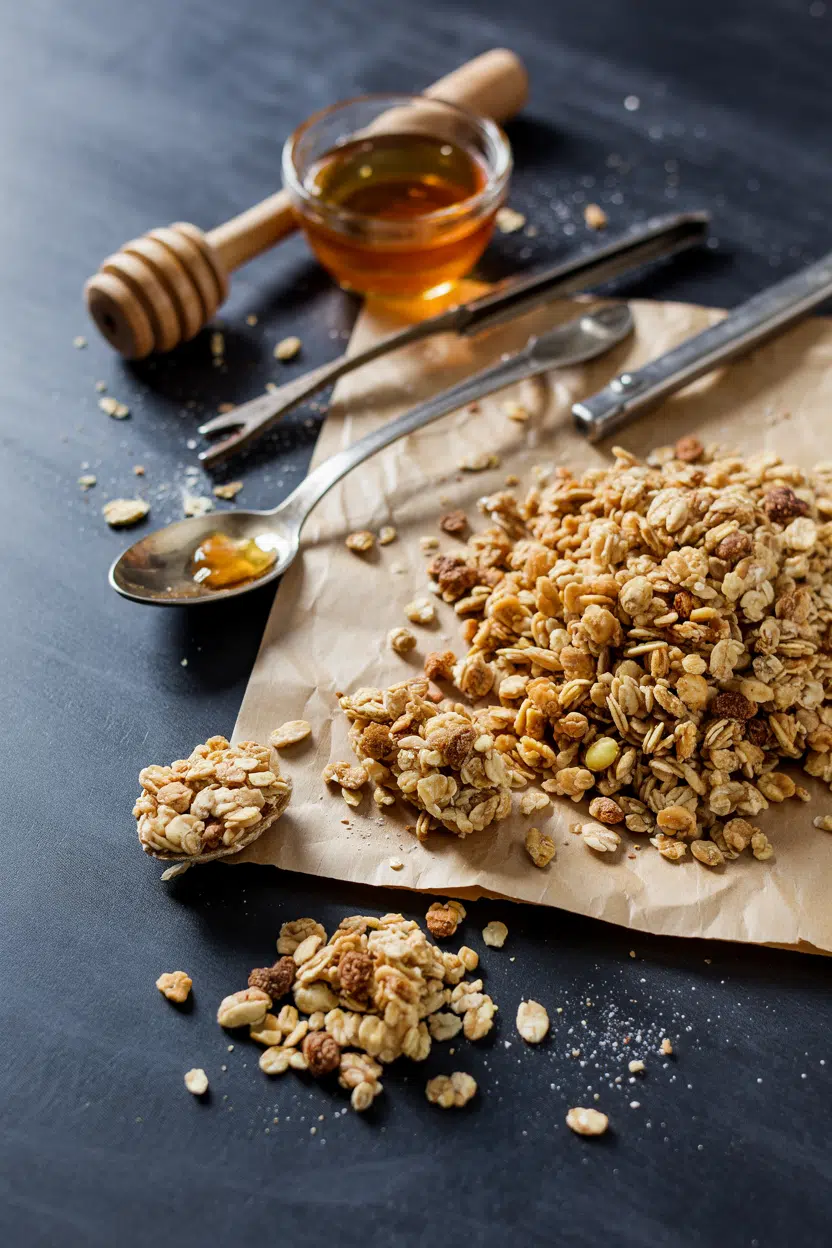
That contrast - brittle golden clusters against something creamy or cool - is why it shows up across breakfast tables, café menus, and snack mixes without much fanfare, just consistent results.
Granola is a baked oat cluster with a toasty, lightly caramelized flavor and satisfying crunch. Made from rolled oats, sweeteners, and oil, it works as a cereal, parfait layer, snack, or topping - and keeps well in an airtight container for weeks.
What Is Granola?
Granola originated in the United States in the late 19th century, developed as a health food reform product before evolving into the sweetened, clustered cereal we recognize today.
Remember it later
Planning to try this recipe soon? Save it for a quick find later!
At its core, it's rolled oats bound with a sweetener - honey, maple syrup, or brown sugar - and an oil, then baked on a sheet pan until golden and crisp.
The baking process is what sets granola apart from raw muesli. Heat caramelizes the sugars, binds the oats into clusters, and develops that characteristic toasted flavor throughout.
Common add-ins include:
- Nuts - almonds and pecans add richness and extra crunch
- Seeds - pumpkin and sunflower seeds increase density and texture variation
- Dried fruit - raisins, cranberries, or apricots introduce chewiness after the bake
- Spices - cinnamon and vanilla are the most common flavor additions
You'll also find specialty varieties: low-sugar blends, coconut-oil-based granola, nut-free versions for allergy-conscious households, and pressed granola bars where the same mixture is compacted and re-baked.
What Does Granola Taste Like?
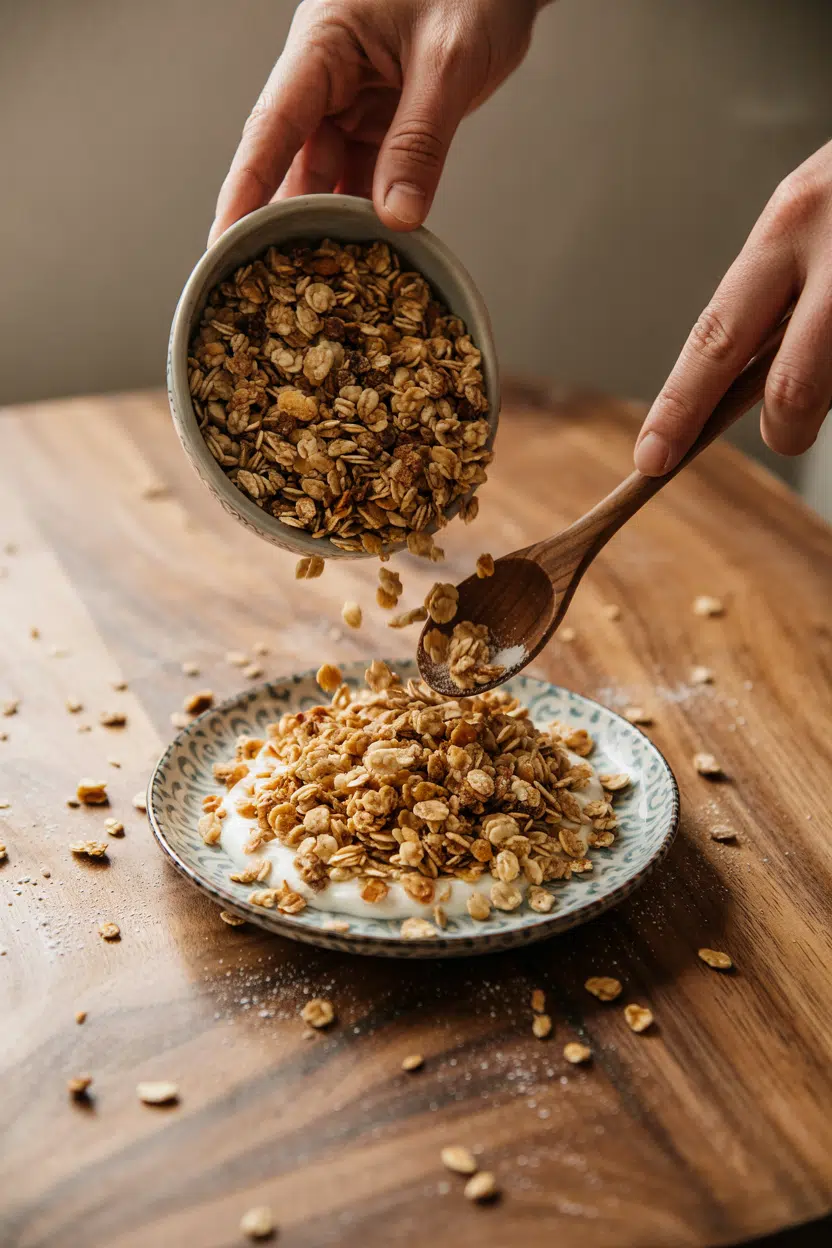
Granola tastes like toasted oatmeal with a caramel-forward sweetness layered on top - richer and more complex than plain cereal, less sugary than most boxed puffed cereals. The oats themselves contribute a mild, slightly nutty base note.
The sweetness level shifts considerably by brand or recipe. Honey-based granola reads warmer and more floral; maple syrup lends a deeper, almost smoky-sweet note; brown sugar versions tend to be the most straightforwardly sweet.
Texture plays a significant role in how granola registers on the palate. A dry, freshly opened cluster crunches cleanly.
Add milk or yogurt, and within a few minutes the outer edges soften while the dense center holds, creating two textures at once - which many people prefer over keeping everything uniformly crisp.
How to Use Granola
Granola's primary role is textural. It brings crunch to soft or liquid bases - yogurt parfaits, smoothie bowls, warm stewed fruit - where no other ingredient would do the same job without altering the flavor profile significantly.
For a quick breakfast, layer it with Greek yogurt and fresh berries; the fruit's acidity offsets the sweetness of the clusters.
As a topping, granola functions as a ready-made streusel. Scatter it over baked pumpkin dishes or fruit crisps in the last five minutes of baking to preserve crunch without overcooking.
It also compresses into no-bake energy balls when mixed with peanut butter and dark chocolate chips, or gets pressed and re-baked into homemade granola bars.
| Method | Best For | Tip |
|---|---|---|
| 🥗 Raw/Dry | Snacking, trail mix, energy balls | Mix with peanut butter or dark chocolate chips for binding |
| 🍳 Baked (sheet pan) | Making homemade granola from scratch | Stir every 10-12 min for even browning; pull while still soft - it crisps as it cools |
| 🍫 Pressed & Baked | Granola bars | Use enough honey or syrup to bind; press firmly before baking |
| ✨ Topping | Parfaits, smoothie bowls, fruit crisps | Add at the last moment to prevent sogginess |
Granola pairs well with milk alternatives like oat or almond milk, which complement its flavor without overpowering the toasty notes. Avoid combining it with very wet sauces or dressings - the clusters dissolve quickly and lose the textural point entirely.
How to Buy and Store Granola
Good granola clusters are uniformly golden - not pale and underbaked, not dark brown at the edges. Check the ingredient list: whole rolled oats should appear first, followed by a named sweetener (honey, maple syrup, or brown sugar) and an oil. Packages loaded with mostly flakes and little else are a sign of a low-density product.
Once opened, transfer granola to an airtight container - a glass jar works well - and keep it away from heat and direct sunlight. For full details on how long it holds up, see our guide to granola storage life.
- Opened, room temp: 6-8 weeks at peak crunch in a sealed container
- Unopened commercial: 6-12 months before quality declines
- Avoid: storing near the stove or in humid spaces, which softens clusters fast
Where to Start with Granola
If you've never made it from scratch, a basic sheet-pan bake is the fastest way to understand what granola actually does - you'll watch the oats brown, the clusters form, and the kitchen fill with that warm toasted-oat smell.
Start with rolled oats, a neutral oil, and honey or maple syrup; add nuts and seeds once you have the base right.
If you're buying rather than baking, a plain, low-add-in variety gives you the most flexibility. Use it as a parfait base first - yogurt, berries, granola - then work outward from there.
Anyone looking for a different texture or flavor base should check out our roundup of granola alternatives before committing to a full bag.
Frequently Asked Questions
The base is always rolled oats, a fat (usually oil or butter), and a sweetener like honey, maple syrup, or brown sugar. Most commercial versions also include nuts, seeds, and dried fruit, with spices like cinnamon added for flavor.
Muesli is raw and unsweet - oats, dried fruit, and nuts mixed without baking. Granola is baked with oil and sweetener, which creates the crunchy clusters and caramelized flavor muesli doesn't have.
It depends heavily on the recipe. Granola provides fiber, plant protein, and unsaturated fats from oats and nuts, however many commercial varieties are high in added sugar and calories. Low-sugar blends or homemade batches give you more control over both.
It doesn't spoil quickly, but it does go stale. Granola exposed to air or humidity loses its crunch within days; sealed in an airtight container it stays crisp for 6-8 weeks. Rancid-smelling nuts or oil are the clearest sign it's past its best.
Yes, and it's one of the most common daily breakfast combinations. Watch portion size - a typical serving is ¼ to ½ cup - since calories from granola add up faster than the volume suggests.



