
You spot it at the deli counter - deep cherry-red slices, laced with white fat, labeled "capicola" or sometimes "coppa" or the New Jersey-inflected gabagool. It looks like prosciutto but thicker, meatier, and more marbled.

Unlike leaner cured meats such as pancetta or guanciale, capicola comes from the pork neck and shoulder, which gives it a fat-to-muscle ratio that makes it richer and more intensely flavored than most dry-cured salumi on the counter.
Capicola is a dry-cured pork salumi from Southern Italy, made from the neck and shoulder. It delivers rich umami with marbled fat, spice from black or red pepper, and a silky texture when sliced thin. Serve it on charcuterie boards, in Italian sandwiches, or torn into warm pasta.
What Is Capicola?
Capicola - also called capocollo, coppa, or capicolla depending on region - is a whole-muscle cured meat from Southern Italy, with roots in Apulia and Calabria. The name comes from capo (head) and collo (neck), describing exactly where the cut originates on the pig.
Remember it later
Planning to try this recipe soon? Save it for a quick find later!
After trimming, the neck and shoulder muscle is rubbed with curing salt, black or red pepper, and regional spices like garlic and fennel, then stuffed into a casing and hung to age. The process takes weeks to months, concentrating flavor and firming the texture.
Two main styles exist: the dolce (sweet) version, seasoned with black pepper and mild spices, and the piccante (hot) Calabrese style, coated in chili pepper for a sharper, spicier finish.
Both share the same base cut and curing method - only the spice profile differs. Mortadella is another Italian cured pork product, though it's made from emulsified meat and bears almost no resemblance in texture or technique.
- 🐷 Sweet (dolce) - black pepper, mild herbs, subtler spice
- 🌶️ Hot (piccante / Calabrese) - coated in crushed red chili, more assertive heat
- 🧂 Domestic versions - often milder, shorter aged, widely available sliced at deli counters
What Does Capicola Taste Like?
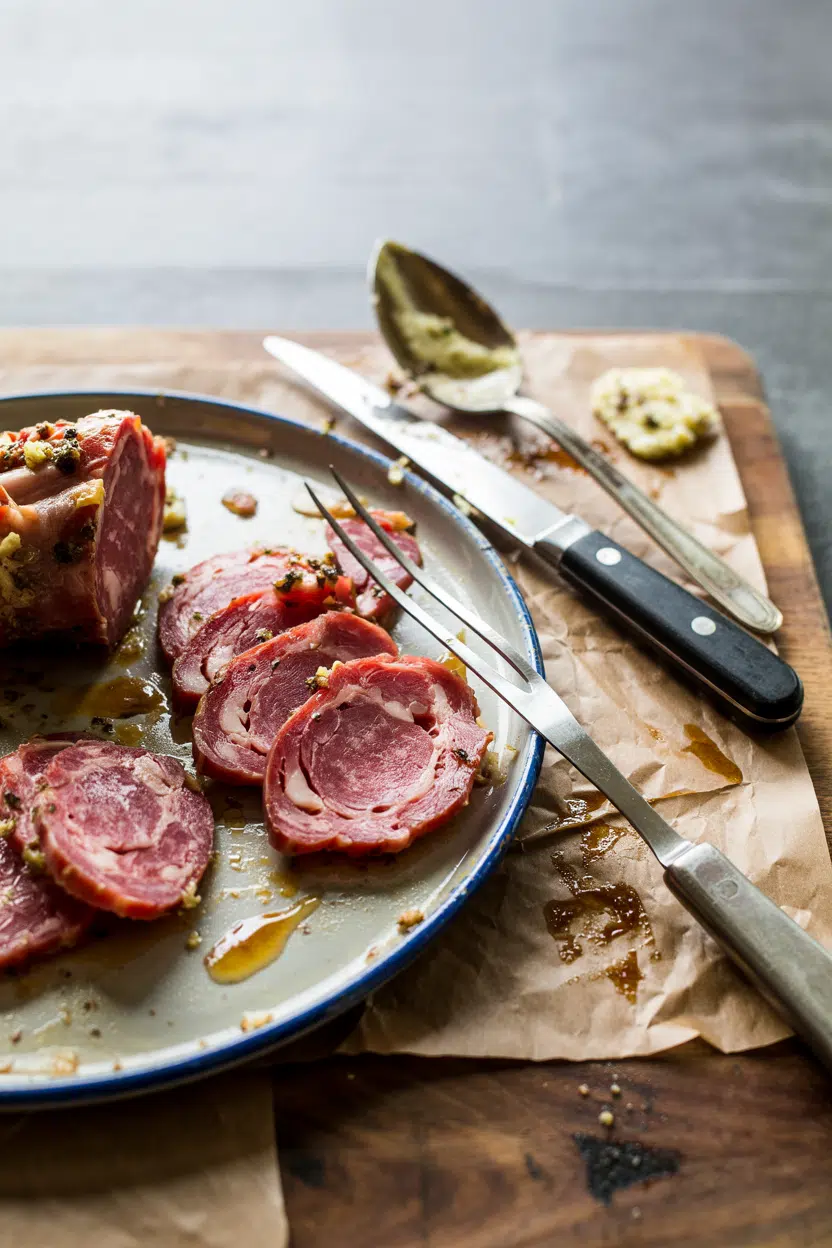
Capicola leads with deep pork umami - savory, slightly sweet from the intramuscular fat, with a lingering spice note depending on which style you buy.
The fat doesn't taste heavy; it melts into the meat and softens the salt, giving the whole slice a round, full quality.
Compared to prosciutto, capicola is meatier and fattier with more chew. It sits closer to coppa on the flavor spectrum - they're effectively the same product under different regional names.
When heat enters the equation, the fat renders slightly and the salt intensifies. Brief warming on a panini press or pizza oven makes it more aromatic - the spice crust becomes more pronounced without turning the meat tough.
How to Use Capicola
Capicola is most at home uncooked and sliced paper-thin, served alongside provolone or pecorino, olives, pickled peppers, and crusty bread on a charcuterie board. The fat-to-muscle ratio makes it satisfying in small quantities - a few slices carry real weight.
In sandwiches, it's the defining meat in an Italian sub and a core component of the New Orleans muffuletta, layered with sharp provolone and olive salad.
Folded into warm focaccia or pressed in a panini, the fat softens without fully rendering, keeping the slices tender and juicy.
On pizza, add capicola post-bake so it stays tender rather than crisping like bacon. Torn into hot pasta, it wilts just enough to release its fat into the sauce without disappearing into it.
Paired with ripe figs or melon, the sweet-salty contrast works the same way prosciutto does - only the porky depth is stronger.
| Method | Best For | Tip |
|---|---|---|
| 🥗 Raw / Sliced | Charcuterie boards, antipasto, melon pairings | Slice paper-thin for best texture and mouthfeel |
| 🔥 Warmed / Pressed | Panini, focaccia sandwiches, muffuletta | Use low-medium heat; fat softens but should not fully render |
| 🍕 Post-Bake Topping | Pizza, flatbreads | Add after the oven, not before; prevents the meat from toughening |
| 🍝 Torn into Hot Dishes | Pasta, frittatas, warm salads | Add off heat or in the final 30 seconds; residual warmth is enough |
If you need a swap for a recipe, capicola swaps include prosciutto for a leaner result or speck for a smokier one. Avoid pairing capicola with delicate seafood - the cured pork flavor overpowers anything mild.
How to Buy and Store Capicola
At the deli counter, look for slices with deep cherry-red meat and even white marbling. Gray edges, wet surfaces, or slimy texture are signs of age or poor storage - pass on those.
Whole-muscle pieces from a reputable salumeria give you more control over thickness, which matters if you're slicing for a board.
Store whole cured capicola wrapped in butcher paper or a clean tea towel in the fridge at 34-38°F. Vacuum-packed sliced capicola should stay sealed until use.
After opening, press out air before resealing. For a full breakdown of how long each format keeps, see our guide to capicola storage life.
Most commercial capicola contains nitrates and nitrites from curing salt - standard in dry-cured meats and responsible for both the color and preservation.
Start Here With Capicola
New to capicola? Buy the dolce (sweet) style first. Its milder spice lets the pork flavor and marbling speak clearly, and it works across more pairings without overwhelming anything on the board.
Once you're comfortable with the base flavor, try the Calabrese piccante version for heat, or seek out a whole coppa from a salumeria to slice to your preferred thickness.
Either way, keep the preparations simple - this is a cured meat that needs no cooking to earn its place on the plate.
Frequently Asked Questions
Effectively, yes - same cut, same curing method, different regional name. Coppa is the term used more widely in Italy, while capicola or capocollo appears more often in Southern Italian and Italian-American contexts.
Prosciutto comes from the hind leg and is leaner, more delicate, and milder in flavor. Capicola comes from the neck and shoulder, making it fattier, meatier, and more intensely spiced.
Unopened vacuum-packed slices keep 2-3 weeks. Once opened, use within 3-7 days stored tightly wrapped to limit air exposure.
Yes, but keep heat minimal. Capicola works best added post-bake on pizza or torn into pasta off the heat. Full cooking toughens the meat and wastes the fat's silky quality.
Most commercial capicola does, added via curing salt to preserve color and inhibit bacterial growth. Some artisan producers use celery powder as a natural alternative, though it still contains nitrates in a different form.



