
Crack open a bottle of St. Germain and the first thing that reaches you is the aroma - a heady rush of fresh-cut blossoms, lemon peel, and something soft and fruity underneath.

It's intensely floral in a way that few spirits manage without tipping into artificial territory. That fragrance alone tells you exactly what kind of work this elderflower liqueur does best.
St. Germain is a French elderflower liqueur with a syrupy texture and a fragrant, honeyed flavor. It adds floral sweetness to cocktails, spritzes, and chilled desserts. Best used in small amounts - it's concentrated and sweet.
What Is St. Germain Liqueur?
St. Germain is a French elderflower liqueur produced from hand-harvested elderflower blossoms gathered each spring in the Alps.
Remember it later
Planning to try this recipe soon? Save it for a quick find later!
The brand's origin story traces to the Haute-Savoie region, where foragers collect the blossoms over a narrow seasonal window - just a few weeks per year. That timing matters: elderflower is highly perishable, which is why the liqueur carries such a vivid, fresh floral quality.
It sits at roughly 20% ABV, making it lighter than most spirits but stronger than a cordial. You'll also see it referred to as simply "elderflower liqueur" or occasionally misspelled as Sainte-Germain.
Unlike plain simple syrup, it brings both sweetness and a complex floral character to whatever it touches.
- Category - Floral liqueur, sub-category of fruit and botanical liqueurs
- ABV - ~20%; sweeter and lower-proof than gin or vodka
- Key ingredient - Elderflower blossom, macerated and concentrated
- Appearance - Translucent, pale gold liquid with a slightly viscous pour
What Does St. Germain Liqueur Taste Like?
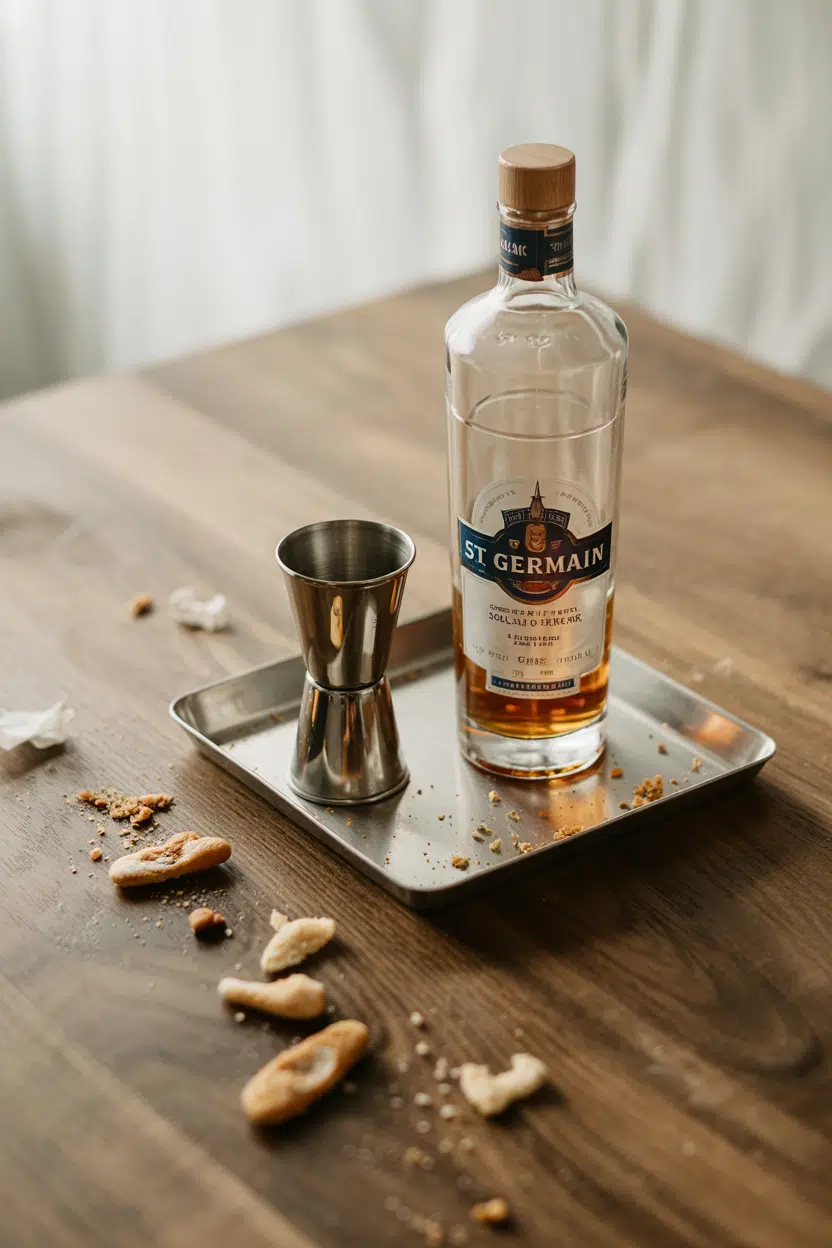
The flavor lands closest to a concentrated elderflower cordial with an alcoholic backbone. Floral is the dominant note - think jasmine-adjacent, but rounder and less perfumed.
Underneath that, bright pear and citrus surface immediately, followed by softer undertones of lychee and stone fruit.
Sweetness is real but not cloying in moderate doses. Used warm or at room temperature, the floral notes become more forward; over ice, the pear and citrus notes sharpen.
It's genuinely unlike anything you'd get from asian pear or elderflower cordial alone - the alcohol carries the aroma differently.
How to Use St. Germain Liqueur
St. Germain shines most in cold applications - cocktails, spritzes, and chilled desserts.
It functions as both a sweetener and a flavoring agent, which means it often replaces simple syrup entirely in a recipe.
| Method | Best For | Tip |
|---|---|---|
| 🍸 Stirred | Gin and tonics, vodka-citrus cocktails, French 75 riffs | Add after your base spirit; taste before adding more |
| 🥂 Spritzes | Champagne, prosecco, and sparkling water combinations | Use ½ oz per flute - it builds quickly in a sparkling format |
| 🍑 Finishing Drizzle | Fresh fruit salad, panna cotta, zabaglione | A few drops only; heat dulls the floral notes significantly |
| 🍮 Folded In | Chilled creams, mousse, no-bake desserts | Fold in cold; do not cook or bake with it |
Gin is its most natural partner - the botanicals in gin and the elderflower aroma are a genuine match. A splash in a gin and tonic in place of simple syrup changes the drink's entire register. Champagne spritzes are equally straightforward: St. Germain, a squeeze of lemon, and sparkling wine is the core of a Hugo cocktail.
Pear and apple cocktails benefit from it too, since the liqueur's existing pear note deepens rather than competes. Ginger-forward drinks - think a Moscow Mule variation - take on pleasant complexity with ½ oz stirred in.
Avoid pairing it with heavily smoky mezcal or amaro-dominant builds, where the floral sweetness sits uncomfortably against bitter or smoky profiles.
If you're working without St. Germain, check what works as a [St.
Germain substitute](https://forkliftkitchen.com/st-germain-liqueur-substitutes/) before substituting a different liqueur - the floral character is harder to replicate than the sweetness.
How to Buy and Store St. Germain Liqueur
Buy sealed bottles with completely clear, pale-gold liquid - any cloudiness or sediment suggests mishandling or age. Check the label for elderflower extract and an ABV around 20%. Bottles from smaller producers can vary in sweetness and color, so stick to recognizable retailers when buying for the first time.
Store upright in a cool, dark place with the cap tightly closed after every use. You don't need to refrigerate it, however cold storage does slow aroma loss once opened.
For full detail on how long it keeps, see our guide to St. Germain shelf life.
- Unopened - Stable for several years if stored correctly
- Opened - Best within 12-24 months; floral aroma fades noticeably after that
- Signs it's past peak - Muted scent, flatter sweetness, slight color change
Where to Start With St. Germain
Start with a gin spritz. One ounce of gin, half an ounce of St.
Germain, a squeeze of lemon, and sparkling water over ice - that drink shows you everything the liqueur does clearly and quickly. From there, try it in a Champagne-based spritz or stirred into a pear cocktail.
If you need an alcohol-free option for a mocktail build, non-alcoholic gin paired with elderflower cordial gets you closer than most alternatives. St.
Germain rewards restraint - use less than you think you need, and adjust upward from there.
Frequently Asked Questions
Both, with floral leading. The elderflower aroma is the dominant impression; sweetness sits underneath it rather than in front. In larger pours, the sugar becomes more noticeable.
Elderflower cordial is the closest non-alcoholic option - use about half the amount since it's sweeter. Other floral liqueurs like Lillet Blanc work structurally but won't replicate the elderflower note.
Peak quality holds for 12-24 months after opening. The liquid stays safe to drink beyond that, however the floral aroma fades and the flavor flattens noticeably.
Yes, though it's rarely served that way. It's very sweet and concentrated at full strength - most people find a small pour over ice more approachable than a neat shot.
No, but refrigeration after opening slows aroma loss. Room-temperature storage in a cool, dark spot is sufficient if you use the bottle within a year.



