
Fajitas sizzling on a cast iron skillet almost always start with flank steak, and for good reason. This long, flat cut from the cow's abdominal muscles delivers a concentrated, beefy punch that holds up to bold marinades and high heat - qualities that make it one of the hardest-working cuts at the grill.
It sits in the same family as hanger steak and skirt, however flank has a tighter grain and leaner profile that sets it apart in both texture and technique.
Flank steak is a lean, coarse-grained beef cut from the abdominal region. It has a robust, iron-forward flavor that rewards marinades and demands slicing against the grain to achieve tenderness. Best grilled hot and fast, then carved thin.
What Is Flank Steak?
Flank steak comes from the beef flank, the lower abdominal section of the cow, just behind the plate and ahead of the round. It's a single, long flat muscle that works hard during the animal's movement, which explains the visible, pronounced grain running its length.
Remember it later
Planning to try this recipe soon? Save it for a quick find later!
In some Latin markets you'll find it labeled bife de vacío, though that term can vary by region. In American butcher cases it sometimes gets grouped loosely with London broil - a preparation style, not a cut - which creates confusion worth knowing about.
The difference between London broil and flank steak comes down to cooking method versus cut identity.
The two cuts most often confused with flank are skirt and flap steak:
- Skirt steak - thinner, fattier, and from the plate section; more loosely grained than flank
- Flap steak - also called sirloin tip; coarser and chewier, often sold mislabeled as flank
- Hanger steak - from the diaphragm; more tender than flank but narrower and harder to find
Flank runs larger than skirt, typically one to two pounds per piece, and holds its shape well on a grill.
What Does Flank Steak Taste Like?
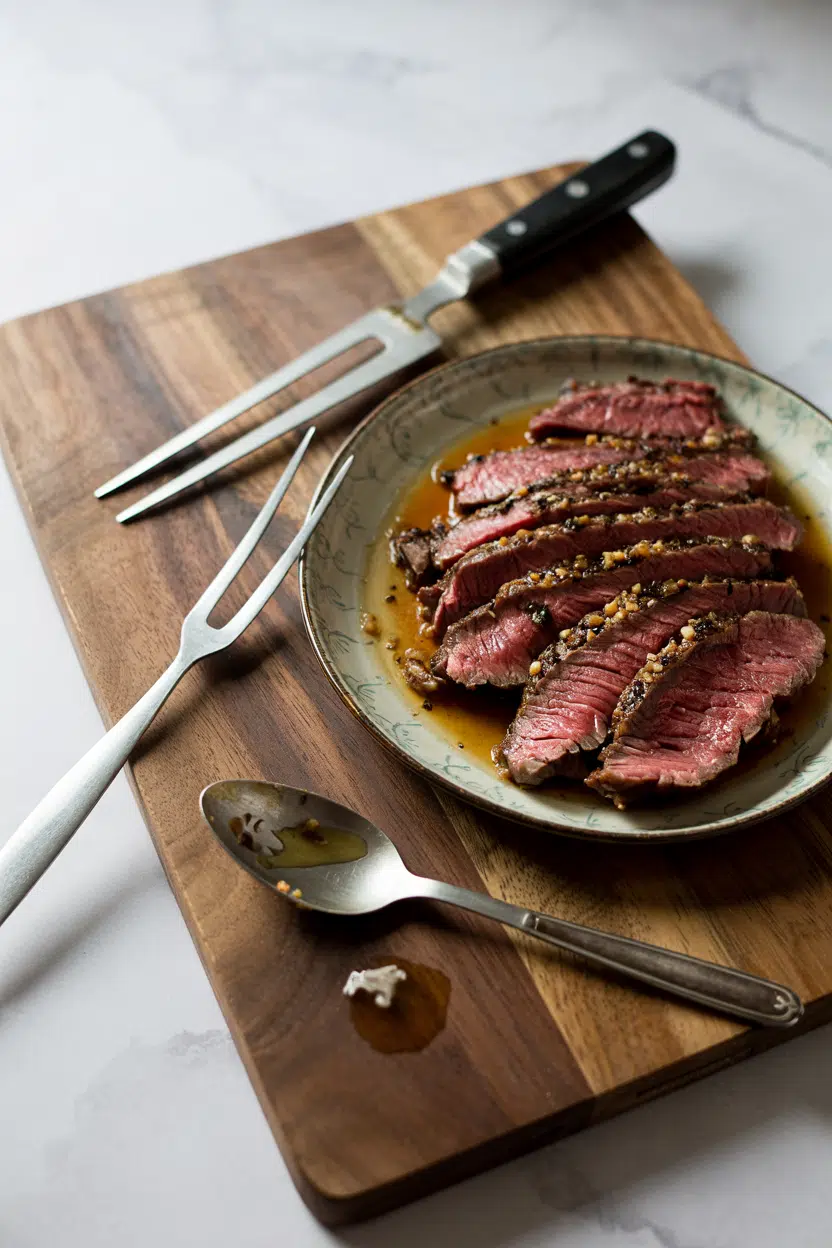
Flank steak tastes robustly beefy, with a slightly mineral, iron-forward edge that you notice most when it's cooked simply - just salt, high heat, and a good sear. The leanness concentrates the flavor rather than softening it.
Compared to skirt steak, flank reads cleaner and tighter on the palate. Skirt carries more intramuscular fat, which gives it a richer, more buttery finish.
Flank is more direct - you get the beef, not the fat.
Heat changes flank noticeably. A rare-to-medium-rare sear keeps the center slightly sweet and metallic-bright.
Push it past medium and the lean muscle tightens fast, turning dry and livery.
How to Use Flank Steak
High heat and thin slicing are the two non-negotiables with flank. Everything else - marinade, seasoning, sauce - builds around those two rules.
| Method | Best For | Tip |
|---|---|---|
| 🔥 Grilling | Carne asada, fajitas, whole-steak presentation | Sear 3-4 min per side over high heat; rest 5-10 min before slicing |
| 🍳 Pan-sear | Steak sandwiches, weeknight dinners | Cast iron, ripping hot; finish in oven if thick |
| 🥘 Braise | Stews, slow-cooked fillings | Leave whole; long braise breaks down the tough fibers |
| ⚡ Stir-fry | Beef noodle bowls, Asian-style dishes | Slice thin across the grain; freeze 20 min first for clean cuts |
| 🔆 Broiling | London broil-style preparations | Position 4-6 inches from broiler element; watch timing closely |
Acidic marinades - lime juice, red wine vinegar, soy sauce - do more than add flavor here. The acid begins to loosen the tight muscle fibers, which matters on a cut this lean.
Thirty minutes gets you flavor; two hours starts to affect texture.
Flank shows up across Mexican, American, and Argentinian cooking. Carne asada and fajitas are the most obvious applications, however Argentine chimichurri sauce alongside a grilled whole flank is equally at home. Bold sauces - chimichurri, salsa verde, peppercorn - all suit the cut's assertive flavor.
For stir-fry applications, pair flank with aromatics like ginger and scallion, and keep the wok contact time under two minutes per batch. For sides, grilled tortillas, roasted potatoes, and rice all work depending on the preparation.
How to Buy and Store Flank Steak
Look for a deep red color and an even thickness across the whole piece. The long grain should be clearly visible.
Avoid cuts with gray edges, excessive surface moisture, or any brown patches - those signal age.
At the butcher counter, ask specifically for flank rather than accepting a substitution. If flank isn't available, check our flank steak alternatives guide before settling for something random.
Storage is straightforward:
- Refrigerator - Keep at or below 40°F, tightly wrapped in butcher paper or vacuum-sealed; use within 2-3 days
- Freezer - Vacuum-sealed flank holds well for up to 6-12 months; label with the date
- After cooking - Sliced cooked flank keeps for 3-4 days refrigerated, stored in an airtight container
For a full breakdown on timing and signs of spoilage, see our flank steak storage guide guide.
Start Here If You're New to This Cut
If you've never cooked flank before, start with a simple marinade and a hot grill. You don't need technique beyond two things: don't overcook it, and slice against the grain.
If you want something richer and more forgiving, skirt steak is worth considering - our side dishes for skirt steak covers the pairing side of that cut well. Flank rewards the cook who respects its grain and its leanness.
Do both, and it delivers every time.
Frequently Asked Questions
It can be, if cooked past medium or sliced with the grain. The long muscle fibers tighten quickly with heat, so keep it rare to medium-rare and always cut perpendicular to the grain for tender results.
Yes, for most preparations. An acidic marinade - lime, vinegar, or soy - loosens the tight fibers and adds depth. Thirty minutes is the minimum; beyond four hours the texture can turn mushy.
Three to four minutes per side over high heat for a one-inch-thick piece, targeting 130-135°F internal for medium-rare. Rest it five to ten minutes before slicing - skipping the rest loses juice fast.
Neither is objectively superior - they suit different needs. Skirt has more fat and a looser grain, making it slightly more forgiving and richer-tasting. Flank is leaner and cleaner-flavored, better for dishes where the marinade or sauce carries the richness.
After resting, cut the steak into strips no wider than a quarter inch, holding your knife at a slight angle across the grain. Thin, angled cuts maximize tenderness and give you strips that fit neatly in a tortilla.



