
Biting into barely cooked broccolini, you get something broccoli rarely delivers - a clean, sweet green note with almost no sharpness. The stems stay slightly crisp, the tiny florets soften fast, and the whole thing has a freshness that holds up to bold flavors without disappearing beneath them.
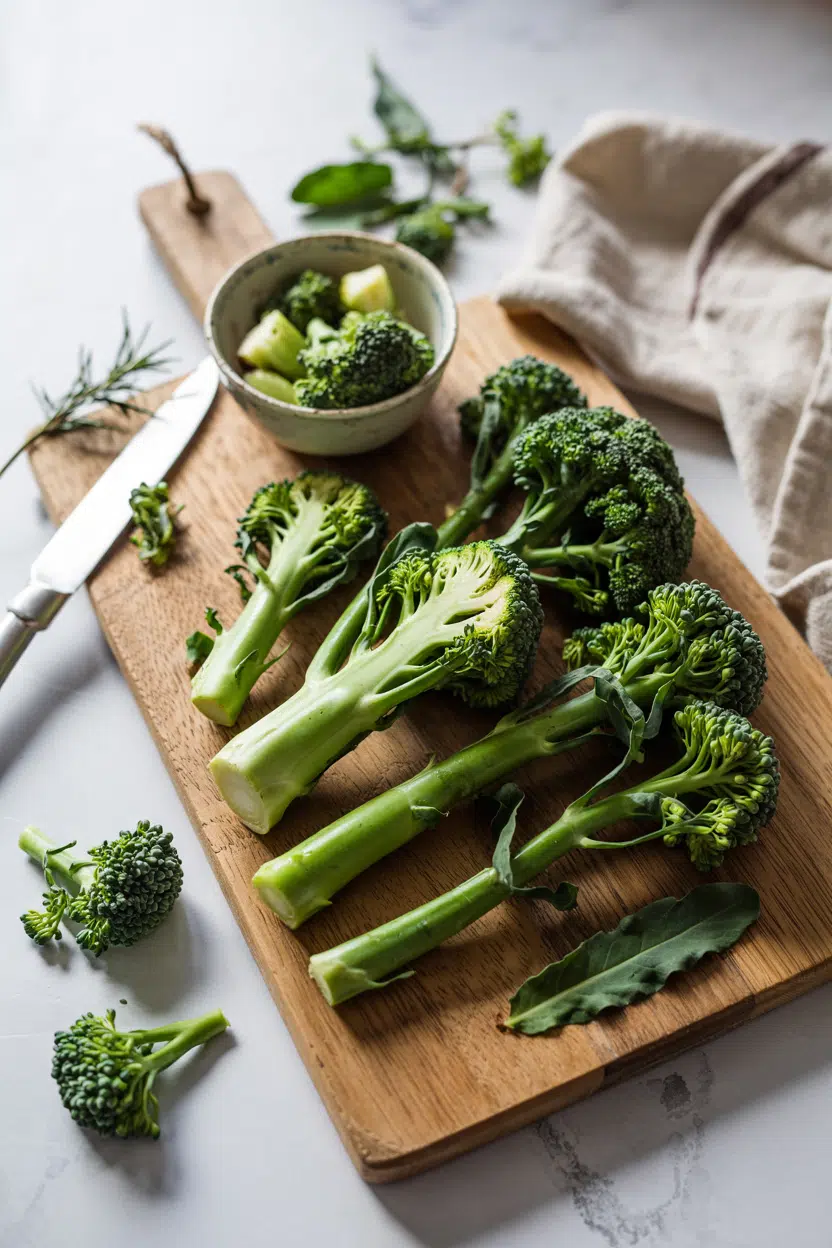
It's a hybrid built for fast cooking, and once you know how it actually tastes, it becomes one of the easier greens to reach for. If your usual rotation leans on Chinese broccoli or you're mapping out side dishes for broccoli, broccolini fits neatly into both conversations.
Broccolini is a broccoli and gai lan hybrid with long tender stems, small florets, and a mildly sweet, lightly bitter flavor. It cooks in minutes, suits a wide range of cooking methods, and keeps in the fridge for up to a week.
What Is Broccolini?
Broccolini is a man-made hybrid, developed in Japan in the early 1990s by crossing standard broccoli with Chinese broccoli (gai lan). Syngenta brought it to commercial markets in 1996 under the Broccolini trademark, and it's now widely available across North America, Europe, and Australia.
Remember it later
Planning to try this recipe soon? Save it for a quick find later!
You'll see it sold under several names - baby broccoli, broccolette, and occasionally asparation, an older trade name. It's commonly confused with broccoli raab (rapini), but that's a different plant entirely with a sharper, more bitter character.
The plant looks distinct from mature broccoli:
- Long, slender stems - typically 6-8 inches, fully edible with no need to peel
- Small, open florets - looser and more delicate than a standard broccoli crown
- Tender leaves - the leaves along the stem are edible and cook down quickly
- Thinner profile - cooks through evenly without splitting or parboiling first
It belongs to the cruciferous family alongside broccoli, kale, and cabbage, and carries the same class of glucosinolate compounds. Need a swap?
The broccolini replacements page covers the closest alternatives.
What Does Broccolini Taste Like?
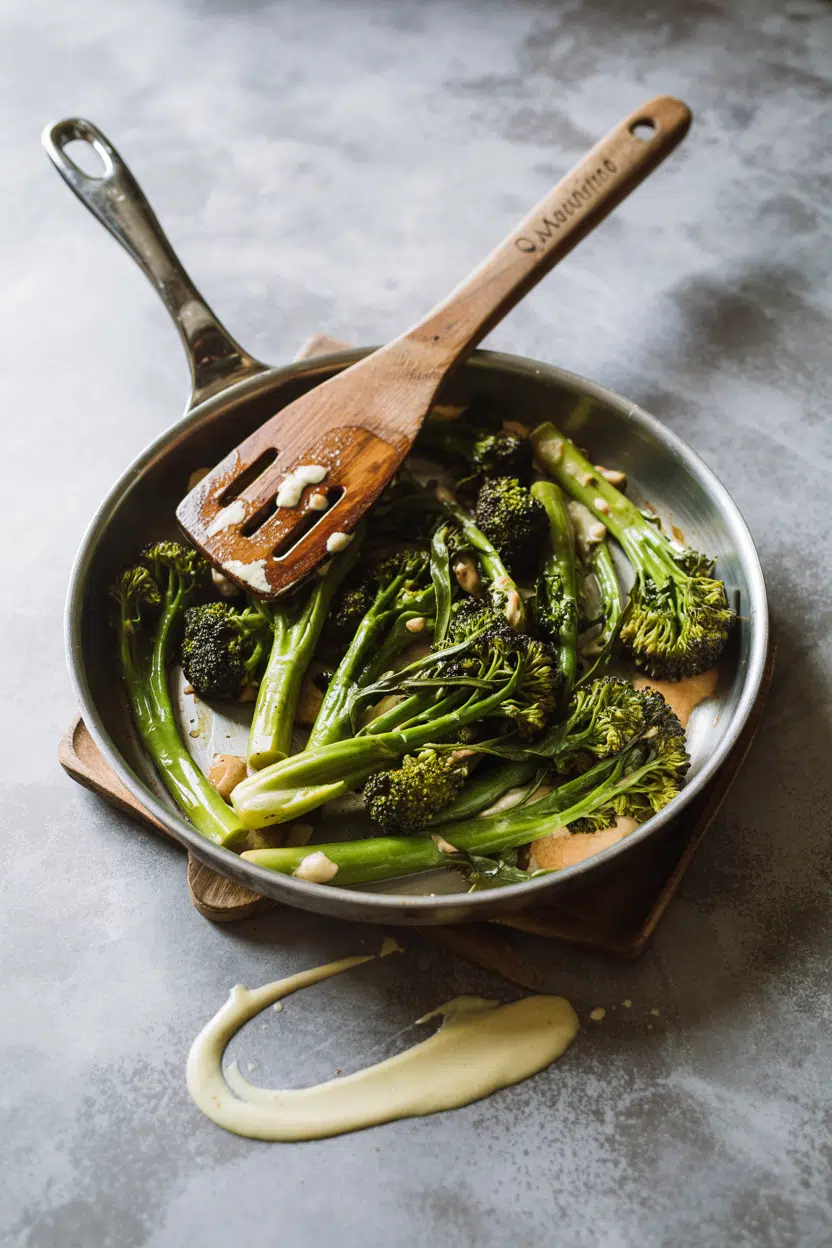
Milder than broccoli is the most accurate starting point. Where standard broccoli can taste dense and slightly sulfurous, broccolini offers a cleaner green sweetness with a light peppery edge at the finish.
Heat affects it noticeably. Raw broccolini tastes sharp and grassy with a more pronounced bitter edge.
Brief cooking - 2 minutes of blanching or a fast stir-fry - mellows the bitterness and draws out the sweetness. Overcook it past that point and the sweetness fades, the stems go limp, and a mild sulfur note appears.
The gai lan parentage shows in the stems. They carry a subtle mineral quality that broccoli doesn't have, which is part of why broccolini holds up well against soy-based sauces and umami-forward dressings.
How to Use Broccolini
Broccolini is fast to prepare. Most cooking methods take under 10 minutes, and the stems and florets cook at roughly the same rate - no need to cut them apart or stagger timing.
| Method | Best For | Tip |
|---|---|---|
| 🔥 Roasting | Crispy edge, caramelized stems, garlic-forward dishes | 425°F for 12-15 min; spread in a single layer. No [roasting rack](https://forkliftkitchen.com/roasting-rack-substitutes/) needed - a flat sheet pan works. |
| 🥘 Stir-frying | East Asian dishes, fast weeknight sides | High heat, 2-3 minutes; add soy and sesame oil at the end |
| 💧 Blanching | Salads, cold plates, prep for pasta | 90 seconds in salted boiling water, then ice bath immediately |
| ♨️ Steaming | Clean sides alongside fish or grains | Steam 3-4 minutes; season simply with lemon and olive oil |
| 🔥 Grilling | Charred flavor, summer sides | Oil the stems well; grill over direct heat 3-4 minutes per side |
Pairings to know: lemon or orange zest, garlic and chili flakes, olive oil, sesame oil, anchovies or miso for depth, toasted almonds or pine nuts, Parmesan, pecorino, and soy sauce with mirin. Butter works well in richer preparations - pasta or a warm grain bowl.
For an easy weeknight combination, toss blanched broccolini into pasta with anchovy, chili, and breadcrumbs. That's a classic Italian approach that lets the green sweetness cut through the salt and fat.
It also appears in stir-fries alongside mushrooms and toasted almonds, or charred on a grill and finished with chili oil. If you want ideas for building out a stir-fry meal, what to serve with stir-fry offers solid direction.
How to Buy and Store Broccolini
Stem firmness is your best signal at the store. Bend a stem - it should snap cleanly rather than bend slowly. Limp stems mean the broccolini has already lost moisture and won't recover with cooking.
For prepackaged broccolini, check inside the bag for moisture buildup or dark spotting on the stems. Either is a sign of early breakdown.
Storage method:
- Wrap loosely in a damp paper towel before bagging
- Use a perforated bag or leave the top partially open for airflow
- Crisper drawer is best - broccolini needs humidity but not condensation
- Don't wash it until you're ready to cook; moisture accelerates decay
Stored correctly, it holds well for 4-7 days. For a deeper look at broccolini storage life and how to tell when it's past its peak, we've covered that in detail.
If you're curious how other leafy greens compare, kale without blanching has a useful shelf life breakdown by storage method.
Where to Start with Broccolini
New to it? Roast it first. Toss trimmed stems with olive oil, salt, and a few smashed garlic cloves, then roast at high heat until the edges char slightly. That method shows the sweet-bitter balance at its clearest and takes under 20 minutes.
From there, move into stir-fries or pasta. Both reward broccolini's quick cooking time and its ability to hold texture in a saucy pan.
If you'd rather substitute something else, the broccoli alternatives page maps out which greens swap well in each context.
Frequently Asked Questions
No. Broccolini is a hybrid of broccoli and Chinese broccoli (gai lan), developed in Japan in the 1990s. It has longer, thinner stems and a milder, sweeter flavor than standard broccoli.
Keep cooking time short - under 5 minutes for most methods. High-heat roasting or a quick stir-fry draws out sweetness and reduces bitterness more effectively than boiling or steaming too long.
Yes, though the flavor is sharper and more bitter than when cooked. Thinly sliced raw broccolini works in salads, especially with an acidic dressing that softens the raw bite.
At 425°F, broccolini roasts in 12-15 minutes. Thinner stems may be done closer to 10 minutes - check for lightly charred edges and tender stems as your cue.
No - broccoli raab (rapini) is a different plant entirely, with a distinctly sharper and more bitter flavor. Broccolini is noticeably milder and sweeter, making them poor substitutes for each other in most dishes.



