
Most people assume broccoli rabe is just a smaller, leafier version of broccoli. It isn't - and that misreading leads to undercooked stems, oversalted dishes, and bitter bites that put people off for good.

Rapini belongs to a different genus entirely, closer to mustard greens and turnips than to the broccoli head in your crisper. Understanding what it actually is - and how to handle its assertive bitter-green character - is the difference between a dish that works and one that doesn't.
Broccoli rabe is a leafy crucifer with thin stems, small florets, and a sharp bitter-green flavor. It's not broccoli. Blanching before sautéing is standard practice. Best in Italian and Mediterranean cooking, especially with garlic, olive oil, and cured pork.
What Is Broccoli Rabe?
Broccoli rabe - also called rapini, raab, or rapa di rapini - is a leafy crucifer native to the Mediterranean, prized across Southern Italy for centuries. Despite the name, it's more closely related to turnips than to broccoli.
Remember it later
Planning to try this recipe soon? Save it for a quick find later!
The plant has thin, firm stems topped with small, tightly clustered florets and broad, jagged leaves. All three parts are edible, though cooking times differ.
In Italy, it anchors the cuisines of Apulia and Campania, where it shows up alongside broccolini and other bitter greens as a staple side or pasta partner. Italian-American cooking brought it stateside, where it became the standard bitter green in pork-and-pasta dishes.
A few names you'll encounter at the market:
- 🌿 Rapini - most common in Italian and Italian-American contexts
- 🌿 Raab or rabe - interchangeable, common in American supermarkets
- 🌿 Broccoli di rapa - the Italian form, used in Southern European recipes
- 🌿 Italian broccoli - a loose term; avoid confusing it with standard broccoli
What Does Broccoli Rabe Taste Like?
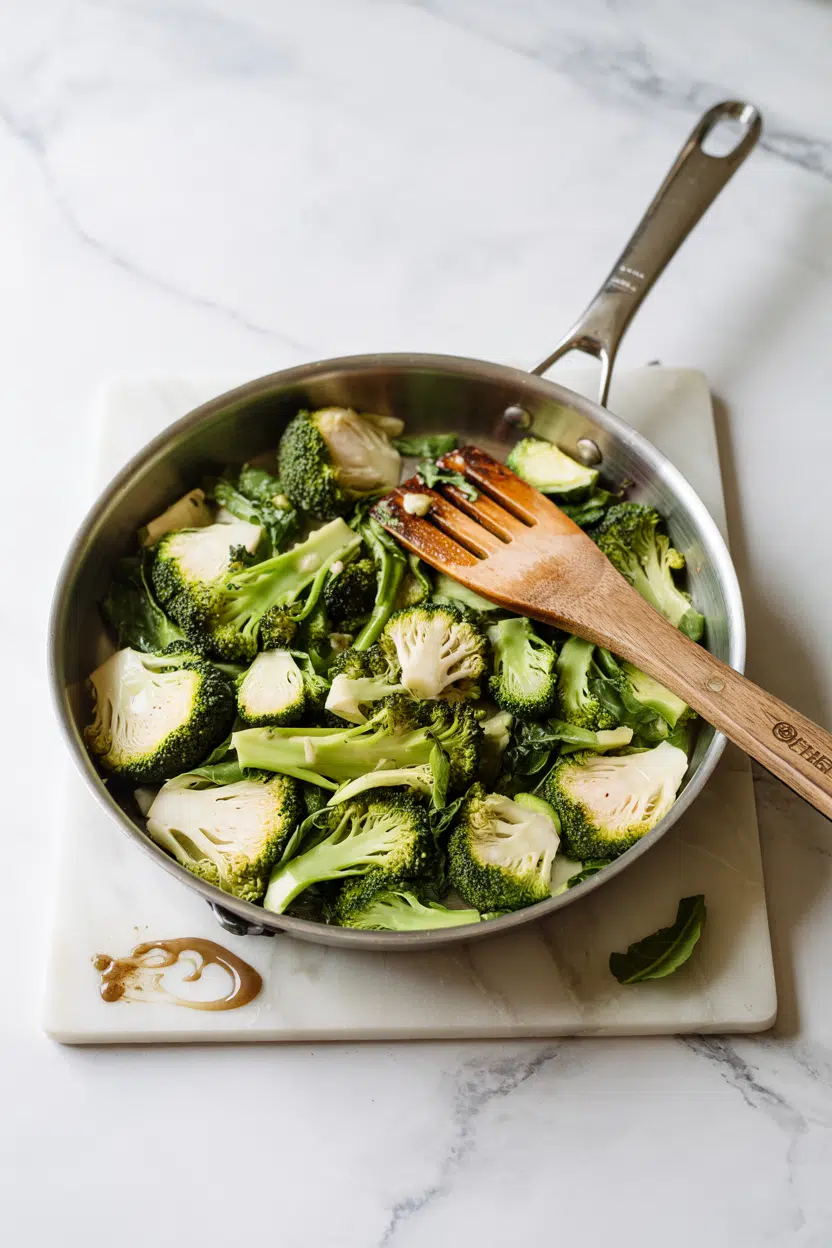
Raw broccoli rabe hits with sharp, bitter-green intensity - more aggressive than kale, significantly more so than broccolini. The leaves carry the most bitterness; the stems follow, with a firm snap and mild peppery bite.
Heat changes the equation. Blanching dials back the bitterness and reveals a slightly nutty, earthy undertone.
A quick sauté after that adds caramelized depth without losing the green character.
The closest comparison is mustard greens for bitterness, though rapini's florets add a faint brassica sweetness that mustard greens lack.
How to Use Broccoli Rabe
The blanch-then-sauté method is the Italian baseline: drop trimmed rapini into boiling salted water for 2 minutes, shock in ice water, drain, then finish in olive oil with garlic and red pepper flakes. It's the standard side dish in Apulian households and Italian-American restaurants alike.
Pasta is the next major application. Orecchiette is the traditional partner - the cup shape traps chopped rapini, anchovy, and Pecorino in every bite. Lemon zest cuts through the bitterness and fat simultaneously.
For slow-cooked dishes, braise whole stems with pork sausage, white wine, and stock. The long cook time mellows bitterness completely and melds the greens into the braise liquid.
If you need a swap for sautéed greens in another recipe, broccoli alternatives or broccolini alternatives cover the basics.
| Method | Best For | Tip |
|---|---|---|
| ♨️ Blanch + Sauté | Side dishes, pasta toss | Salt the blanching water heavily - it seasons the stems from inside |
| 🍲 Braise | Pork dishes, hearty mains | Add whole stems; they hold shape better than chopped |
| 🥗 Raw | Peppery salads, thin-sliced | Use only young, small leaves - mature stems are too fibrous |
| 🔥 Grill/Roast | Charred sides, grain bowls | Toss with oil and high heat; watch closely - leaves scorch fast |
| 🫓 Baked In | Focaccia, savory pies | Blanch first to reduce moisture and prevent soggy dough |
Pairings that hold up against rapini's bitterness: garlic, anchovies, cured pork, Pecorino, lemon, and vinegar. Avoid heavy sweet glazes - they clash rather than balance.
How to Buy and Store Broccoli Rabe
At the market, look for deep green leaves, tight small florets, and firm stems. A bright mustardy smell at the cut base is a good sign.
Skip any bunch with yellowing leaves, black spotting near the stem base, or a slimy feel - those are signs of age.
Storage is straightforward:
- 🧊 Unwashed in the crisper - wrap in a damp towel or use a perforated bag; moisture control matters
- 📅 Use within 3-5 days raw - flavor and texture decline noticeably after day four
- 🥡 Blanched and stored - keeps 3-4 days refrigerated in an airtight container
For full details on maximizing freshness, see our guide on broccoli rabe freshness guide.
Start Here if You're New to Rapini
New to broccoli rabe? Blanch it first. That one step removes enough bitterness to make the flavor approachable while keeping its green bite intact.
From there, pair it with fat, acid, and something salty. Garlic in olive oil, a squeeze of lemon, shaved Pecorino - those three elements balance rapini's sharpness without masking it.
If you find even blanched rapini too intense, check the broccoli rabe swaps guide for milder alternatives that cook the same way.
Frequently Asked Questions
No. Broccoli rabe belongs to the turnip genus (Brassica rapa), while common broccoli is Brassica oleracea. They share the crucifer family but differ in flavor, structure, and cooking behavior - rapini is far more bitter and has loose leaves rather than a dense head.
Significantly more bitter. Kale has a mild, grassy bitterness that most people find approachable raw. Rapini's bitterness is sharper and more mustardy - it typically needs blanching or braising to reach a similar level of palatability.
Yes, but only the young, small leaves hold up well. Thin-slice them and use in salads with citrus or vinaigrette to cut the bitterness. Mature stems are too fibrous and sharp to eat raw comfortably.
Blanch in heavily salted boiling water for 2 minutes, then transfer to ice water. This leaches out glucosinolates - the compounds responsible for bitterness. A second round of blanching reduces it further if needed.
Raw rapini lasts 3-5 days when stored unwashed in a damp towel in the crisper drawer. Blanched and refrigerated in an airtight container, it keeps for 3-4 days before texture degrades.



