
Most people who dislike parsnips have only eaten them raw or boiled without purpose - pale, fibrous, and oddly sharp. That version barely hints at what this root vegetable can do.

Roast one at high heat and you get something almost unrecognizable: caramelized edges, a honeyed sweetness, and a nutty depth that puts it closer to a side dish centerpiece than an afterthought. Whether you're new to parsnips or just underusing them, this profile covers everything from raw flavor to the best way to buy and store them.
Parsnip is a cream-colored taproot with a sweet, nutty, earthy flavor that deepens with heat. Raw, it's sharp and fibrous. Cooked, it turns creamy and caramelized. Best roasted, mashed, or simmered in soups and stews.
What Is Parsnip?
Parsnip (Pastinaca sativa) is a tapered taproot native to temperate Eurasia, cultivated in Europe for centuries before the potato displaced it as a primary starch crop.
Remember it later
Planning to try this recipe soon? Save it for a quick find later!
It belongs to the same family as carrot and parsley, which explains both its shape and its subtle herbal edge.
The root grows cream to off-white in color, with a smooth skin and a firm, dense flesh surrounding a central fibrous core.
Mature roots develop a woodier core and a slightly more bitter flavor, driven by compounds in the falcarinol family - the same class that gives carrots their faint bitterness.
You'll occasionally see it labeled pastinaca, white carrot, or parsnip root at specialty markets. The most widely grown variety in commercial and home gardens is Hollow Crown, a long, tapered type prized for consistent sweetness and manageable core size.
- Size matters here - small-to-medium roots have a thinner, less woody core than large specimens.
- Season - parsnips peak after the first frost, which converts more starch to sugar naturally in the ground.
- Family ties - turnip and parsnip often appear together in root blends, though they're from different plant families entirely.
What Does Parsnip Taste Like?
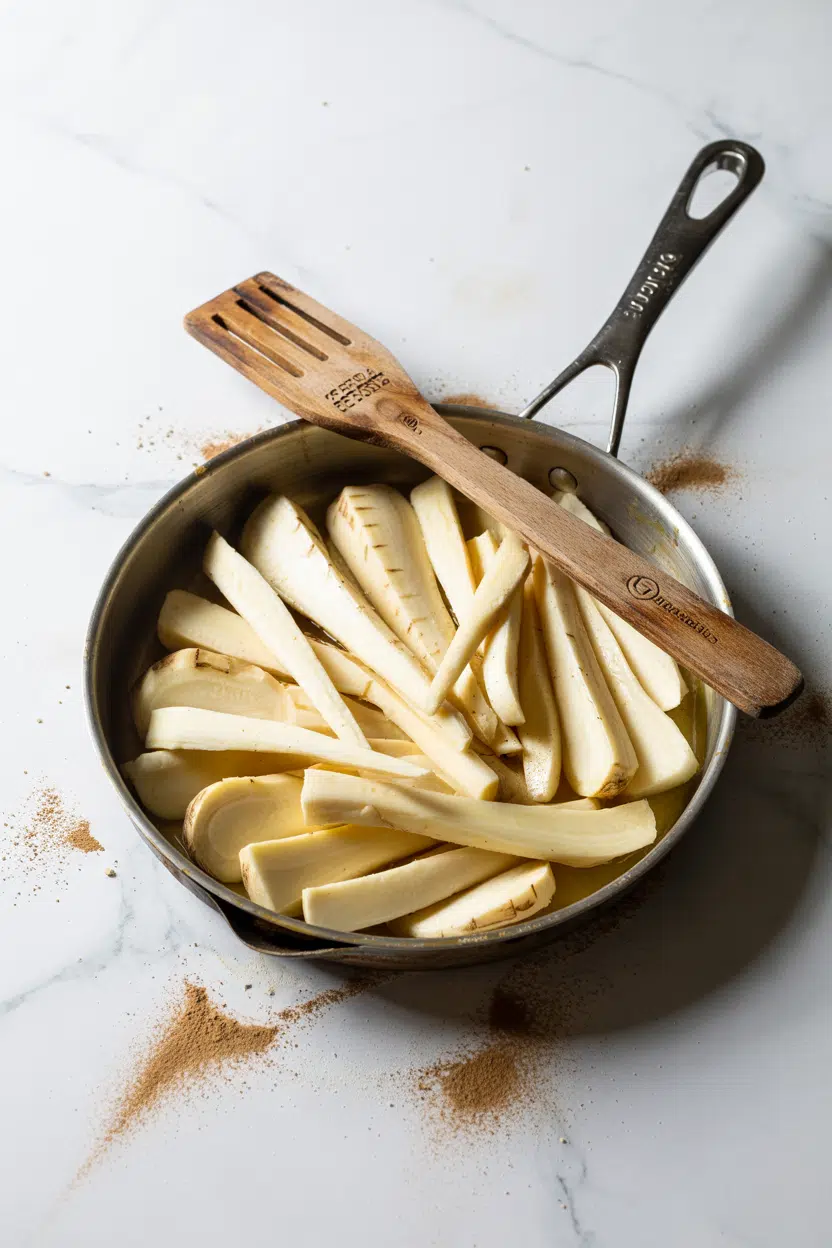
Raw parsnip is sharper and more aggressive than most people expect. It has a peppery, celery-like bite alongside earthy nuttiness, with a fibrous texture that resists chewing.
Most people don't eat it this way for good reason.
Cooking changes everything. Heat converts the starches to sugars, and the result is a honeyed sweetness that no amount of raw tasting prepares you for.
Roasting pushes this furthest - caramelized edges with a creamy, slightly fluffy interior.
Parsnip is sweeter than carrot once roasted, though the flavors share a family resemblance. The key difference is that nuttiness and celery note - neither carrot nor turnip alternatives replicate it cleanly.
How to Use Parsnip
Parsnip pairs most naturally with the fat and salt of roast cooking. British and Northern European cuisines rely on it heavily - think Christmas roast trays alongside potatoes and carrots, or cold-weather purées served under braised meats.
| Method | Best For | Tip |
|---|---|---|
| 🔥 Roasting | Caramelized side dish, holiday trays | Cut into even batons; roast at 400°F+ with oil and thyme |
| 🥣 Boiling/Mashing | Silky purée under roast meats | Add butter and nutmeg; blend hot for smoothest result |
| 🍲 Simmering | Soups, stews, pot roasts | Add in the last 30 minutes - breaks down and sweetens broth |
| 🧀 Gratin | Layered with potato or turnip | Slice thin and uniform; cream and cheese balance the sweetness |
| 🍟 Frying | Parsnip chips, fritters | Slice paper-thin; fry at 350°F for crisp, nutty snacking |
| 🥗 Raw/Shredded | Slaws, quick-texture salads | Shred fine and dress immediately to soften the sharp edge |
Flavoring pairings lean warming and aromatic: rosemary, thyme, sage, nutmeg, and butter are the classics. For contrast, apples or pears in a bisque, or a maple glaze on roasted pieces, cut through the earthiness with bright sweetness. Parsnip and apple bisque is one of the most underrated winter soups in the British tradition.
Protein pairings skew rich - pork belly, roast beef, and braised chicken all work well alongside parsnip's sweetness. Finish with parsley and a squeeze of lemon to lift the dish if it starts to feel heavy.
If you're out of parsnips mid-recipe, parsnip replacements include celeriac and carrot, though neither matches the full flavor profile.
How to Buy and Store Parsnip
Good parsnips are firm, smooth, and dry with no soft spots, deep cracks, or blackened areas. Skip any with limp tips or greenish skin - sun exposure causes greening and can intensify bitter compounds near the surface.
Small-to-medium roots give you the best flesh-to-core ratio. Once home, remove any leafy tops immediately, since greens draw moisture from the root.
Store unwashed in a perforated bag or damp paper towel in the crisper drawer.
- Whole roots - last 2-4 weeks refrigerated with proper airflow
- Cut or peeled pieces - use within 3 days; they dry out and oxidize quickly
- Cooked parsnip - keeps 4 days in an airtight container in the fridge
For a full breakdown of parsnip storage life including freezing guidance, that page covers every storage scenario in detail.
Where to Start with Parsnip
Roast it first. Cut into even batons, toss with olive oil and thyme, and put them in a hot oven until the edges brown.
That one cook teaches you more about what parsnip is than any amount of reading.
Once you're comfortable there, move to a simple purée - boiled, blended with butter and nutmeg, finished with cream. From that base, parsnip soups, gratins, and stews become obvious next steps.
It's a root that rewards patience more than technique.
Frequently Asked Questions
Raw parsnip is sharp, fibrous, and peppery with a celery-like bite. Cooked, it becomes sweet, honeyed, and creamy - the flavor difference is significant enough that the two states barely seem like the same vegetable.
Yes, once roasted or cooked. Parsnips convert more starch to sugar under heat than carrots do, and their natural sugar content is higher. They also carry a nuttiness and spice that carrots don't have.
Quarter the parsnip lengthwise, then cut out the pale central core with a paring knife. This matters most in large, mature roots - small roots rarely need it.
Yes, but the texture is tough and the flavor is aggressively sharp. Shredding them finely and dressing immediately makes them more palatable in slaws. Most preparations benefit from at least light cooking.
For young, small roots, peeling is optional - the skin is thin and softens with roasting. Larger, older parsnips have tougher skin with a more bitter edge, so peeling is worth the effort there.



