Most people reach for prepared horseradish without thinking about what they're actually buying - a root that's half condiment, half chemical event. Grated horseradish doesn't burn the way chili does; it fires straight up into the sinuses, then vanishes in seconds. That fleeting, nasal heat is the whole point, and understanding how to control it changes how you cook with it entirely.
Unlike its close botanical cousins radish and other pungent roots, horseradish carries heat in a uniquely volatile form that reacts instantly to air, acid, and temperature.
Horseradish is a pungent root vegetable in the mustard family. Its sharp, nasal heat comes from allyl isothiocyanate - compounds released when the root is grated or crushed. Use it raw for maximum punch or blend it into sauces for a gentler, lasting warmth.
What Is Horseradish?
Horseradish (Armoracia rusticana) is a hardy perennial root from temperate Europe and western Asia, cultivated for centuries as both a condiment and a medicinal plant.
Remember it later
Planning to try this recipe soon? Save it for a quick find later!
It belongs to the Brassicaceae family - the same plant group as mustard, wasabi, and cabbage - which explains why its heat mechanism feels so chemically similar to those ingredients.
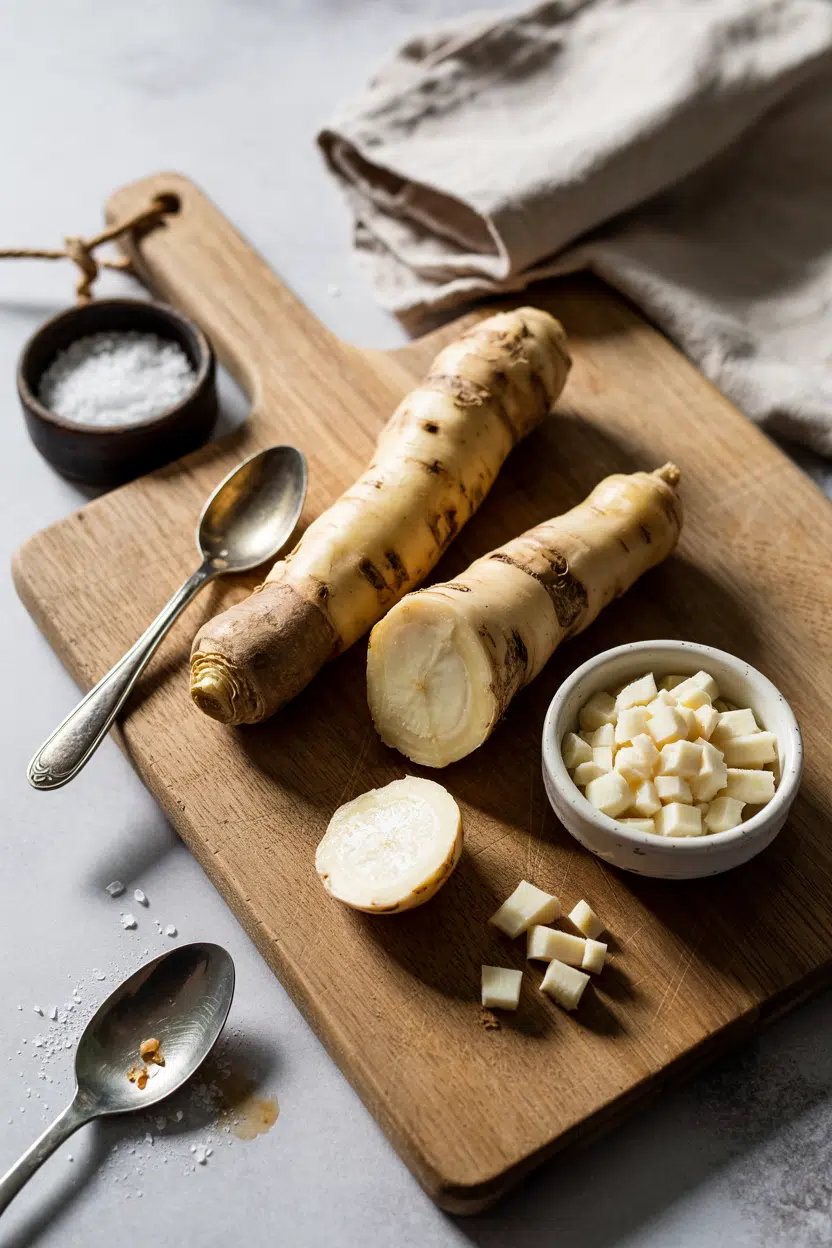
The root itself is white, thick, and knobby, with a tough beige skin and dense fibrous flesh. Left whole and uncut, it barely smells.
Once you grate or crush it, glucosinolates inside the cells react with enzymes and convert to allyl isothiocyanate - the volatile compound responsible for that sinus-clearing blast.
You'll find it sold in a few distinct forms:
- Fresh whole root - the strongest form, raw heat at full intensity
- Prepared horseradish - grated root preserved in vinegar, widely jarred
- Cream horseradish - prepared horseradish blended with mayonnaise or sour cream
- Horseradish sauce - British-style, creamier and milder than the American jarred version
It also goes by garden horseradish or simply horseradish root, though "horse radish" as two words appears on older labels and regional packaging.
What Does Horseradish Taste Like?
Horseradish heat is nasal, not oral. Unlike chili pepper burn - which sits on the tongue and builds - allyl isothiocyanate vaporizes rapidly and hits the back of the nasal passage.
The sensation peaks fast and fades within thirty seconds.
The flavor underneath that heat is layered. There's a bright peppery bite up front, then a clean, sharp bitterness at the finish that lingers longer than the heat does.
Fresh-grated horseradish is significantly more aggressive than jarred - the volatile compounds start degrading the moment the root is cut.
Compared to wasabi, the heat is similar in character but cruder - wasabi has a cleaner, greener sweetness that horseradish lacks. Both share allyl isothiocyanate as their active compound, which is why commercial wasabi paste is often just horseradish dyed green.
How to Use Horseradish
Raw grated horseradish delivers the most heat, but most recipes call for it blended into something - cream, mayonnaise, or vinegar - to soften its edge and make it spreadable. The method you choose directly determines how much heat survives.
| Method | Best For | Tip |
|---|---|---|
| 🥗 Raw Grated | Cocktail sauce, vinaigrettes, fresh condiments | Use within 30 minutes; heat fades fast once grated |
| 🥣 Creamed | Roast beef sauce, steak sandwiches, potato salad | Sour cream or crème fraîche mutes heat gently |
| 🫙 Pickled | Eastern European condiments, beet-horseradish (ćwikła) | Vinegar locks in moderate heat; flavor mellows over weeks |
| 🔥 Roasted | Crusts for beef tenderloin, baked sauces | Heat destroys volatiles - add raw horseradish after cooking for punch |
In British cuisine, horseradish cream sauce is the default partner for roast beef and prime rib. Eastern European cooking uses it pickled alongside beets for a traditional condiment, and Jewish deli tradition puts sharp prepared horseradish on pastrami and corned beef.
American cocktail sauce for shrimp and oysters relies on horseradish as its primary heat source.
Beyond its classic pairings, it works surprisingly well stirred into mashed potatoes or folded into egg salad for a peppery finish. A small spoonful in a balsamic vinaigrette adds unexpected backbone.
It also cuts the oiliness of smoked salmon effectively - a role where almost nothing else performs as cleanly.
If you're out and need a swap, the closest options are horseradish alternatives like wasabi paste or spicy brown mustard, though neither fully replicates the nasal volatility of fresh root.
How to Buy and Store Horseradish
Fresh horseradish root should feel dense and heavy for its size. The skin should be relatively smooth and unbroken; avoid roots with deep cracks, soft spots, or significant green shoots, which signal age and depleted heat.
A fresh root barely smells - if it already reeks sharply before you've cut it, it's past its prime.
Prepared horseradish in jars is widely available and perfectly usable, though it's noticeably milder than fresh. Once opened, keep it tightly sealed and refrigerated. Full details on how long each form lasts are in our guide to horseradish storage guide; the short version is that opened jars hold well for 3-6 months before the heat fades noticeably.
Note that sour cream - a common mix-in for horseradish sauce - has its own shelf life to track separately when you're making blended condiments from scratch.
Where to Start With Horseradish
New to it? Open a jar of prepared horseradish and stir a teaspoon into sour cream - that ratio gives you a mild, approachable sauce with none of the intimidation of raw root.
If you want more heat, grate fresh root yourself and use it immediately.
- Start mild - prepared horseradish in cream or mayo for sandwiches and beef
- Go bolder - fresh-grated stirred into cocktail sauce right before serving
- Full commitment - raw grated root served straight as a condiment, Eastern European style
The heat is always manageable. You're in control the moment you understand acid stops it.
Frequently Asked Questions
Not exactly. Horseradish heat hits the nasal passage rather than the tongue and fades within thirty seconds, whereas chili pepper burn builds and lingers on the palate. They use entirely different chemical compounds - allyl isothiocyanate versus capsaicin.
No, though they're closely related botanically and share the same heat compound. Most commercial wasabi paste sold outside Japan is horseradish mixed with mustard and green food dye - real wasabi root is expensive and rare.
An opened jar typically lasts 3-6 months refrigerated before the heat noticeably fades. Color is a reliable indicator - when prepared horseradish turns dark brown throughout, potency has dropped significantly.
Yes. Freeze whole or grated root in an airtight container for up to 6 months. Grated frozen horseradish loses some texture but retains enough heat for sauces - grate it straight from frozen for best results.
Add acid immediately - vinegar or lemon juice stops the enzyme reaction that generates heat. Blending with sour cream or heavy cream also dilutes intensity without muting the underlying peppery flavor.