You spot a hefty bunch of collard greens at the market - broad, dark leaves fanning out like oversized paddles, stems thick enough to feel almost architectural. Most people walk past them, unsure what to do with something so sturdy.

That's a missed opportunity, because few greens hold up to long, smoky cooking the way collards do, and that toughness is exactly the point. They're a staple across swiss chard alternatives and mustard green swaps lists, but collards deserve to be understood on their own terms.
Collard greens are a large, dark Brassica leaf with mild bitterness that softens dramatically during braising. Common in Southern U.S. and Portuguese cooking, they pair best with smoked meats and acidic finishes. Raw leaves last up to 10 days refrigerated.
What Is Collard Green?
Collard green - botanically Brassica oleracea - belongs to the same species as cabbage, kale, and broccoli, though it grows as a non-heading, open-leaf plant.
Remember it later
Planning to try this recipe soon? Save it for a quick find later!
Its roots trace to West Africa, where it was cultivated long before it became a cornerstone of Southern U.S. cooking through the African diaspora.
The leaves are large and flat with a prominent central rib, dark blue-green in color, and noticeably thicker than most other leafy greens. That thickness is structural - the leaf resists wilting and holds its shape through hours of braising.
You'll hear them called collards, colewort, or couve in Portuguese and Brazilian cooking. Unlike kale, which has curly or lacinato varieties with distinct personalities, collards are relatively uniform - same broad leaf, same sturdy build, across most bunches you'll find at market.
What Does Collard Green Taste Like?
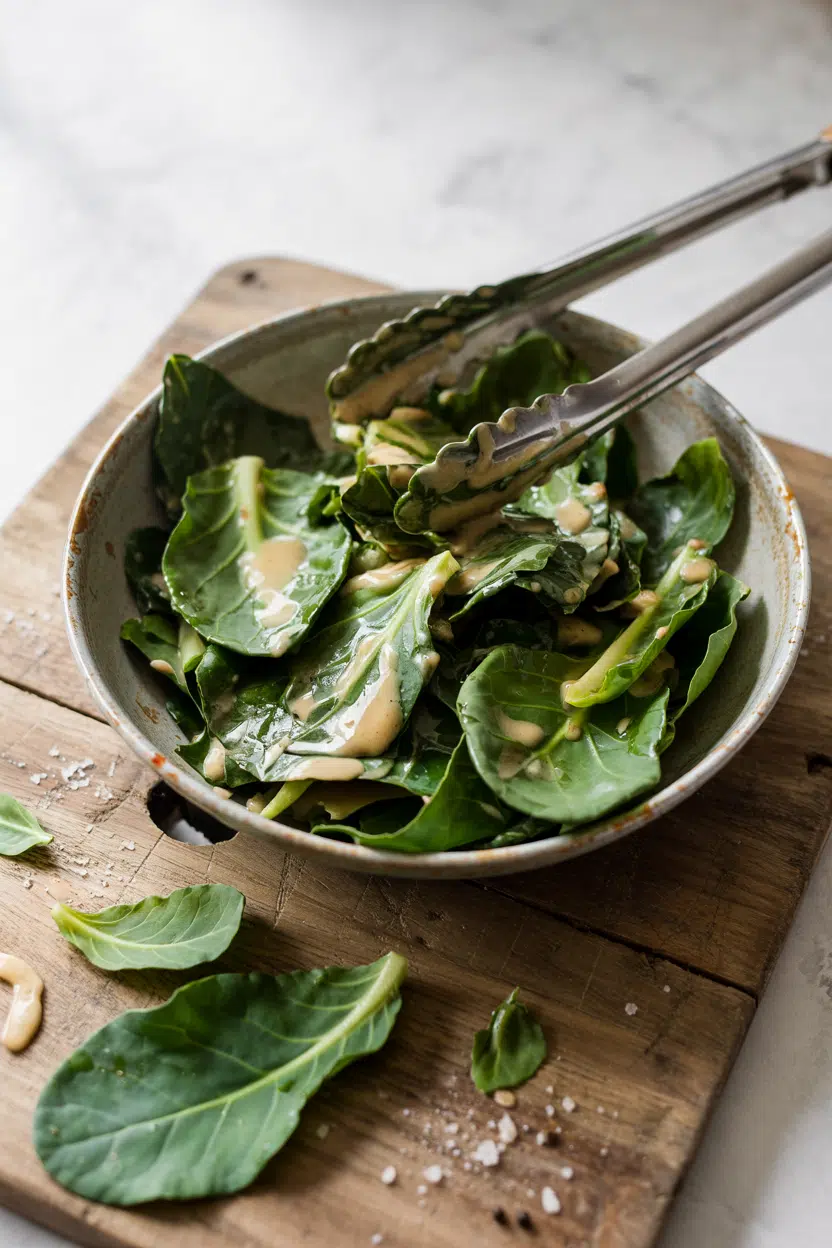
Raw collards have a mild, grassy bitterness - less sharp than mustard greens, less mineral than kale, but with a faint pepper note near the thick central stem. The raw flavor is assertive enough to notice, not aggressive enough to overwhelm.
Heat changes everything. Long braising pulls out that bitterness and replaces it with something earthy, savory, and almost sweet.
The leaves absorb whatever liquid they cook in - pot likker spiked with smoked turkey or ham hock turns them deeply savory and faintly smoky.
Acid - vinegar, lemon - brightens the cooked flavor sharply. A splash at the end of braising cuts through the richness and lifts the whole pot.
How to Use Collard Green
Southern-style braised collards are the most recognized preparation: leaves stripped from the central rib, chopped, and cooked low and slow in seasoned broth with smoked pork. A ham hock or smoked turkey neck added early in cooking gives the pot likker its signature depth. If you're planning a full Southern spread, pairings for smoked turkey breast is a useful starting point for building the meal around it.
Portuguese couve a mineira takes a faster route - thin-sliced leaves sautéed quickly in olive oil and garlic, finished with salt. Brazilian cooking uses the same technique alongside rice and beans.
Both approaches prove collards don't need hours to be good; they just need different goals.
Beyond those two anchor preparations, collards work across several methods:
| Method | Best For | Tip |
|---|---|---|
| 🫕 Braising | Southern-style greens, pot likker | Cook 45-90 min with smoked meat; finish with vinegar |
| 🍳 Sautéing | Portuguese couve, quick weeknight side | Slice thin; high heat, 3-5 min only |
| 🥗 Raw (massaged) | Hearty salads, slaws | Thin-slice and massage with salt and acid to soften |
| 🥬 Leaf-wrapping | Grain or protein fillings as a wrap | Blanch briefly to make pliable without tearing |
| 🍲 Stewing | Soups, beans, lentils | Add near the end so leaves stay intact, not mushy |
Vinegar, garlic, and hot red pepper flakes are the classic flavor partners. lard swaps like smoked olive oil or bacon fat work well when you want the rendered richness without the pork itself.
How to Buy and Store Collard Green
At the store, look for firm, deep blue-green leaves - no large brown spots, no slimy edges, no yellowing. Flexibility matters: leaves that crumble when you bend them are past their prime.
Check the cut base of the bunch; fresh collards have moist, pale ends and no sour smell.
- 🌡️ Refrigerator storage - Wrap unwashed leaves loosely in a damp paper towel, place in a perforated plastic bag, and store in the crisper drawer.
- 💧 Don't wash before storing - Moisture on the leaves accelerates rot; wash immediately before cooking only.
- 📅 Shelf life - Raw whole leaves hold 5-10 days; for the full breakdown, see our guide on [collard green shelf life](https://forkliftkitchen.com/collard-green-shelf-life/).
- ❄️ Freezing - Blanch first, squeeze dry, then freeze in portions for up to 12 months.
Start With the Braise
If you've never cooked collards, start with the braise. It's forgiving, it showcases what makes this green distinct, and it teaches you the right texture to aim for.
If braised greens feel like too much for a weeknight, try the thin-sliced sauté instead - same leaf, faster result.
For anyone building out a rotation of sturdy greens, the collard green swaps guide covers when kale or chard can step in and when they can't.
Frequently Asked Questions
No. Both are Brassica oleracea, but collards have broader, flatter leaves with a milder, earthier flavor. Kale is more bitter and fibrous, and it breaks down faster during cooking than collards do.
Long, slow braising is the most reliable method - heat breaks down the bitter compounds over time. Adding an acid like apple cider vinegar at the end also cuts any remaining bitterness without masking the earthy flavor.
Yes, but the texture requires preparation. Thin-slicing and massaging the leaves with salt and acid for a few minutes breaks down the fibrous structure enough for salads and slaws.
Raw whole leaves last 5-10 days stored unwashed in a damp paper towel inside a perforated bag. Cooked collards keep 3-5 days in a sealed container.
Not always. For long braises, the stems soften enough to eat. For sautés or salads, strip the leaf from the central rib - it stays tough and fibrous even with high heat.