
Shortbread batter, a Victoria sponge, a bowl of stiff meringue peaks - each relies on a sugar that vanishes into the mix rather than leaving gritty traces behind. Caster sugar does that job. Its crystals are finer than standard granulated sugar but coarser than powdered sugar, landing in a sweet spot that makes it the go-to for bakers who care about texture.
If you're working with whipped egg whites or a creamed butter base and the result keeps falling short, the sugar grade is often the culprit.
Caster sugar is a finely milled dry sweetener with a clean, neutral sweetness and nearly no aroma. It dissolves faster than granulated sugar, making it the preferred choice for meringues, sponge cakes, cold drinks, and custards where a smooth, grit-free result matters.
What Is Caster Sugar?
Caster sugar is granulated cane or beet sugar that has been milled to a much finer crystal size than standard granulated sugar.
Remember it later
Planning to try this recipe soon? Save it for a quick find later!
It originated in the United Kingdom, where it remains a baking staple, and the name comes from the old-fashioned sugar caster - a shaker used to dust fine sugar over food.
Outside the UK and Commonwealth countries, you'll find it sold as superfine sugar or baker's sugar. It is pure sucrose, just like regular granulated sugar, so it carries no additional flavor compounds on its own.
Two main varieties exist:
- White caster sugar - the standard, made from refined cane or beet sucrose with a completely neutral flavor profile.
- Golden caster sugar - less refined, retaining a trace of molasses for a faint, warm undertone; common in British artisan baking.
It sits between granulated sugar and powdered sugar on the processing spectrum. Unlike powdered sugar, it contains no cornstarch anti-caking agent, which is why it behaves differently in recipes that call for one or the other.
What Does Caster Sugar Taste Like?
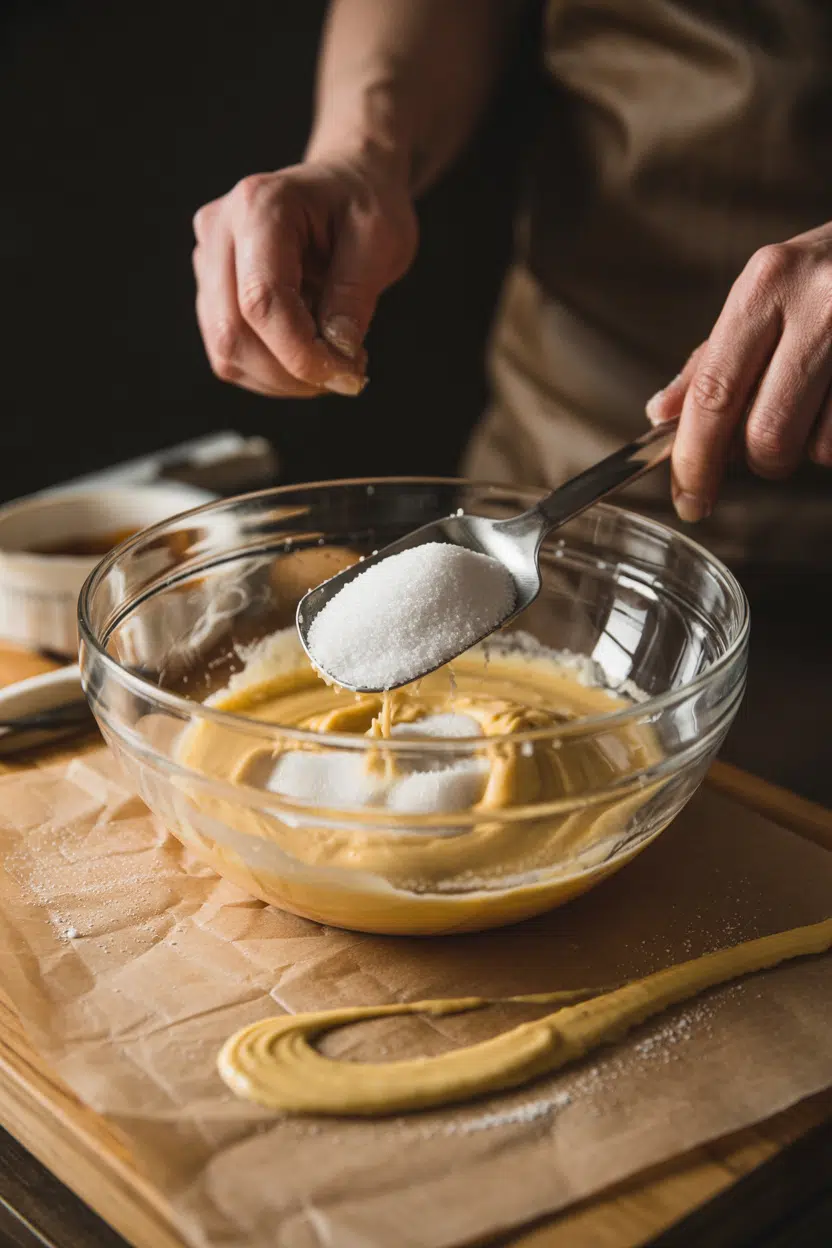
Pure, clean sweetness - that's the short answer. There are no caramel, molasses, or bitter notes in white caster sugar's dry form, making it one of the most neutral sweeteners available.
On the tongue, it's nearly indistinguishable from granulated sugar in sweetness level. The difference is physical: fine crystals dissolve against moisture faster, so there's no gritty sensation when dissolved into a batter or drink.
Heat changes its behavior. Applied directly to a surface, caster sugar melts quickly and evenly toward caramel, though the flavor shift happens at the same temperature as any other sucrose - roughly 320°F (160°C).
Golden caster sugar adds a very subtle warmth that white caster sugar doesn't, though you'd only notice it in delicate preparations like a light syrup.
How to Use Caster Sugar
Dissolution speed is what sets caster sugar apart in practical cooking. Wherever undissolved sugar grains would ruin the result - a meringue, a cold cocktail, a silky custard - this is the sugar to reach for.
| Method | Best For | Tip |
|---|---|---|
| 🥄 Whipping | Meringues, whipped cream, mousses | Add gradually to avoid deflating the foam |
| 🧈 Creaming | Sponge cakes, Victoria sponge, pound cake | Fine crystals aerate butter faster and more evenly |
| 🥂 Dissolving cold | Cocktails, lemonade, iced tea, cold syrups | Stirs in without heating - granulated sugar won't |
| 🍮 Syrup & custard | Simple syrups, crème brûlée, panna cotta | Dissolves without stirring over heat for long |
| ✨ Finishing | Dusting fruit, warm crêpes, pavlova | Melts on contact with warm surfaces faster than coarse sugar |
British baking leans on caster sugar most heavily - it's standard in a classic Victoria sponge and mandatory for a proper pavlova. French patisserie uses it in genoise and chiffon batters where even crumb structure depends on fine sugar integration.
Australian and New Zealand baking traditions follow the same approach, making caster sugar a pantry default across Commonwealth kitchens.
It pairs naturally with butter, eggs, vanilla, and cream in baked goods, and with rum, citrus, and berries in drinks and cold desserts. Where you'd want textural crunch on top of cookies or crumbles, coarser raw or demerara sugar does a better job.
For recipes where a dry, starchy sweetener matters, powdered sugar substitutes are worth understanding separately.
How to Buy and Store Caster Sugar
Look for packaging labeled "caster sugar" or "superfine sugar" specifically - regular granulated sold in a similar bag won't perform the same way. Through the bag, the crystals should look uniform and free-flowing.
Avoid any package showing clumps or a damp appearance; moisture uptake has already begun.
Storage is straightforward:
- Airtight container - transfer from the bag immediately after opening to prevent clumping.
- Cool, dry location - a pantry shelf away from the stove works; humidity is the main enemy.
- Away from strong odors - fine crystals absorb surrounding scents more readily than coarser sugar.
Properly stored, caster sugar storage life is indefinite, though best quality holds for about two years. For comparison, most dry sugars share this longevity - see how sugar storage life varies across types if you're stocking multiple varieties.
Start Here If You're New to Caster Sugar
If your recipes come from British or Australian sources, you likely already need it and don't realize why your results differ when using regular granulated. Start with meringue or a Victoria sponge - both will immediately show the difference in texture.
For everything else, knowing your caster sugar swaps is useful: a brief blitz of granulated sugar in a food processor gets you close. However, for cold drinks and uncooked applications, it won't fully replicate the speed of dissolution that true superfine sugar delivers.
Frequently Asked Questions
Yes, in most cooked or baked recipes with no noticeable difference in flavor. The risk is texture - coarser crystals may not cream or dissolve fully, leaving a slightly grainy result in delicate cakes or meringues.
Pulse regular granulated sugar in a food processor or blender for about 30 seconds. Stop before it becomes powdery - you want fine crystals, not powder. Sift it to remove any lumps before using.
Yes. Smaller crystals have more surface area, so they dissolve and melt more quickly. This is especially noticeable in cold liquids and when caramelizing on low heat.
Effectively yes - both refer to sugar milled to a finer crystal than standard granulated. "Caster" is the British term; "superfine" is common in American markets. Crystal size may vary slightly by brand.
Caster sugar is the standard choice. Its fine crystals dissolve into egg whites quickly and completely, preventing the weeping or graininess that coarser granulated sugar can cause in a finished meringue.



