Wasabi does one thing no other condiment can replicate: it delivers a sharp, sinus-clearing heat that rises fast, peaks instantly, and then vanishes - leaving the flavor of the food beneath it completely intact. Unlike brown mustard or ginger, which linger and layer, real wasabi clears the palate rather than coating it.
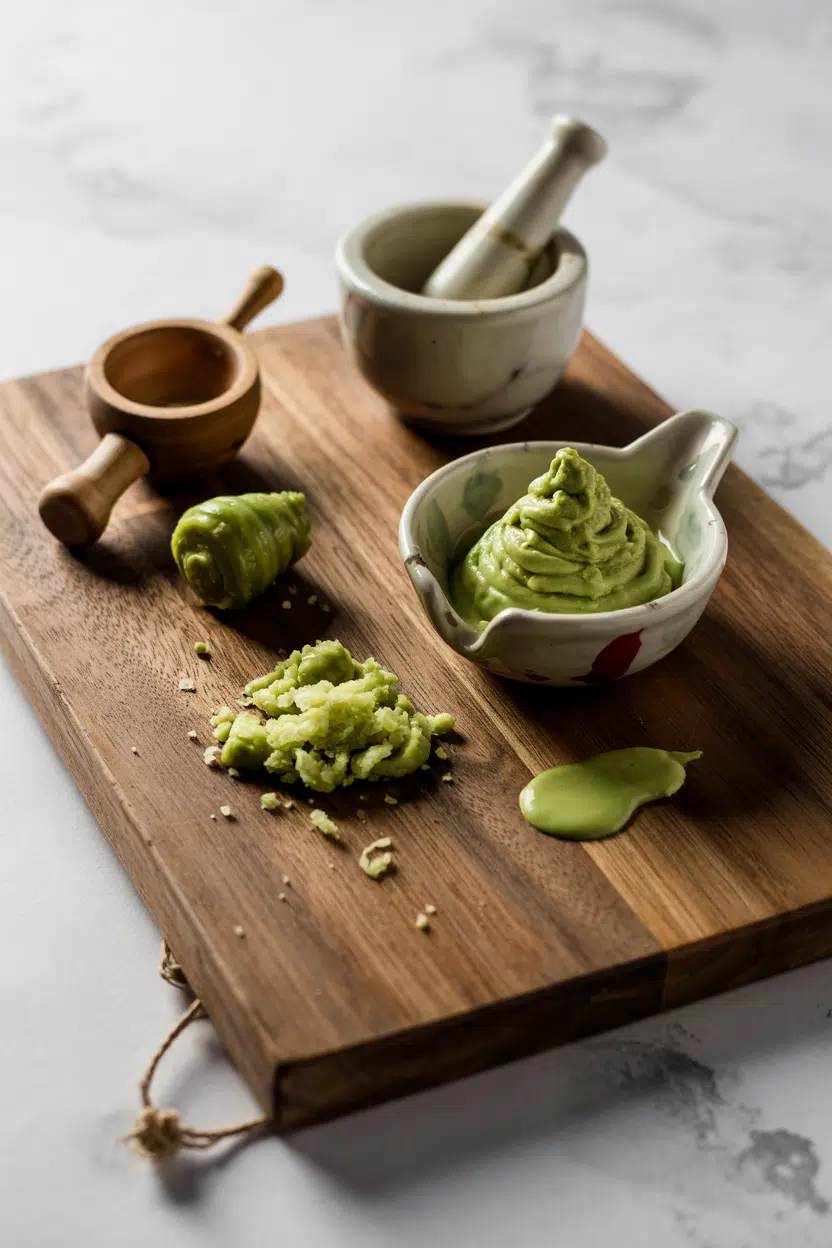
That role - precise heat with zero residue - is exactly why sushi chefs still reach for the rhizome first.
Wasabi is a pungent Japanese rhizome prized for its sharp nasal heat and clean green finish. Most products sold as wasabi are horseradish-based. Freshly grated hon-wasabi loses peak heat within minutes and pairs best with raw fish, soy sauce, and cold noodles.
What Is Wasabi?
Wasabi (Wasabia japonica, also classified as Eutrema japonicum) is a semi-aquatic rhizome native to mountain stream regions of Japan, particularly on Honshu and Shikoku. It has been cultivated in Japan for over a thousand years and remains one of the most labor-intensive crops in food production.
Remember it later
Planning to try this recipe soon? Save it for a quick find later!
The plant requires cold, clean running water, filtered light, and precise temperature control - conditions that make commercial farming outside Japan rare and expensive.
The part used in cooking is the swollen stem, or rhizome, not the root itself. When grated, cells in the tissue break open and release allyl isothiocyanate, the volatile compound responsible for wasabi's distinctive nasal burn.
You'll encounter wasabi in several forms:
- Hon-wasabi (real wasabi) - the whole fresh rhizome, grated to order; the gold standard
- Wasabi paste (tube or tub) - often a blend of horseradish, mustard, and green dye with little or no actual wasabi
- Wasabi powder - dried and ground, reconstituted with water; flavor is sharper and less nuanced than fresh
- Wasabi leaves and stems - edible and mildly pungent; sometimes pickled or used in salads
The term "Japanese horseradish" is technically inaccurate - wasabi and horseradish are different species, though both belong to the Brassicaceae family.
What Does Wasabi Taste Like?
Wasabi's heat is fundamentally different from chili heat. It travels upward into the sinuses rather than spreading across the tongue, which is why the sensation feels like a sharp clearing rather than a burn.
The intensity peaks within two or three seconds and then drops away almost completely.
Beneath that heat sits a clean green sweetness - faintly grassy and mildly floral - that horseradish and hot mustard don't have. That's the quality that makes real wasabi worth seeking out.
The finish is slightly bitter, which helps reset the palate between bites.
Freshly grated wasabi tastes noticeably rounder and more complex than tube paste. Powder-based preparations lean sharper and more one-dimensional, closer to strong mustard.
How to Use Wasabi
Fresh hon-wasabi should be grated using an oroshigane - traditionally a sharkskin grater - in small circular motions to produce the finest paste possible. Grate only what you'll use immediately. The volatile compounds that create its heat begin breaking down within 10 to 30 minutes of grating, so timing matters.
Heat destroys allyl isothiocyanate, so wasabi belongs in cold or room-temperature applications. It works best raw or folded gently into sauces just before serving.
The ingredient pairs most naturally with raw fish - tuna, salmon, yellowtail - and is a cornerstone of pairings for sashimi.
| Method | Best For | Tip |
|---|---|---|
| 🥗 Fresh Grated | Nigiri, sashimi, tofu with soy | Use immediately; circular motion on oroshigane produces finest paste |
| 🥄 Folded into Sauce | Ponzu vinaigrettes, cold noodle dips, soy dipping sauce | Add just before serving to preserve heat; avoid prolonged stirring |
| 🧈 Blended into Fat | Wasabi mayo, compound butter for seared beef or seafood | Use sparingly - fat amplifies the sharpness noticeably |
| 💧 Reconstituted Powder | Everyday cooking when fresh is unavailable | Mix with cold water, rest 5 minutes before using for best flavor |
Wasabi mayo works particularly well on fried seafood and sandwiches - the richness of the mayonnaise tempers the nasal hit without erasing it. A thin smear between seared beef and sauce cuts through fat cleanly. Ponzu with a small amount of whisked wasabi makes a sharp, citrusy dressing for cold soba or udon.
Outside Japanese cuisine, wasabi shows up in modern fusion cooking - Japanese-European crossovers especially - where it contrasts with butter-rich sauces and fatty proteins.
How to Buy and Store Wasabi
Fresh rhizomes are the hardest to source outside Japan but worth finding. Select firm, knobby specimens with pale green flesh and no soft spots.
Leaves still attached indicate a recent harvest - a reliable freshness signal. For prepared products, read the ingredient list carefully.
Most commercial tubes and packets contain horseradish, mustard powder, and green food coloring with no wasabi whatsoever; genuine products list Wasabia japonica and tend to cost significantly more.
Storage is straightforward but time-sensitive:
- Whole rhizome - wrap in a damp paper towel, seal in an airtight container, refrigerate; use within 1-2 weeks
- Grated wasabi - use within 10-30 minutes or heat and aroma are largely gone
- Tube paste - refrigerate after opening and use within the manufacturer's window (weeks to months, depending on preservatives)
- Wasabi powder - store in a cool, dry place; reconstitute only what you need
For a full breakdown of how long each form keeps, see our wasabi freshness guide guide. And if fresh rhizomes aren't available, our wasabi swaps guide covers the closest alternatives.
A good grater matters more than most people expect - the finer the grate, the more heat compounds release.
Start Here
Real wasabi is unforgiving in one direction: timing. If you have a fresh rhizome, grate it in the last minute before serving and use every bit of it.
If you're working with powder or tube paste, read the label and adjust portion size down - commercial preparations tend to run sharper and less nuanced than fresh. Start with half a teaspoon in any sauce or dressing; you can always add more, and you cannot take it back.
Frequently Asked Questions
Almost never. Most commercial tubes and packets are made from horseradish, mustard powder, and green dye. Only products that list Wasabia japonica or hon-wasabi in the ingredients contain genuine wasabi.
Peak heat lasts roughly 10-30 minutes after grating. The volatile allyl isothiocyanate compounds disperse quickly at room temperature, so grate directly before serving.
Both belong to the Brassicaceae family and share similar heat compounds, however wasabi has a cleaner, greener flavor and shorter-lived heat. Horseradish is more widely grown and significantly cheaper to produce.
Yes, though it's difficult. Wasabi needs cold running water or consistently moist soil, filtered light, and temperatures between 8-20°C (46-68°F). Container growing near a cool, shaded water source is the most manageable home approach.
Yes. High heat breaks down allyl isothiocyanate rapidly, leaving little to no pungency. Wasabi should always be added to cold or room-temperature dishes, or stirred into sauces just before serving.