You spot them at every store - loose cloves in a bin, full bulbs in a mesh bag, or pre-peeled in a plastic tub.
Garlic cloves are one of those ingredients that seem simple until you realize how much their flavor shifts depending on how you treat them. Raw, they're sharp enough to clear a room.
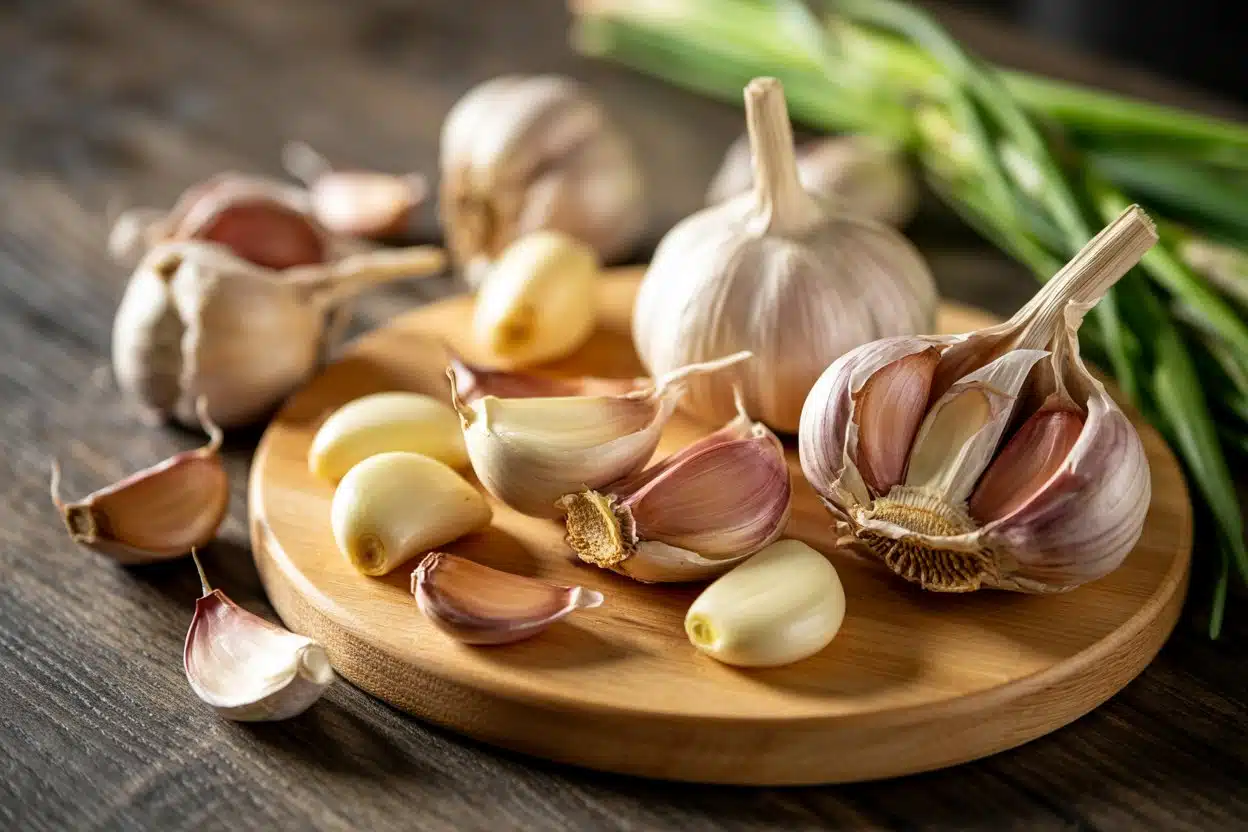
Slow-roasted, they turn sweet, nutty, and spreadable. Knowing which version to reach for makes a real difference in what lands on the plate.
Garlic sits in the same allium family as shallots and onions, and like those aromatics, it rewards a little attention.
Garlic cloves are the individual segments of a garlic bulb, each delivering a pungent, sulfurous punch raw and a mellow sweetness when cooked. Use them minced, roasted, or slow-poached depending on the intensity you need. Whole bulbs store for months; peeled cloves last only a few days.
What Is Garlic Cloves?
Garlic (Allium sativum) is an aromatic bulb that originated in Central Asia, most likely across the region stretching from Kazakhstan to western China, and has been cultivated for over 5,000 years.
Remember it later
Planning to try this recipe soon? Save it for a quick find later!
Each bulb is composed of individual segments called cloves, each wrapped in a thin papery skin that ranges from white to purple-tinged depending on the variety.
The two main types are softneck garlic and hardneck garlic. Softneck varieties are what you'll find at most grocery stores - they're milder, store longer, and have flexible stems.
Hardneck varieties carry more complex flavor and a single ring of larger cloves around a stiff central stalk.
Elephant garlic is often shelved alongside regular garlic but is actually closer to a leek - its cloves are dramatically larger and considerably milder. In French-speaking contexts, garlic is called ail, and individual market stalls across the Mediterranean still sell cured bulbs the same way they have for centuries.
- Softneck garlic - the standard supermarket variety; longer shelf life, milder bite
- Hardneck garlic - richer flavor, fewer but larger cloves, preferred by most cooks who seek it out
- Black garlic - fermented over weeks until cloves turn dark and develop a molasses-like sweetness
- Elephant garlic - mild, leek-adjacent flavor; not a true garlic substitute in most applications
What Does Garlic Cloves Taste Like?
Raw garlic cloves hit hard. The flavor is sharp, sulfurous, and pungent - closer to a fiercer version of raw onion, but with a distinctive edge that's entirely its own.
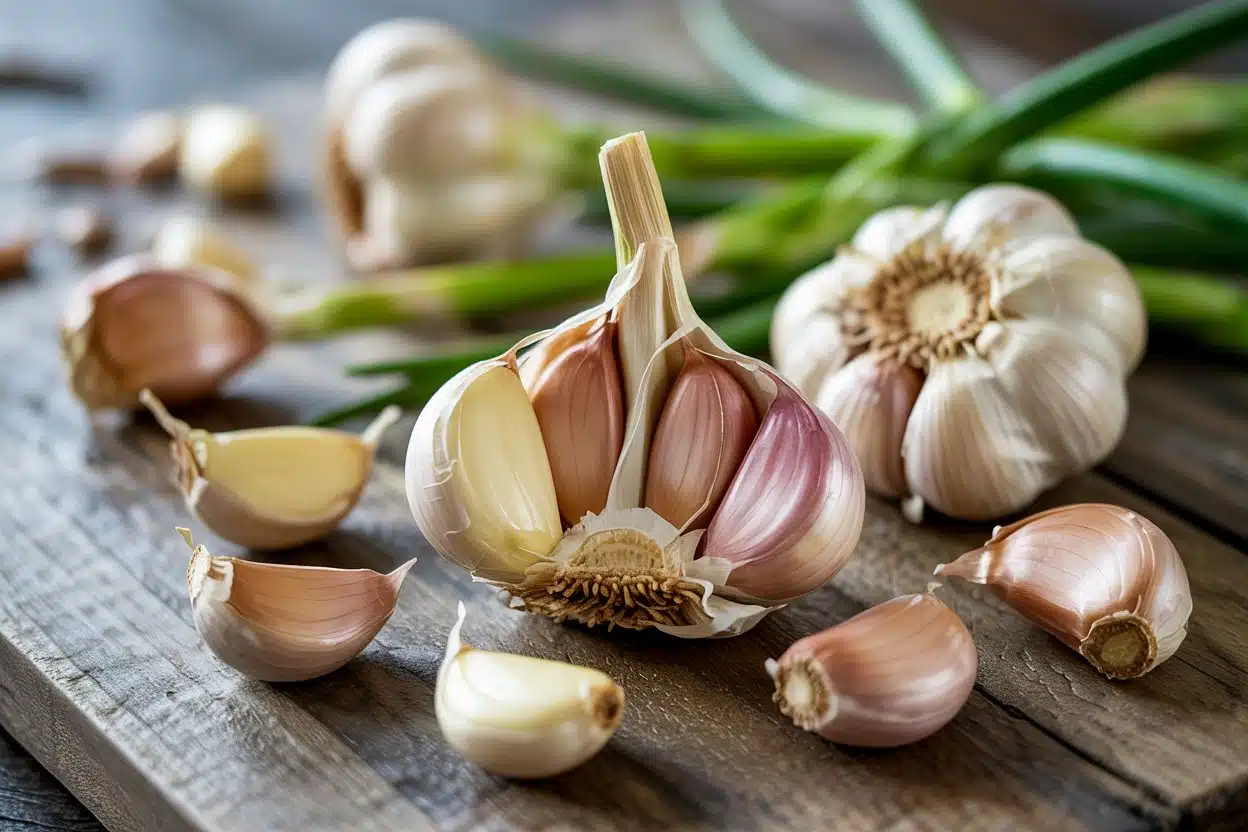
That bite comes from allicin, a compound released when a clove is crushed or cut.
Heat changes everything. Sautéed in olive oil over medium heat, garlic softens into a warm, savory base note within a few minutes.
Roasted whole in its skin, it caramelizes into something almost nutty - think toasted shallot crossed with roasted hazelnuts.
The difference between minced raw garlic in a vinaigrette and slow-roasted garlic squeezed onto bread is dramatic enough that they almost function as separate ingredients.
How to Use Garlic Cloves
Garlic cloves anchor savory cooking across nearly every global tradition - Italian soffritto, Chinese stir-fries, Indian tadka, Middle Eastern mezze, and Korean kimchi all depend on garlic at different stages of preparation.
How you break down the clove shapes the intensity before heat is even applied.
Whether you're deciding between a garlic press vs mince technique matters here - a press produces a finer, more pungent paste, while hand-mincing gives you slightly more texture and a touch less heat.
| Method | Best For | Tip |
|---|---|---|
| 🥗 Raw Minced | Vinaigrettes, salsas, aioli, compound butter | Let it sit 10 min after cutting to develop allicin fully |
| 🍳 Sautéed | Soups, stews, pasta sauces, stir-fries | Watch heat closely - it burns fast and turns bitter |
| 🔥 Roasted | Spreads, mashed potatoes, roasted veg, dips | Slice the top off a whole head, drizzle oil, wrap in foil |
| 🫙 Confit | Finishing sauces, toast, grain bowls | Slow-poach peeled cloves in oil at low heat until golden |
| 🧂 Paste | Marinades, spice rubs, sauces | Crush with coarse salt on a cutting board for smooth paste |
Garlic confit deserves more attention than it gets. Peeled cloves slow-poached in oil until golden and tender keep for two weeks refrigerated, and the infused oil doubles as a finishing drizzle. For a faster weeknight shortcut, if you're out of fresh cloves, garlic powder works in dry rubs and braises - though not in raw applications where fresh is essential.
Air Fryer Garlic Parmesan Potato WedgesSautéed garlic provides the savory base for the parmesan coating→Air Fryer Honey Garlic Potato WedgesShows how garlic mellows and sweetens when cooked into a glaze→Air Fryer Garlic Parmesan Zucchini FriesA lighter application where garlic adds punch without heaviness→
How to Buy and Store Garlic Cloves
At the store, pick up the bulb and check its weight. A good bulb feels heavy and firm, with tight, dry, papery skin. Pass on anything with green shoots poking through - those cloves have started converting sugars and will taste bitter.
Damp patches or a fermented smell are also signs to put it back.
Storage life varies dramatically by how far along you've broken the bulb down. For a full breakdown of how long each form lasts, see our guide on garlic cloves storage guide.
- Whole bulb - lasts several months in a cool, ventilated pantry spot
- Separated cloves (unpeeled) - keep for a few weeks at room temperature
- Peeled cloves - refrigerate in an airtight container; use within 3-5 days
- Crushed or minced - use same day for best flavor, or refrigerate up to 2 days
Where to Start With Garlic Cloves
If you're new to cooking with garlic, start with the sauté. A clove or two, thinly sliced and cooked in oil over medium heat until pale gold, takes about two minutes and builds the base for hundreds of dishes.
It's low-risk and immediately instructive.
Once that feels comfortable, try whole roasted garlic. Cut the top off a full head, drizzle with oil, wrap in foil, and roast at 400°F for 40 minutes.
The result is a completely different ingredient - soft, sweet, and mild enough to spread directly on bread. From there, garlic cloves replacements are worth knowing for the moments when you're out, but fresh will almost always give you more range than any swap.
Frequently Asked Questions
In French, garlic is called ail, with individual cloves referred to as gousses d'ail. Spanish uses ajo, Italian uses aglio, and Hindi uses lehsun - all derived from the same ancient Central Asian root crop.
Yes, raw garlic is safe to eat. It's sharper and more pungent than cooked garlic, so small amounts go a long way - a half clove minced into a dressing is usually enough for most people.
Whole bulbs last several months in pantry conditions. Separated unpeeled cloves last a few weeks; peeled cloves refrigerated in an airtight container last 3-5 days before the flavor degrades noticeably.
Elephant garlic is botanically closer to a leek than true garlic - its cloves are much larger but significantly milder. It won't deliver the same sharp, sulfurous punch that standard garlic cloves provide in most savory cooking.
No - garlic powder lacks the sharp allicin bite of freshly cut cloves and won't caramelize the same way. It works well in dry rubs and slow-cooked dishes but falls short in raw applications or anywhere fresh garlic's texture matters.