Most cooks treat scallions as a garnish and move on. That's a miss.
The white base and the green stalk behave differently in heat, and understanding both parts unlocks a lot more than a sprinkle of green rings on top of ramen. If you need a swap in a pinch, our green onion alternatives and leek alternatives guides cover the closest options - but scallions earn their own place on the cutting board.
Scallions are mild, crisp alliums with a two-part structure - a white base that carries more punch and green tops that are bright and grassy. Use them raw for freshness, briefly cooked for a softened onion note, or grilled whole for char and sweetness.
What Is Scallion?
Scallions are immature onions from the species Allium fistulosum, harvested before any significant bulb forms. They originated in East Asia, with China credited as the center of widespread cultivation, and they remain a staple across Chinese, Korean, and Japanese kitchens today.
Remember it later
Planning to try this recipe soon? Save it for a quick find later!
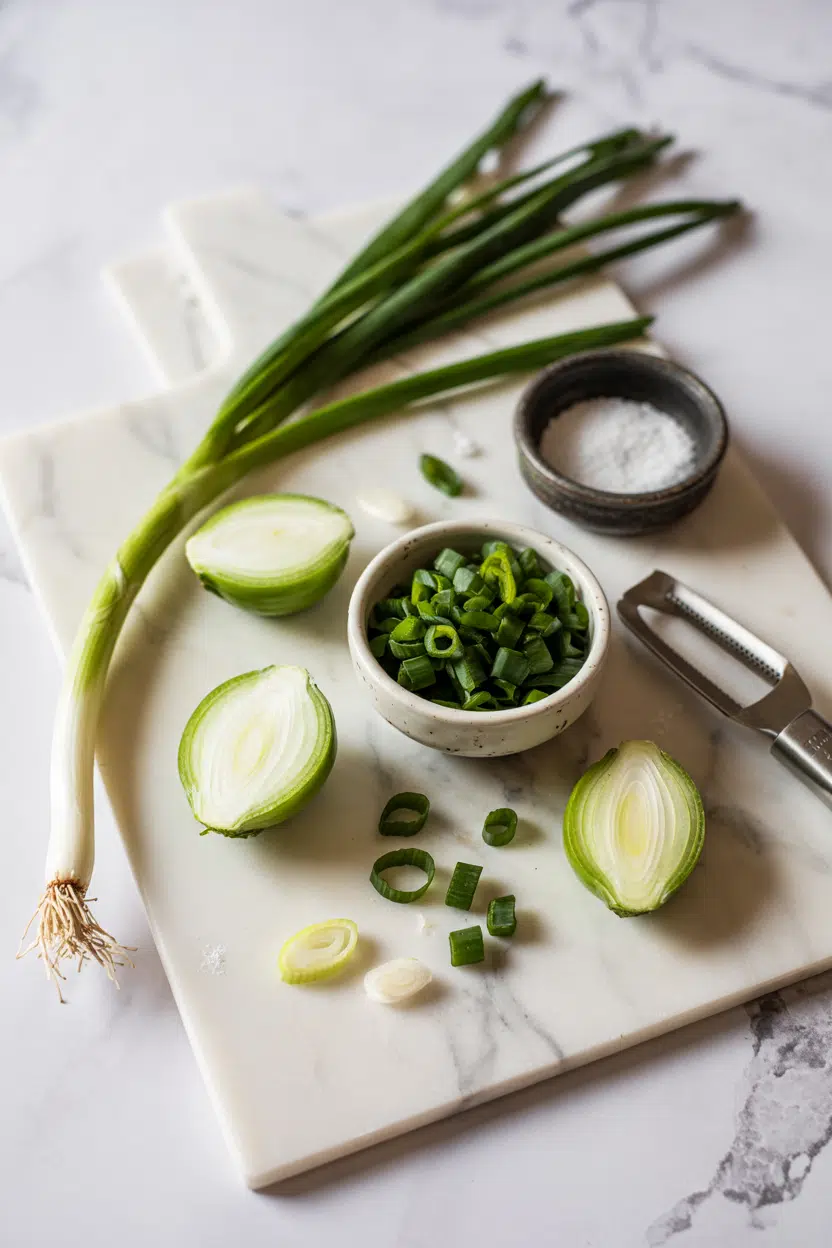
The plant has two distinct parts: a short white-to-pale base and long, hollow green tubular leaves. Both are edible, though the white end is sharper and the green tops are more delicate.
You'll see them labeled as green onions or spring onions depending on where you shop - these names are largely interchangeable, though some regions use "spring onion" to describe a slightly more developed bulb.
Scallions are closely related to chives but are notably larger, with a fuller onion flavor that chives don't quite reach. They're also distinct from shallots and mature onions, which develop dense, papery-skinned bulbs.
What Does Scallion Taste Like?
Raw scallions land somewhere between a mild raw onion and a fresh chive - recognizably allium, but without the eye-watering bite of a yellow or white onion. The white base is sharpest, carrying a clean, slightly pungent onion note.
The green tops are grassy and bright, closer to a herb than a vegetable.
Heat changes the character significantly. A quick sauté softens the sharp edge and pulls out a gentle sweetness, while grilling whole scallions until lightly charred adds a smoky depth that raw scallions don't have.
Either way, they lose volume fast - add them late if you want any texture left.
How to Use Scallion
Scallions split naturally into two cooking modes: raw and briefly heated. Raw, they add crunch and a fresh onion note without overpowering other ingredients.
Heated, they mellow into a soft aromatic that blends into a dish rather than standing apart.
| Method | Best For | Tip |
|---|---|---|
| 🥗 Raw Sliced | Garnish on ramen, pho, salsas, dips, potato salad | Slice on a bias for more surface area and better presentation |
| 🍳 Sauté/Stir-fry | Eggs, fried rice, noodles, stir-fried vegetables | Add in the final 60 seconds to keep some bite and color |
| 🔥 Grilled Whole | Side dish, kebab base, charred garnish | Brush with oil and grill over high heat until blackened in spots |
| 🧈 Softened in Butter | Compound butters, omelettes, frittatas, cream sauces | Use white parts first; fold green tops in at the end |
| 🥣 Blended/Mixed | Cold dips, vinaigrettes, herb spreads, pico de gallo | Use green tops only for a cleaner, less sharp flavor |
Scallions pair well with soy sauce, sesame oil, and ginger across East Asian dishes - the combination appears in everything from scallion oil noodles to dumpling dipping sauces. In Mexican cooking, they're used raw in pico de gallo and as a grilled side alongside meats. Fried shallots often share the garnish role in Southeast Asian dishes, but scallions deliver fresher, greener flavor without frying.
Avoid pairing them with delicate floral herbs - any onion presence will cancel the subtlety.
How to Buy and Store Scallion
At the market, look for firm white bases with no soft spots and bright green tops that stand upright rather than droop. Yellowing or slimy leaves are a sign of age.
If you can smell the base, fresh scallions have a faint onion scent - not a sour or fermented one.
Keeping them in the fridge wrapped in a slightly damp paper towel inside a perforated bag also works well, especially if you have a lot. Once cut, store in an airtight container and use within 3-5 days.
For a full breakdown of freshness timelines, see our scallion storage life guide.
- Whole, unwashed - 7-10 days in the fridge
- Cut or trimmed - 3-5 days in an airtight container
- Upright in water - up to 7 days at room temperature, away from direct sun
Where to Start with Scallion
Scallions are a low-risk, high-return ingredient if you treat them as two separate tools.
- Start with the green tops - scatter thinly sliced rings over eggs, soups, or noodles to see how much fresh flavor they add at zero effort.
- Then try the white base - sauté the white parts in butter or oil before scrambling eggs or building a stir-fry sauce.
- Go whole last - grill entire scallions brushed with oil for a completely different result than either raw or sautéed.
If you need a replacement in a recipe, scallion replacements and chive replacements are your closest routes depending on whether the recipe needs bulk or just flavor.
Frequently Asked Questions
Yes, in most contexts. Both names refer to the same immature allium harvested before the bulb forms. Some recipes use "spring onion" for a slightly more developed bulb with a rounder base, but at the grocery store, scallion and green onion are the same thing.
Absolutely - the green tops are the most commonly eaten part. They're milder and more herb-like than the white base, making them ideal for raw garnish or last-minute additions to cooked dishes.
Spring onions have a more developed, rounded white bulb and a slightly stronger flavor. Scallions are harvested earlier with a straight, undeveloped base. The difference is minor in most recipes, and either can substitute for the other.
Whole scallions kept dry and cool last about 7-10 days. Once cut, use them within 3-5 days stored in an airtight container. Standing them upright in a jar of water can extend freshness at room temperature.
No - raw scallions are safe and commonly used uncooked in garnishes, salsas, dips, and salads. Cooking softens their texture and mellows the sharp edge, but raw delivers better color and a fresher bite.