
You spot a small jar of capers tucked between the olives and cornichons at the grocery store, and you're not quite sure what to do with it. These tiny pickled buds punch well above their size - a few scattered into a dish deliver more briny, tangy impact than almost anything else in the pantry.

If you've been reaching for preserved lemon to add that sharp, salty brightness to a recipe, capers are worth knowing just as well.
Capers are pickled flower buds from the caper bush, sold in brine or salt. They taste briny, tangy, and faintly floral - closer to a concentrated green olive than anything else. Use them sparingly in pasta, sauces, salads, and fish dishes.
What Is a Caper?
Capers are the unopened flower buds of Capparis spinosa, a sprawling shrub native to the Mediterranean basin.
Remember it later
Planning to try this recipe soon? Save it for a quick find later!
Harvesters pick the buds by hand before they bloom, then cure them in brine or pack them in coarse salt - the pickling process is what gives capers their signature sharp flavor.
You'll find them sold in jars or tins under a few regional names: kapari in Greek cooking, or simply "pickled capers" on most labels.
The caper berry is a different product - it's the larger, olive-sized fruit that forms after the flower opens, with a milder, less concentrated flavor and small edible seeds inside.
Size grading matters here:
- Nonpareil - the smallest grade (under 7mm), most prized for their delicate texture and intense flavor
- Surfines / fines - slightly larger, still good for most recipes
- Caperberries - the full fruit, eaten whole as a garnish or antipasto item, not a direct swap for buds
Southern Italian and Greek kitchens use capers most heavily, though North African cuisine also folds them into cooked sauces and relishes.
What Does a Caper Taste Like?
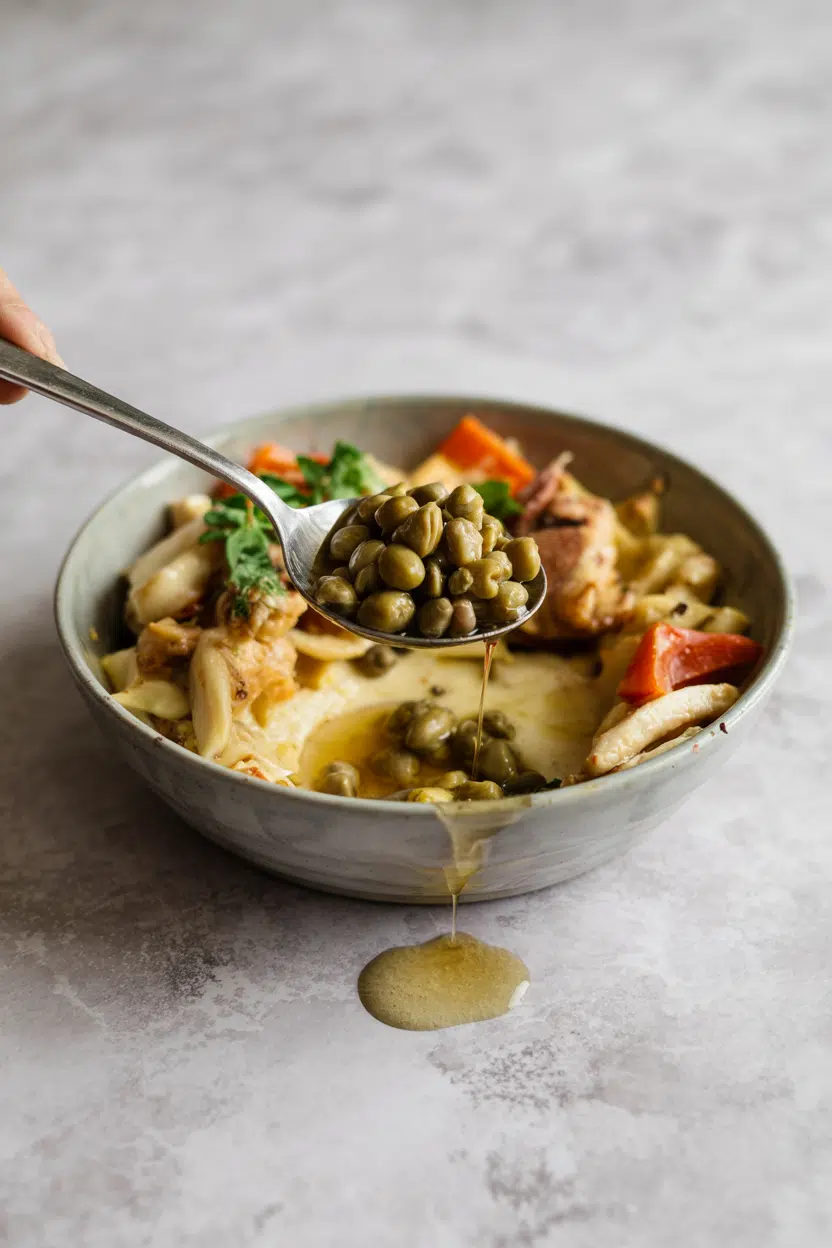
Briny and salty hits first - that's the brine talking. Right behind it comes a bright tanginess, almost acidic, with a faint floral sharpness that separates capers from plain salt or anchovies.
The closest comparison is a concentrated green olive - same briny salinity, but capers carry a lighter, more lemony top note. Bite through one and you get a firm outer skin giving way to a slightly soft, poppy center.
Heat mellows the sharpest edges. A brief sauté in butter or olive oil softens the bite and pulls out a rounder, more savory quality - which is why piccata sauce tastes less aggressive than eating a caper straight from the jar.
How to Use Capers
Capers work as a seasoning, not a centerpiece. A small amount reshapes a whole dish; too many and everything tastes like brine.
Raw and unrinsed is the strongest approach - drop them directly into cold pasta salads, potato salads, or vinaigrettes for maximum salty-acid punch. Rinsing first (a quick cold-water rinse and pat dry) dials back the sodium and lets the floral note come through more cleanly. Either approach is valid depending on the dish.
In cooked applications, brief heat is enough. Pasta puttanesca stirs them in during the last few minutes with olives and tomato. Chicken or fish piccata builds a whole pan sauce around them - capers, lemon juice, and butter form the backbone.
Tapenade blitzes them with olives, olive oil, and anchovies into a spreadable paste.
| Method | Best For | Tip |
|---|---|---|
| 🥗 Raw | Salads, dressings, bagels with smoked salmon | Rinse if sodium-sensitive; leave unrinsed for max punch |
| 🍳 Sautéed | Piccata, pasta sauces, roasted vegetable dishes | Add in last 2-3 minutes to preserve shape and flavor |
| ✨ Garnish | Grilled fish, eggs, smoked salmon platters | Leave whole; scattered at the end adds visual and flavor contrast |
| 🧄 Blended | Tapenade, salsa verde, compound butters | Chop or process with anchovies, herbs, and oil for spreads |
Capers pair strongest with lemon, butter, parsley, dill, anchovies, tuna, and cream cheese. Avoid pairing them with anything sweet - the brine clashes with dessert flavors or sweet glazes.
How to Buy and Store Capers
Look for nonpareil-grade capers - labeled as such on the jar - for the best texture and flavor intensity in most recipes. The brine should be reasonably clear, not murky, and the buds should look plump and intact rather than mushy.
Store unopened jars in a cool, dry pantry - they keep well for up to a year. Once open, submerge the remaining capers in their brine, seal the jar, and refrigerate.
For a full breakdown of how long they last under different conditions, see our guide to caper freshness guide. If you run out mid-recipe, caper swaps cover the closest alternatives.
Where to Start With Capers
Capers reward cooks who use them with intention. Start with a piccata or smoked salmon application - both are low-effort and show exactly what capers contribute without overwhelming the dish.
- Already a caper user? Try folding them into a salsa verde or compound butter to see how they behave when blended rather than whole.
- New to the flavor? Rinse before using. The sodium is high and the unrinsed brine can dominate your first attempt.
One jar goes a long way. Used well, it's one of the most efficient flavor-builders in a pantry.
Frequently Asked Questions
No. Capers are the small, pickled flower buds; caperberries are the larger fruit that forms after the flower opens. Caperberries have a milder, less concentrated flavor and are typically eaten whole as a garnish or antipasto rather than used as a recipe seasoning.
It depends on the recipe. Rinsing removes excess brine and reduces sodium, letting the floral flavor come through more cleanly. Skip the rinse when you want full-strength briny punch in a sauce or dressing.
Nonpareil (under 7mm) is the standard recommendation - smaller buds have more concentrated flavor and a more delicate texture. Larger grades work fine in blended applications like tapenade where size doesn't matter.
Technically yes, but it's rarely worth doing. Freezing softens the texture considerably, and an opened jar kept submerged in brine in the fridge already lasts several months. Freeze only as a last resort.
Yes - sodium is high due to the pickling brine. A single tablespoon can contain 200-300mg. Rinsing reduces this noticeably, and since capers are used in small quantities, the impact on most diets is limited.



