Stir a spoonful of aged kimchi into a hot pan of leftover rice and the kitchen fills immediately with that sharp, fermented heat - sour, garlicky, faintly funky, and completely unlike anything else in the refrigerator. Kimchi is one of those ingredients that does several jobs at once: condiment, seasoning base, and fermented vegetable side, all in a single jar.

It's built on lacto-fermented napa cabbage, chili, garlic, and ginger, and it rewards cooks who understand how its flavor shifts with age.
Kimchi is a fermented Korean condiment made from salted napa cabbage, gochugaru, garlic, and ginger. Tangy, spicy, salty, and pungent, it works as a side dish, cooking ingredient, or flavor base. Flavor deepens and sours as it ages.
What Is Kimchi?
Kimchi (김치) is a Korean fermented vegetable condiment with roots stretching back over a thousand years, though the chili-spiked version most people recognize today dates to the 18th century when gochugaru - Korean red pepper flakes - became widely used. The base is almost always napa cabbage salted to draw out moisture, then packed with a paste of chili, garlic, ginger, and frequently jeotgal (salted fermented seafood) or fish sauce for deep umami.
Remember it later
Planning to try this recipe soon? Save it for a quick find later!
That mixture ferments through lacto-fermentation, the same bacterial process behind sauerkraut and pickled daikon.
The most common style is baechu kimchi - whole or quartered cabbage heads packed in jars - but there are hundreds of regional varieties. Kkakdugi uses cubed radish.
Oi sobagi stuffs cucumber. Vegan versions skip the seafood entirely and rely on kombucha cultures or miso for fermentation depth.
Each version shares that same foundation: salt, time, and beneficial bacteria.
- Baechu kimchi - the standard napa cabbage version; what most jars in stores contain
- Kkakdugi - cubed radish kimchi, crunchier and slightly milder
- Oi sobagi - cucumber kimchi, fresher and faster to ferment
- Vegan kimchi - made without jeotgal; uses miso or soy sauce in place of seafood
What Does Kimchi Taste Like?
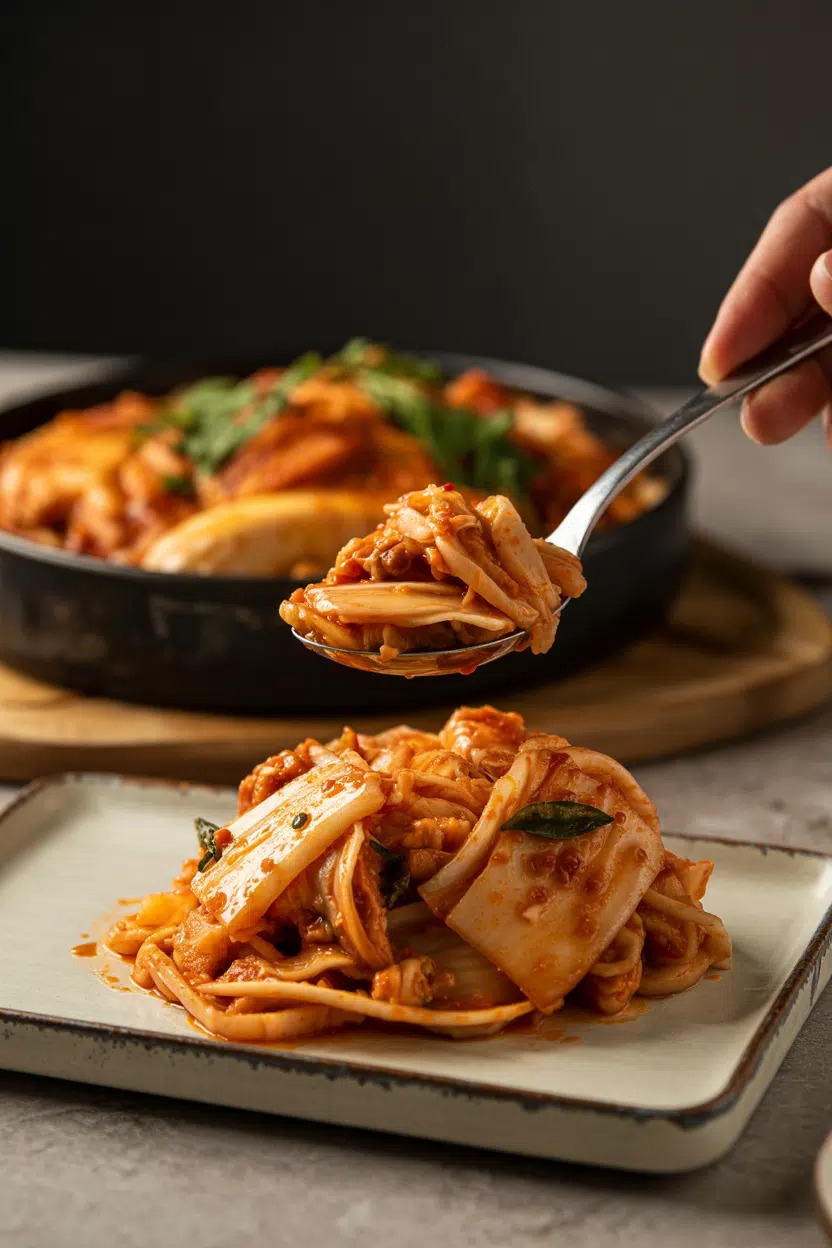
Think of kimchi as sauerkraut's louder, more complicated sibling. The lactic acid tang is there - bright, sharp, and mouth-puckering - but layered beneath it are chili heat from gochugaru, a savory saltiness from jeotgal or fish sauce, and subtle sweetness from fermented sugars.
Age changes everything. Fresh kimchi (under two weeks) is crunchy and relatively mild - the chili and garlic dominate.
After a month or more in the jar, acidity climbs sharply and the texture softens into something almost effervescent. That older, more sour kimchi is what cooks seek out for kimchi jjigae, because the ferment has had time to build real complexity.
Texture shifts from snappy to silky; the aroma intensifies from sharp to deeply funky.
How to Use Kimchi
Kimchi functions differently depending on how old it is and whether it's raw or cooked. Served cold and straight from the jar, it acts as banchan - the small side dishes that accompany every Korean meal alongside short-grain rice, proteins, and other pickled vegetables.
This is the simplest use, and the one that needs no recipe.
Cooked applications let older kimchi shine. Kimchi-bokkeumbap (kimchi fried rice) is the most accessible entry point: chop kimchi, stir-fry it with rice, add a fried egg on top. The heat drives off some of the sharp sourness and leaves behind concentrated flavor.
For something more involved, kimchi jjigae is a simmered stew built almost entirely on well-aged kimchi, tofu, and pork - it's where fermented depth becomes the entire point of a dish. You can also fold chopped kimchi into dumpling filling (mandu) or whisk it into a batter for kimchi jeon (savory pancakes).
Beyond Korean cooking, kimchi moves naturally into fusion applications: stirred into mayo for sandwiches, layered on pizza with pork belly, or mixed into ramen broth for extra funk.
If you can't source it locally, understanding your kimchi replacements helps when a recipe depends on its tangy, fermented backbone.
| Method | Best For | Tip |
|---|---|---|
| 🥗 Raw | Banchan, condiment, sandwich topping | Use fresh kimchi for crunch and milder heat |
| 🍳 Stir-Fried | Fried rice, noodles, eggs | Fry kimchi briefly before adding rice to caramelize the sugars |
| 🫕 Braised/Stewed | Kimchi jjigae, braised pork | Use aged kimchi - its higher acidity deepens the broth |
| 🥞 Pan-Fried | Kimchi jeon (pancakes), dumplings | Squeeze excess brine from kimchi before mixing into batter |
Kimchi pairs especially well with pork belly or bacon, where fat absorbs and balances the acidity. Soft tofu, scrambled eggs, and sesame oil round it out.
It handles what to serve with pork instinctively - the same logic that makes sauerkraut a natural partner for braised pork applies here.
How to Buy and Store Kimchi
At the refrigerated section, look for jars with bright, deeply red gochugaru coating the cabbage leaves - faded orange or pale pink suggests old or low-quality chili. Active fermentation shows up as slight cloudiness in the brine or small bubbles around the lid.
Both are good signs. Avoid jars with swollen or bulging lids, which signal uncontrolled fermentation or improper sealing.
Once opened, keep kimchi in a sealed jar and press the cabbage below the brine after each use - air exposure speeds spoilage and surface mold. Refrigeration slows fermentation significantly but doesn't stop it, so flavor will continue to sour over weeks.
For a full breakdown of how long opened kimchi stays usable, see our guide on kimchi storage life. Unopened, pasteurized shelf-stable jars keep for months at room temperature; unpasteurized refrigerated kimchi is the better choice when you want live probiotics.
- Refrigerated, opened - best within 1-3 months; still safe longer but sharply sour
- Refrigerated, unopened - months; check the best-by date
- Shelf-stable, unopened - up to a year depending on pasteurization
Start Here With Kimchi
Buy a small jar of refrigerated, unpasteurized kimchi first. Eat it cold alongside rice for a week before you cook with it - that's the fastest way to understand what fresh kimchi tastes like before age changes it.
Once you're halfway through the jar and the sourness has climbed, that's the moment to make fried rice or a simple stew. Those two uses cover most of what kimchi does in a kitchen, and everything else follows from there.
Frequently Asked Questions
Both are lacto-fermented cabbage, but kimchi uses gochugaru, garlic, ginger, and often fish sauce, making it spicier and more complex. Sauerkraut uses only cabbage and salt, producing a cleaner, milder sourness with no heat.
Unpasteurized kimchi supplies live lactic acid bacteria, vitamin C, vitamin K, and dietary fiber. Sodium content is high - typically 400-500mg per serving - so portion size matters if you're watching sodium intake.
Heat level varies by brand and recipe, but most commercial kimchi sits at a mild-to-medium range - noticeable but not intense. White kimchi (baek kimchi) skips the chili entirely and is a good option for heat-sensitive eaters.
Opened kimchi stays safe for up to three months refrigerated, often longer. Flavor becomes increasingly sour over that time - older kimchi is better used for cooking than eating raw.
Yes. Skip the jeotgal and fish sauce, replacing them with soy sauce, miso paste, or a small amount of seaweed for umami. Fermentation still proceeds normally through naturally occurring bacteria on the cabbage leaves.