
You're halfway through making gajar ka halwa when you realize the jaggery jar sits empty. The recipe counts on that deep caramel sweetness and earthy undertone that regular white sugar can't match.

Jaggery brings molasses-like depth and moisture to Indian sweets, Southeast Asian desserts, and savory marinades. Its unrefined structure holds minerals and a complex flavor that processed sugars lack.
Most pantries hold at least one swap that mimics jaggery's richness without needing a trip to a specialty store.
Dark brown sugar swaps 1:1 for jaggery, since its molasses gives similar caramel depth, though the flavor runs slightly lighter.
Palm sugar is the closest in flavor, also at 1:1.
No brown sugar? Stir 2 tablespoon molasses into 1 cup white sugar and use it 1:1 for jaggery.
What Jaggery Does in a Recipe
Jaggery is cane juice or palm sap boiled down and set into hard blocks, so it adds sweetness, a little moisture, and a dark molasses-style flavor in one ingredient.
Remember it later
Planning to try this recipe soon? Save it for a quick find later!
Grate or chop the block before you measure it. A cup of grated jaggery and a cup of packed sugar do not weigh the same, so if the recipe lists grams, swap gram for gram.
If a market near you sells piloncillo, muscovado, or Sucanat, these unrefined cane sugars are the nearest relatives and usually go in 1:1. The seven swaps below cover what most home pantries already hold.
7 Substitutes for Jaggery: Caramel Sweetness and Moisture
Each swap matches a different part of jaggery: some bring the earthy depth, others the molasses-like richness.
| # | Substitute | Best For | Ratio | Key Note |
|---|---|---|---|---|
| 1 | Dark Brown Sugar | ✨ Both | 1:1 | Slightly lighter flavor |
| 2 | Palm Sugar | 🍳 Cooking | 1:1 | Closest flavor match |
| 3 | Molasses | 🍳 Cooking | 2 tablespoon per 1 cup sugar | Needs sugar for balance |
| 4 | Turbinado Sugar | 🥗 Raw | 1:1 | Lighter caramel notes |
| 5 | Coconut Sugar | 🌱 Vegan | 1:1 | Drier, needs moisture |
| 6 | Honey | 🥗 Raw | ¾ cup | Alters texture significantly |
| 7 | DIY Blend | ✨ Both | 1 cup + 1 tbsp | Most accurate rebuild |
1 – Dark Brown Sugar 🍳
Dark brown sugar is white sugar with molasses added back, and that molasses mimics jaggery's caramel depth and moisture. The flavor runs slightly lighter, but the sweetness level and texture work in most recipes.
Use 1:1 anywhere you'd use jaggery: in chai, sweets, marinades, or baking. The molasses content adds enough complexity to pass in traditional Indian and Southeast Asian dishes.
- ✅ Dissolves easily in hot liquids like tea and coffee
- ✅ Works in both cooked and raw applications
- ⚠️ Less earthy complexity than authentic jaggery
It's the first swap to try because most kitchens already stock it.
2 – Palm Sugar 🌴
Palm sugar comes from palm tree sap and shares jaggery's unrefined structure. The flavor runs closer to jaggery than any other swap: caramel-forward, with mild fruity notes and natural minerals.
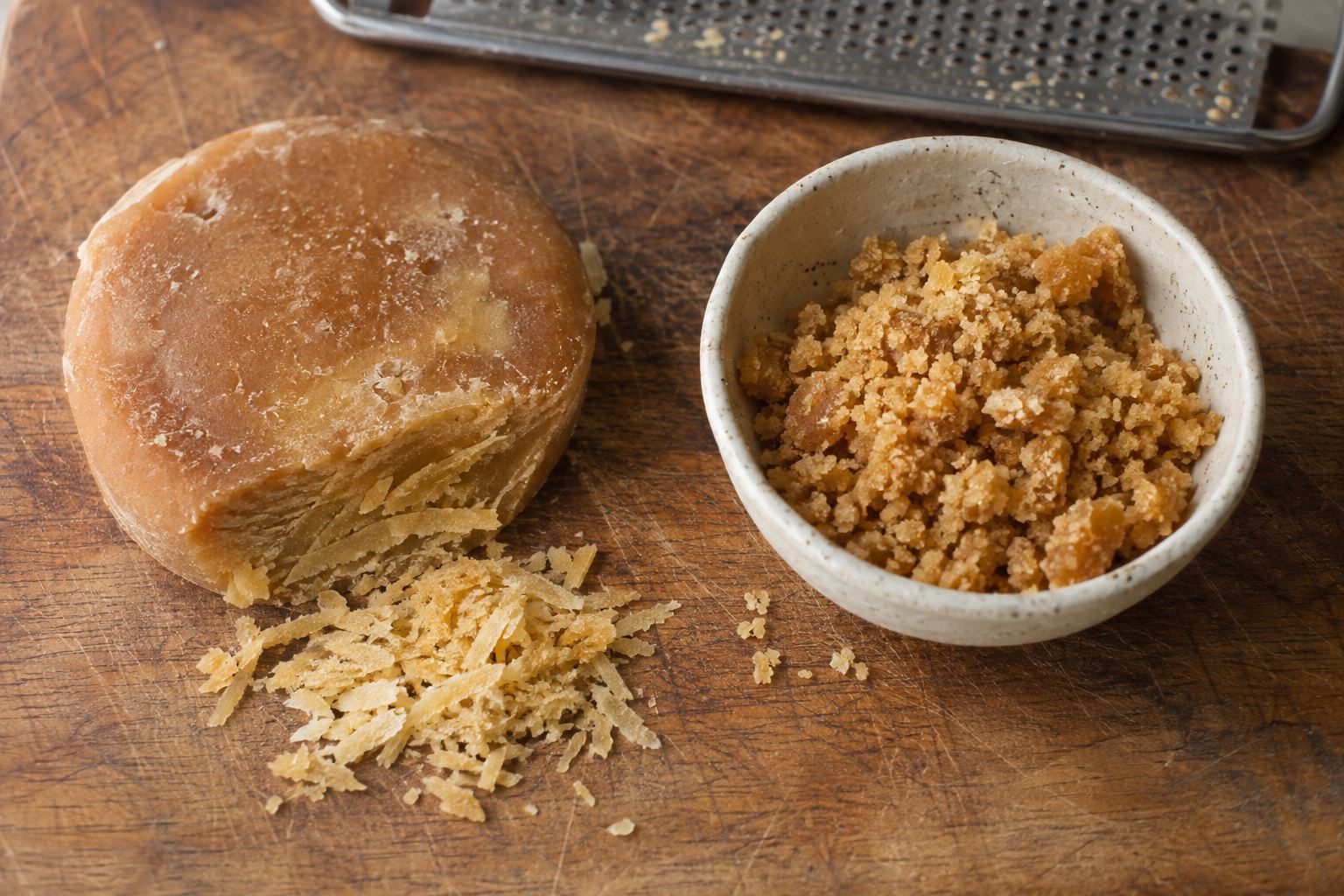
Texture varies by brand: some palm sugar comes in hard cakes that need grating, others in granulated form. Use 1:1 by volume once you've prepared it.
Asian grocery stores usually stock palm sugar. It shines in curries, pad thai, and any Southeast Asian dish where jaggery's earthy notes matter.
3 – Molasses 🍯
Molasses alone pours like syrup and tastes more bitter than jaggery, so it only works stirred into sugar. Mix 2 tablespoons unsulfured molasses into 1 cup white sugar (1 tablespoon only gives light brown sugar), then use that 1:1 for jaggery.
This is how brown sugar itself is made, so it suits a kitchen with white sugar but no brown. Add it early in cooking so the flavors meld.
- 🍳 In cooking: Works great in marinades and braised dishes
- ⚠️ Skip if: Baking light-colored desserts, because molasses darkens everything
4 – Turbinado Sugar ✨
Turbinado sugar's raw crystals carry a subtle caramel flavor from the thin molasses coating. It's milder and less moist than jaggery but works for sprinkling on desserts or stirring into beverages.
Use 1:1 when you need visible sugar crystals or want a lighter sweetness. The coarse texture makes it shine as a topping for muffins, cookies, and yogurt bowls.
Skip turbinado in recipes where jaggery's deep molasses flavor defines the dish, because it won't deliver that richness.
5 – Coconut Sugar 🥥
Coconut sugar shares jaggery's caramel notes but runs significantly drier. The granulated texture doesn't hold moisture the same way, which changes how it behaves in cooked dishes.
Use 1:1 by volume in dry applications like baking or raw desserts. For cooked dishes like halwa or payasam, add a splash of water or milk to compensate for the drier texture.
- ✅ Mild caramel flavor with slight fruity notes
- ✅ Naturally vegan and unrefined
- ⚠️ Grainier texture than jaggery
- ⚠️ Won't create the same syrupy consistency in cooked sweets
6 – Honey 🍯
Honey adds sweetness and moisture but brings a distinctly floral flavor that doesn't match jaggery's molasses profile. The liquid texture changes how recipes behave, especially in baking.
Use ¾ cup honey per 1 cup jaggery in dressings, glazes, and raw applications. In baking, cut the other liquid by about ¼ cup per cup of honey and lower the oven by 25°F, because honey browns faster than sugar.
The floral notes work better in dishes where jaggery isn't the star flavor. Skip honey in gajar ka halwa, tilgul, and other traditional Indian sweets where jaggery's deep caramel flavor matters.
7 – DIY Molasses Brown Sugar Blend 🔧
Mixing 1 cup dark brown sugar with 1 tablespoon unsulfured molasses rebuilds jaggery's flavor and texture more accurately than any single ingredient. The brown sugar brings base sweetness and moisture while extra molasses deepens the caramel notes.
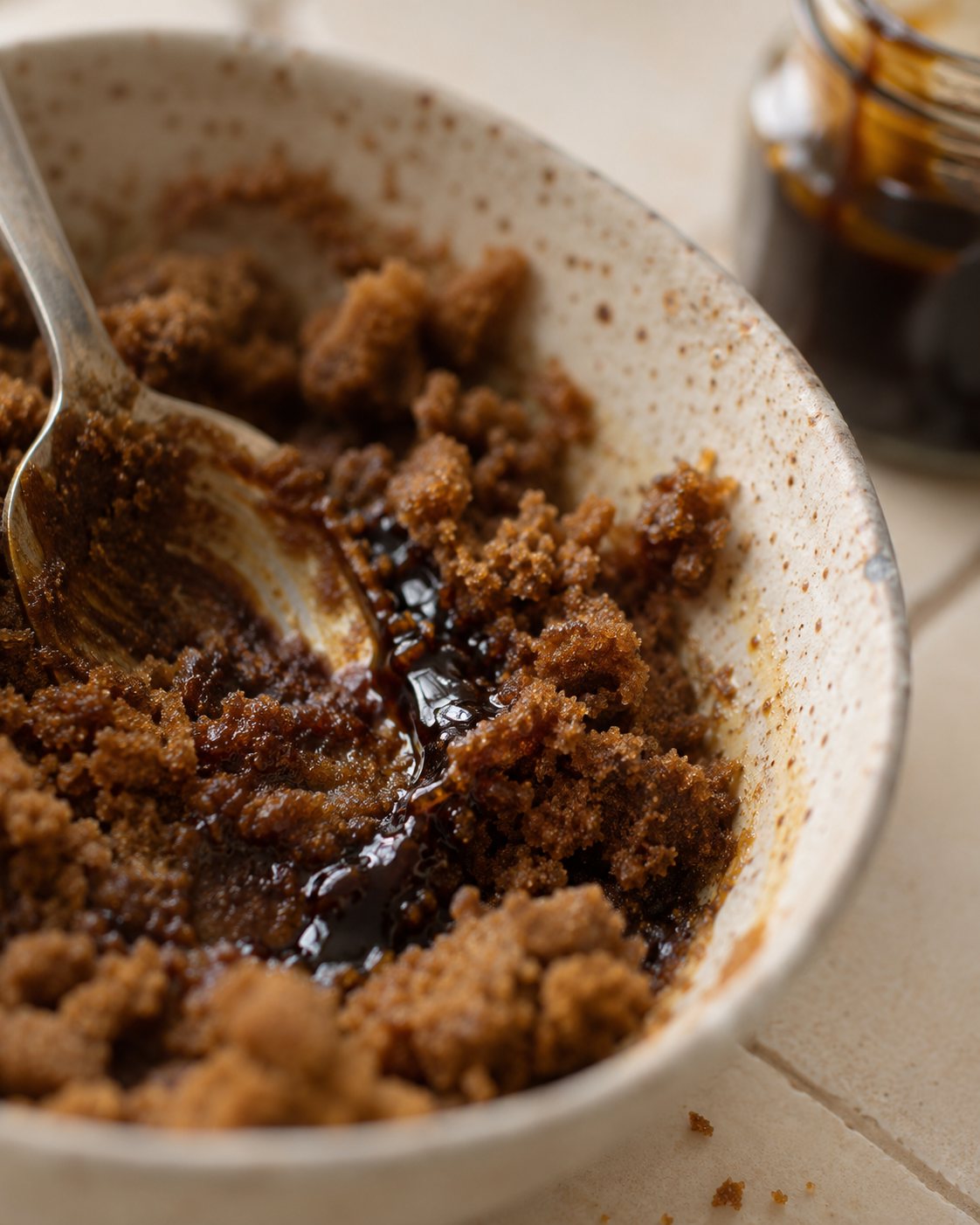
Stir the molasses into brown sugar until evenly distributed. Use this blend 1:1 in any recipe calling for jaggery.
- ✅ Most accurate flavor match you can make at home
- ⚠️ Requires a few minutes of prep time
This blend works in everything from chai to payasam to barbecue marinades.
Match Your Jaggery Swap to the Dish
Sweets and halwa: Dark brown sugar or the DIY blend delivers the closest flavor and moisture. In milk sweets like payasam they also save a step: jaggery can split hot milk, so cooks add it off the heat, while sugar can go in with the milk.
Chai and coffee: Any granulated swap works 1:1, and palm sugar, coconut sugar, or brown sugar all dissolve easily.
Marinades: Molasses mixed with sugar brings the deep caramel notes that balance soy sauce and spices.
Frequently Asked Questions
White sugar provides sweetness but lacks jaggery's caramel depth and earthy notes. Mix 2 tablespoons molasses into 1 cup white sugar to add the missing depth.
Dark brown sugar and palm sugar work 1:1 in baking because they match jaggery's moisture content. Honey needs ¾ cup per 1 cup jaggery with the other liquids reduced, and coconut sugar runs drier, so add a tablespoon of milk or water per cup.
Jaggery is unrefined cane or palm sugar with natural minerals and a deeper caramel flavor, while brown sugar is refined white sugar with molasses added back in. Both add moisture and caramel notes, but jaggery tastes more earthy.
Maple syrup works in a pinch but brings woody-sweet notes that don't match jaggery's molasses profile, so use ¾ cup per 1 cup jaggery and reduce other liquids by 2-3 tablespoons. It works better in Western-style baking than traditional Indian sweets where jaggery's flavor defines the dish.
Store granulated swaps like brown sugar, coconut sugar, and turbinado in airtight containers at room temperature; brown sugar hardens if air gets in. Keep molasses and honey sealed in a cool, dark pantry, and the DIY blend in an airtight container, where it lasts several months.



