You're scaling up a tomato sauce for guests when you realize you only have half the marjoram the recipe needs. The jar's nearly empty.
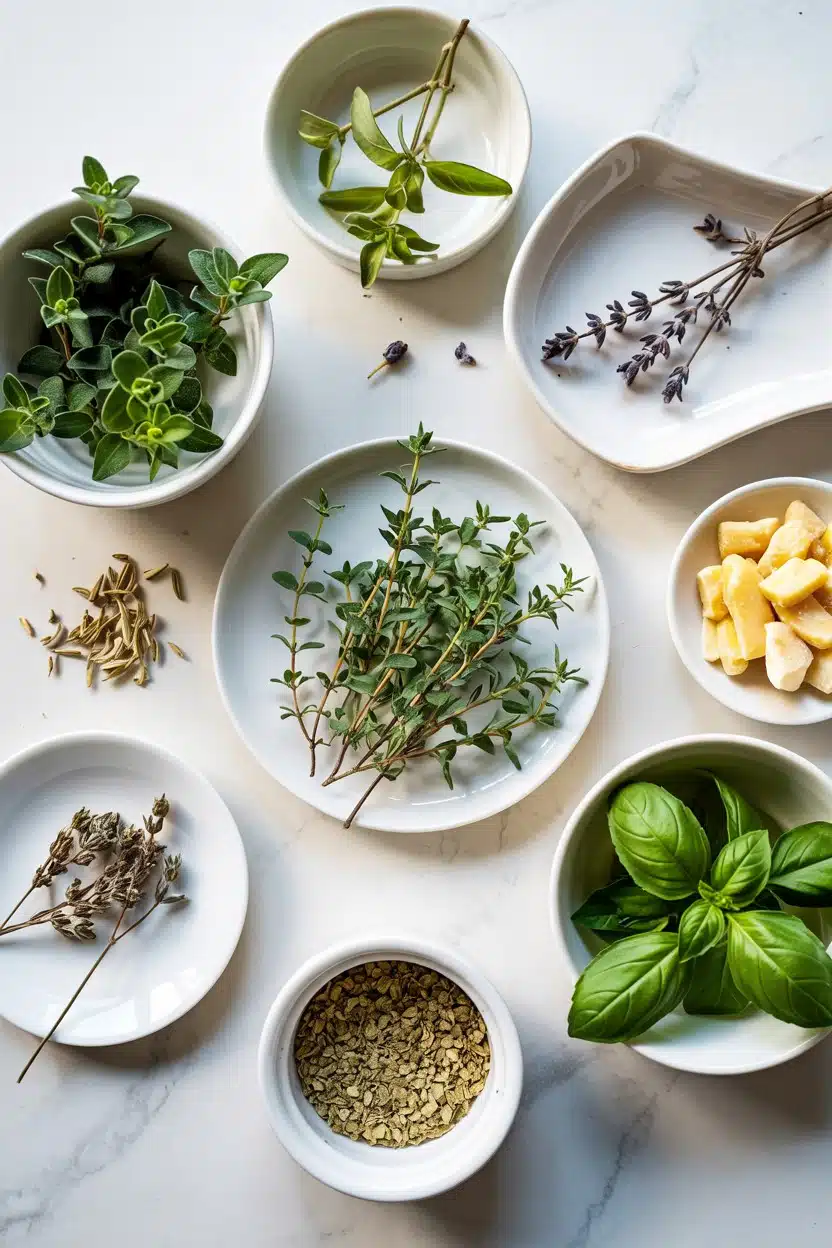
Marjoram adds a gentle herbal sweetness that brightens savory dishes without overwhelming them. Most swaps lean stronger or more peppery, so you'll need to adjust amounts to keep the balance right.
Oregano and thyme work best for cooked dishes, though both taste stronger. Use less at first-marjoram's sweetness is hard to replicate. The main risk is overpowering delicate recipes with too much pungency.
5 Marjoram Substitutes Without Big Changes
Each substitute brings different intensity and character. Pick based on whether your dish cooks long or finishes fresh.
Remember it later
Planning to try this recipe soon? Save it for a quick find later!
| # | Substitute | Best For | Ratio | Key Note |
|---|---|---|---|---|
| 1 | Oregano | 🍳 Cooking | ⅔ teaspoon per 1 tsp | stronger, more bitter |
| 2 | Thyme | 🍳 Cooking | 1:1 | earthy, less sweet |
| 3 | Savory | 🍳 Cooking | 1:1 | peppery warmth |
| 4 | Basil | 🍳 Cooking | 1:1 fresh | sweet, raw dishes only |
| 5 | Herbes de Provence | 🍳 Cooking | 1:1 | complex blend with lavender |
1 - Oregano
Oregano shares marjoram's herbal warmth but hits harder. It works well in Mediterranean sauces and roasted vegetables where the extra punch won't throw things off.
Use ⅔ teaspoon oregano for every 1 teaspoon marjoram called for. Start conservative-you can always add more after tasting.
Fresh Oregano
Works for: bright, leafy dishes that cook quickly
Skip if: you need subtle background flavor
Dried Oregano
Works for: long-simmered sauces and braises
Skip if: finishing a delicate fish or salad
Here's what to know:
- Oregano tastes more pungent and slightly bitter than marjoram
- It stands up to tomato-based dishes better than marjoram does
- The flavor mellows with heat, so add early in cooking
Skip if: your recipe highlights marjoram's floral sweetness as a finishing note.
2 - Thyme
Thyme brings earthy, minty notes without marjoram's sweetness. It blends into soups and stews where herbs support rather than lead.
Use equal amounts-1 teaspoon thyme for 1 teaspoon marjoram. The flavor profile shifts slightly earthier, but most dishes absorb the change well.
Quick specs:
- Works best in dishes that cook at least 20 minutes
- Fresh thyme tastes brighter; dried concentrates the earthiness
Skip if: the recipe depends on marjoram's gentle sweetness to balance acidity.
3 - Savory
Savory mimics marjoram's warmth but leans peppery instead of sweet. It shines in bean dishes and vegetable stews where a little bite helps.
Use the same amount-1 teaspoon savory for 1 teaspoon marjoram. The peppery edge adds character without dominating the dish.
The essentials:
- Summer savory tastes lighter and works for fresh applications
- Winter savory runs stronger and suits long-cooked dishes
- Both varieties hold up to heat better than marjoram
- Savory pairs especially well with legumes and root vegetables
Missing savory too? Savory swaps for beans covers milder herb options.
Skip if: you're finishing a cream sauce or delicate seafood dish.
4 - Basil
Basil works when you're using marjoram raw or adding it at the very end. The sweet, peppery notes complement salads and fresh tomato dishes where marjoram would normally brighten things up.
Use equal parts fresh basil for marjoram in uncooked applications. Tear the leaves instead of chopping to prevent bruising and bitterness.
Key details:
- Basil's clove undertones replace some of marjoram's floral character
- Thai basil adds a slight anise note that can work in Mediterranean dishes
- Fresh basil wilts fast, so add it right before serving
Out of basil as well? Replacements for basil has fresh herb picks that stay bright.
Skip if: your recipe involves simmering or roasting-basil's flavor breaks down with heat.
5 - Herbes de Provence
This blend already contains marjoram along with thyme, rosemary, and lavender. It brings complexity but works when you want layered herbal flavor instead of a single note.
Use the same amount-1 teaspoon herbes de Provence for 1 teaspoon marjoram. The blend adds more dimension than marjoram alone.
| Use | Ratio | Notes |
|---|---|---|
| Roasted vegetables | 1:1 | Lavender adds floral warmth |
| Grilled chicken | 1:1 | Complex blend builds depth |
| Herb crusts | 1:1 | Multiple herbs create texture |
What to expect:
- The lavender note can feel prominent if you're not used to it
- Works best in French and Mediterranean preparations
Skip if: you need a clean, single-herb flavor or your dish already has multiple seasonings.
Making Marjoram Substitutes Work
The best swap depends on how you're using marjoram and how much its sweetness matters. Oregano works for most cooked dishes, while basil handles fresh applications.
Test your substitute in a small portion first if the recipe centers on marjoram's flavor. Most swaps need less than the original amount to avoid overpowering the dish.
- Closest match - Oregano at ⅔ amount for herbal warmth
- Easiest grab - Thyme at equal parts for everyday cooking
- Fresh option - Basil at equal parts for raw applications
Frequently Asked Questions
Yes-use 1 teaspoon dried marjoram for every 3 teaspoon fresh. Dried herbs concentrate in flavor, so you need less. Add dried marjoram early in cooking to let it bloom.
They're related but marjoram tastes sweeter and more delicate. Oregano brings stronger, more pungent flavor with a slight bitterness that marjoram lacks.
Rarely-marjoram works better in savory applications. If a sweet bread recipe calls for it, try thyme or a tiny pinch of lavender instead. The floral notes translate better than oregano's pungency.
Use 1 teaspoon dried marjoram for every bay leaf in soups or stews. Bay leaf adds subtle background flavor while marjoram brings more forward herbal notes, so the swap changes the dish's character slightly.
Cut the amount in half and add a pinch of sugar to mimic marjoram's sweetness. Dilute with a splash of broth or water if the flavor's already in the dish. Next time, start with less.
5 Best Substitutes for Marjoram
Ingredients
Method
- Choose your substitute based on whether the dish cooks long or is fresh-finished.
- For cooked dishes, prefer oregano or thyme but start with less than marjoram amount to avoid overpowering.
- For fresh or raw applications, use fresh basil in equal amounts to marjoram.
- Apply the recommended ratios: ⅔ teaspoon oregano per teaspoon marjoram, or 1:1 for thyme, savory, basil, and herbes de Provence.
- Add oregano early in cooking to mellow pungency; add basil at the end or raw to prevent bitterness.
- Taste and adjust the substitute quantities gradually to maintain balanced flavor.