
You're halfway through a batch of yuca fries when you realize you grabbed the wrong root vegetable at the market. The recipe needs that starchy-firm texture for a reason-yuca holds its shape while staying creamy inside.
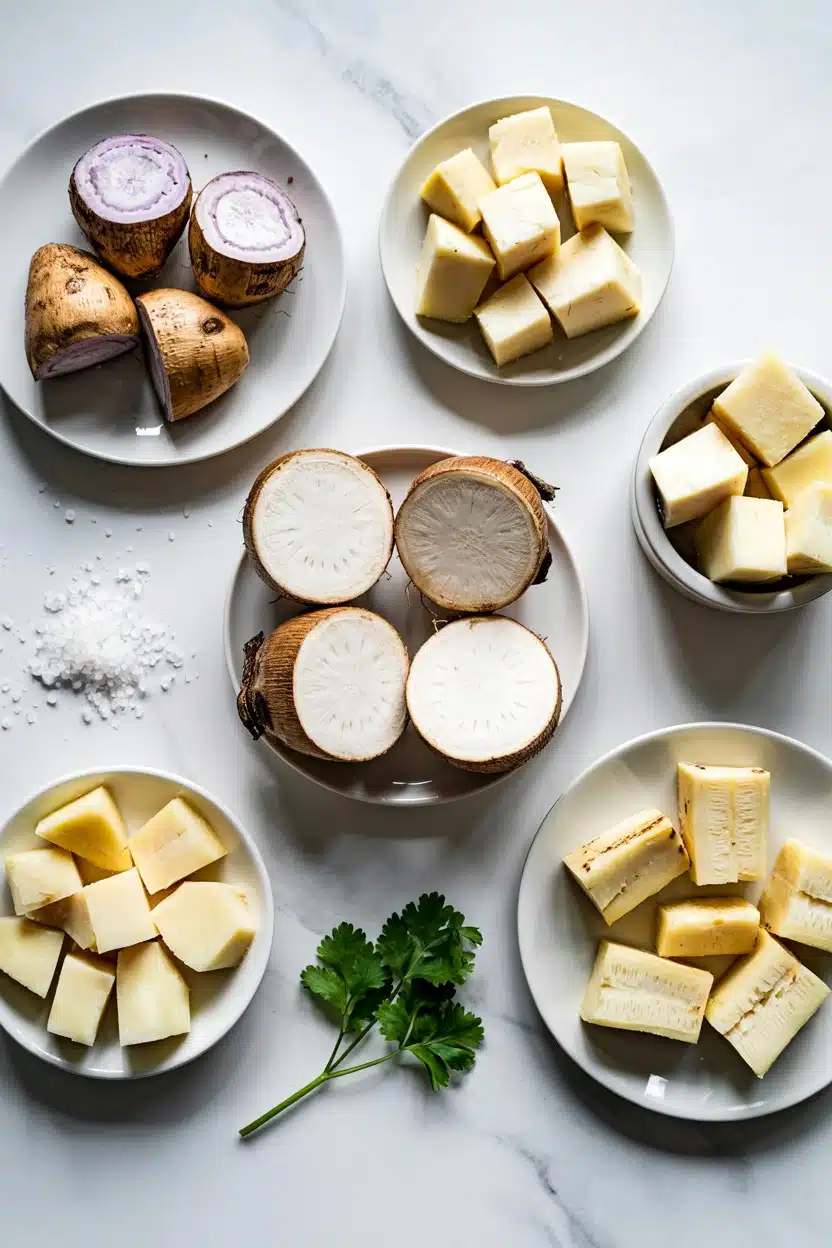
Yuca brings both bulk and a mild sweetness that works in fried, boiled, and mashed dishes. Without it, you need something that can take the heat and deliver similar texture.
A few root vegetables and one flour swap get you close enough.
We swap potatoes or taro root when we need that starchy-firm bite in fried or boiled dishes. For baking, cassava flour handles the starch but can't replicate chunks. Watch the sweetness-sweet potatoes and breadfruit lean sweeter than yuca's neutral base.
| # | Substitute | Best For | Ratio | Key Note |
|---|---|---|---|---|
| 1 | Cassava Flour | 🥧 Baking | 1:1 | Ground form only |
| 2 | Potatoes | ✨ Both | 1:1 | Less fibrous texture |
| 3 | Taro Root | 🍳 Cooking | 1:1 | Nuttier flavor profile |
| 4 | Sweet Potato | 🍳 Cooking | 1:1 | Much sweeter taste |
| 5 | Breadfruit | 🍳 Cooking | 1:1 | Tropical sweet notes |
1. Cassava Flour 🌾
Cassava flour is ground yuca-it's the same root in powdered form. Use 1:1 by weight when a recipe calls for yuca flour or needs starchy binding.
Remember it later
Planning to try this recipe soon? Save it for a quick find later!
It works in baking and thickening but can't replace yuca chunks or slices. The flour lacks the fibrous texture you'd get from boiling or frying whole pieces.
- ✅ Direct yuca product with same starch content
- ⚠️ Can't mimic whole-root texture or appearance
If you're working with flour swaps often, instead of Cassava Flour try these options for different baking needs.
2. Potatoes 🥔
Potatoes step in when you need starchy bulk and a creamy-firm texture. The flavor runs more earthy and less sweet than yuca.
Use 1 cup potato for 1 cup yuca in boiled, mashed, or fried dishes. They hold up to high heat and stay firm without falling apart.
Potatoes don't have yuca's natural sweetness or fibrous bite. They won't replicate that exact mouthfeel but they'll keep the dish hearty and filling.
3. Taro Root 🌿
Taro root brings the starchy-firm texture yuca does, with a faint nuttiness layered in. Use 1:1 by volume in steamed or boiled dishes.
The flavor shifts slightly-taro runs nuttier and less sweet. It won't taste neutral the way yuca does.
- 🍳 Boiled or steamed: Works in soups and side dishes
- ⚠️ Flavor shift: Nutty notes stand out in simple recipes
- ✅ Texture match: Firm yet creamy after cooking
Taro handles heat well and won't turn mushy if you cook it right.
4. Sweet Potato 🍠
Sweet potatoes deliver a creamy texture and starchy base, but they lean much sweeter than yuca. Use 1:1 by volume in roasted or baked dishes.
The sweetness works in recipes where a hint of sugar won't clash. Skip this swap in neutral-flavored savory dishes-it'll overpower the other ingredients.
Sweet potatoes hold their shape through roasting and baking. They just won't taste like yuca-expect earthy sweetness instead of mild starch.
If you need more replacements similar to Sweet Potato, we've tested other root vegetables that work in similar ways.
5. Breadfruit 🌴
Breadfruit offers starchy flesh with a mildly sweet, tropical flavor. Use equal parts in boiled or fried snacks.
The texture runs softer and more fibrous than yuca. It works in tropical-inspired dishes but won't mash as smoothly.
- 🍳 Fried snacks: Holds up to frying and browning
- 🥘 Boiled dishes: Works in stews and soups
- ⚠️ Texture trade-off: More fibrous and less firm than yuca
- ✅ Flavor boost: Adds subtle tropical sweetness
Picking Your Yuca Swap
- 🏆 Closest match: Potatoes for neutral flavor and starchy-firm texture
- 🌾 For baking: Cassava flour when you need ground starch, not chunks
- ⚡ For tropical dishes: Taro or breadfruit if sweetness and nuttiness won't clash
Frequently Asked Questions
Yes-potatoes fry just as well as yuca and hold their shape. Cut them into similar-sized pieces and fry at the same temperature. The texture will be slightly less fibrous but still crispy outside and creamy inside.
Taro needs peeling and can't be eaten raw, just like yuca. Boil or steam it fully before eating-raw taro contains compounds that irritate the throat. The prep steps match what you'd do with yuca.
They can, but the sweetness will change the flavor profile. Sweet potatoes work best in recipes where a hint of sugar won't clash-like roasted sides or spiced stews. Skip them in dishes that need yuca's neutral base.
No-cassava flour only works when you need ground starch, not whole pieces. It won't replicate the texture of boiled or fried yuca chunks. Use potatoes or taro if the recipe calls for intact root vegetable pieces.
Potatoes give you the closest texture and neutral flavor for fried snacks. Cut them into similar shapes and fry at the same temperature. They'll crisp up nicely and stay creamy inside, just like yuca fries.
5 Best Substitutes for Yuca
Ingredients
Method
- Choose the substitute based on your recipe type: potatoes or taro for cooked dishes, cassava flour for baking.
- Prepare the substitute similarly to yuca: peel, cut into chunks or use flour as is.
- Apply the 1:1 substitution ratio by volume or weight as appropriate.
- Cook or bake the substitute according to your recipe, monitoring texture and doneness.
- Adjust seasoning and check final taste and consistency before serving.
Notes
- Potatoes are the best all-around substitute for maintaining texture and neutral flavor.
- Cassava flour works well for baking but cannot replace whole yuca chunks.
- Taro, sweet potato, and breadfruit add sweetness and nuttiness that may alter flavor profiles.



