
Pulling a warm slice of white American cheese off a cheeseburger reveals everything you need to know about it - the way it stretches in one glossy, unbroken sheet, clinging evenly to the beef without greasing the bun.

That clean, faintly buttery melt is the result of careful engineering, and it's why this cheese holds its ground against bolder alternatives to cheddar cheese in applications where texture matters as much as flavor.
No other cheese melts quite the same way. The emulsifiers built into processed American cheese keep the fat and protein from separating, giving you that uniform, silky coverage every time.
White American cheese is a mild, emulsified processed cheese with a buttery, lightly salty flavor and an exceptionally smooth melt. It's the go-to slice for cheeseburgers, grilled cheese, and creamy sauces where consistent texture is non-negotiable.
What Is White American Cheese?
White American cheese is a processed cheese product made by blending natural cheeses - typically cheddar and Colby-style varieties - with emulsifying salts and pasteurized milk.
Remember it later
Planning to try this recipe soon? Save it for a quick find later!
The result is a pale, smooth, uniform block or slice with no rind and no aging required.
Its origins sit squarely in the American processed cheese tradition, which took off in the early twentieth century as a shelf-stable, consistent alternative to natural cheese wheels.
Unlike aged cheddar or Colby, white American skips the maturation process entirely, which is precisely what keeps the flavor mild and the texture predictable.
You'll find it sold as individual pre-wrapped slices, deli-counter blocks cut to order, or in resealable packages.
The "white" designation simply means no annatto dye was added - the composition is otherwise identical to yellow American.
If you're already familiar with using colby jack cheese for creaminess in cooked dishes, white American delivers a similar result with an even softer, more uniform finish.
- 🏷️ Other names - white American, American cheese slice, white American processed cheese
- 🧪 Key ingredients - cheddar/Colby blend, emulsifying salts, pasteurized milk
- 🎨 Color note - pale ivory; no annatto coloring used
- 📦 Forms available - pre-wrapped slices, deli block, resealable pack
What Does White American Cheese Taste Like?
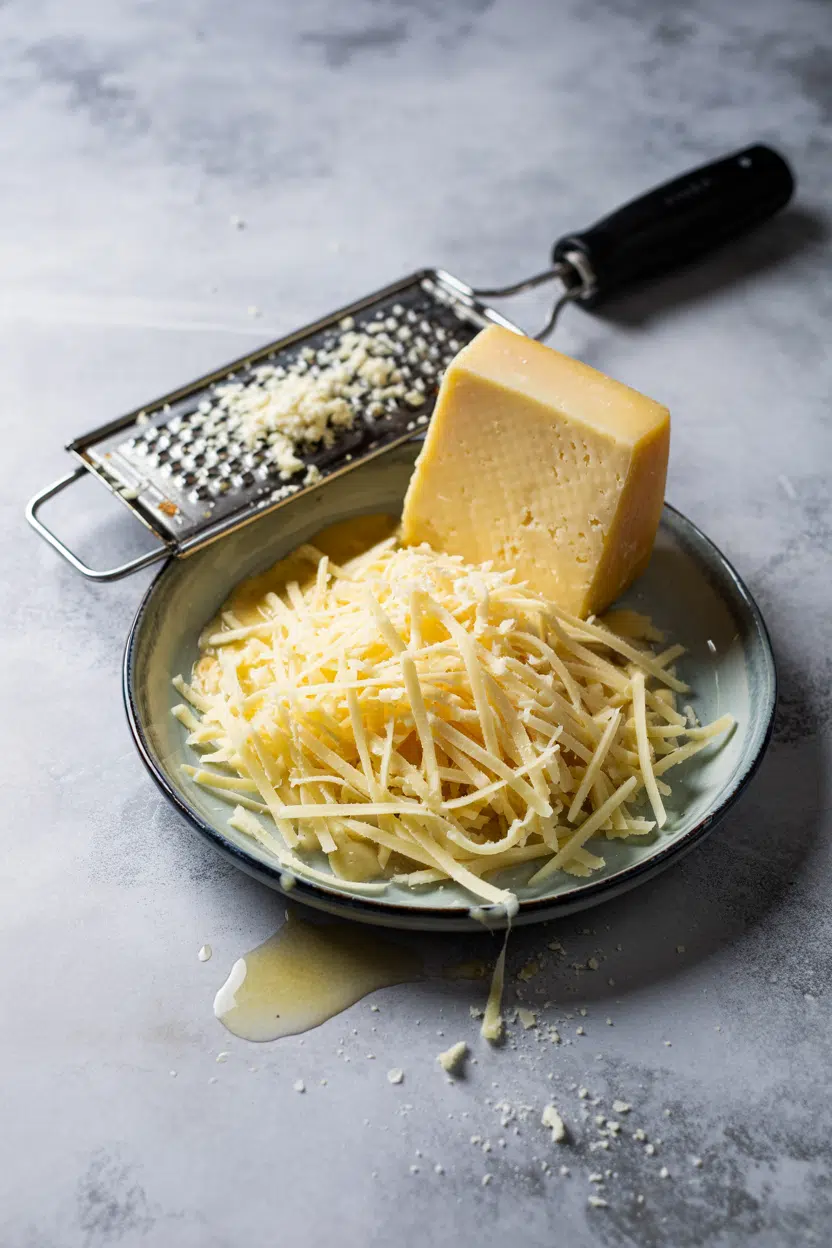
The flavor is quiet, which is the point. Mild lactic tang anchors the profile, supported by a gentle butteriness and a low-level saltiness that doesn't overpower anything around it.
Cold from the fridge, you get a clean dairy sweetness that sits closer to Colby than sharp cheddar - soft and non-acidic. Heat changes the experience considerably.
Melted, the cheese becomes richer and creamier, and the buttery note amplifies without turning greasy. There's a barely-there nutty background aroma that disappears entirely once it hits a hot pan.
What it doesn't do: develop sharpness, bite, or complexity. That's a feature, not a flaw - mild flavor means it layers under other ingredients without competing.
How to Use White American Cheese
White American cheese earns its place through one reliable capability: even, glossy, non-oily melting. The emulsifiers hold fat and protein together under heat, so you never get a greasy puddle or a broken sauce.
For diner-style cheeseburgers, lay a slice directly on the patty during the last minute of cooking and tent a lid over the pan. The steam finishes the melt in seconds.
A solid starting point for that technique is making air fryer grilled cheese at home - the same two-slice method applies to a burger build with minor adjustments.
Macaroni and cheese is where this cheese quietly outperforms natural options.
Stir slices or cubed block into a warm cream base off the heat, and the sauce stays smooth without any starch slurry.
The same logic applies to nacho cheese dip and pub-style queso.
For a weeknight application that shows off that smooth sauce behavior, a dish like skillet cheeseburger pasta uses the melt to bind the whole dish together.
Breakfast sandwiches are another natural home. White American doesn't weep oil onto the egg the way sharper cheeses sometimes do, and its mild flavor stays in the background while the egg and meat lead.
| Method | Best For | Tip |
|---|---|---|
| 🥗 Cold/Sliced | Sandwiches, cold-cut boards, wraps | Let slices come to room temp for easier peel separation |
| 🍳 Pan Melt | Grilled cheese, cheeseburgers, omelets | Add slice in the final 60 seconds; cover pan to trap steam |
| 🥣 Sauce Melt | Mac and cheese, nacho dip, queso | Add off direct heat into warm liquid; stir gently |
| 🔥 Oven/Casserole | Baked pasta, layered casseroles | Low oven (325-350°F) keeps the melt even, not oily |
It pairs cleanly with burger beef, soft white bread, pickles, caramelized onions, and sharp mustard. Light lagers and cola both cut the mild fat without overwhelming the cheese.
Avoid pairing it with very spicy chiles if you want the pepper heat front-and-center - white American's creaminess will blunt the burn.
How to Buy and Store White American Cheese
At the deli counter, ask for white American by name - some counters stock both yellow and white, and they aren't always labeled identically.
Look for a pale ivory color with no dry or chalky edges, and a surface that looks uniform rather than sweaty or wet.
Vacuum-sealed deli packs offer the longest refrigerator life. Once opened, wrap slices tightly in wax paper or parchment and keep them in an airtight container - loose exposure dries edges fast and causes odor pickup from other fridge contents.
Catching spoilage early is similar to reading milk spoilage signs: off smell, slick surface, and discoloration are the clear tells.
Unopened, the cheese keeps for several weeks to months depending on packaging. Opened, plan to use it within 2-3 weeks.
For longer storage, read up on freezing white american cheese - it's possible, though texture softens slightly after thawing.
Where White American Cheese Fits Best
Start here if you need a melt that won't break, separate, or overpower.
White American handles the jobs where texture is the job - cheeseburgers, grilled cheese, smooth cream sauces - without requiring any technique adjustments.
If the flavor profile feels too neutral for a recipe, consider swapping out white american cheese for something with more edge.
However, for reliable, no-fuss melting in everyday cooking, nothing in its category is more consistent.
Frequently Asked Questions
Technically, it's a processed cheese product, not a natural cheese. It starts with real cheddar and Colby-type cheeses, then adds emulsifying salts and pasteurized milk during processing. The FDA classifies it as "pasteurized process American cheese."
Yes, for most melting applications. Emulsifying salts prevent fat separation, so it melts smoothly without breaking or turning greasy. Sharp cheddar can split under direct heat, especially in sauces without added starch.
Color only - yellow American gets its hue from annatto, a natural plant-based dye. The base cheese blend, emulsifiers, flavor, and melt behavior are identical between the two.
Yes, though texture becomes slightly softer after thawing. Freeze slices separated by parchment paper in a sealed bag for up to two months. Use thawed slices in cooked applications rather than cold sandwiches.
No meaningful nutritional difference exists between them. Both are higher in sodium than most natural cheeses due to added emulsifying salts, and both supply calcium and protein in similar amounts per slice.



