That first spoonful of whipped cream - cold, barely sweet, dissolving almost before you register it - is one of the most satisfying contrasts in a dessert kitchen. Cream in dairy recipes plays many roles, and whipped cream sits at the lightest, most fleeting end of that spectrum.
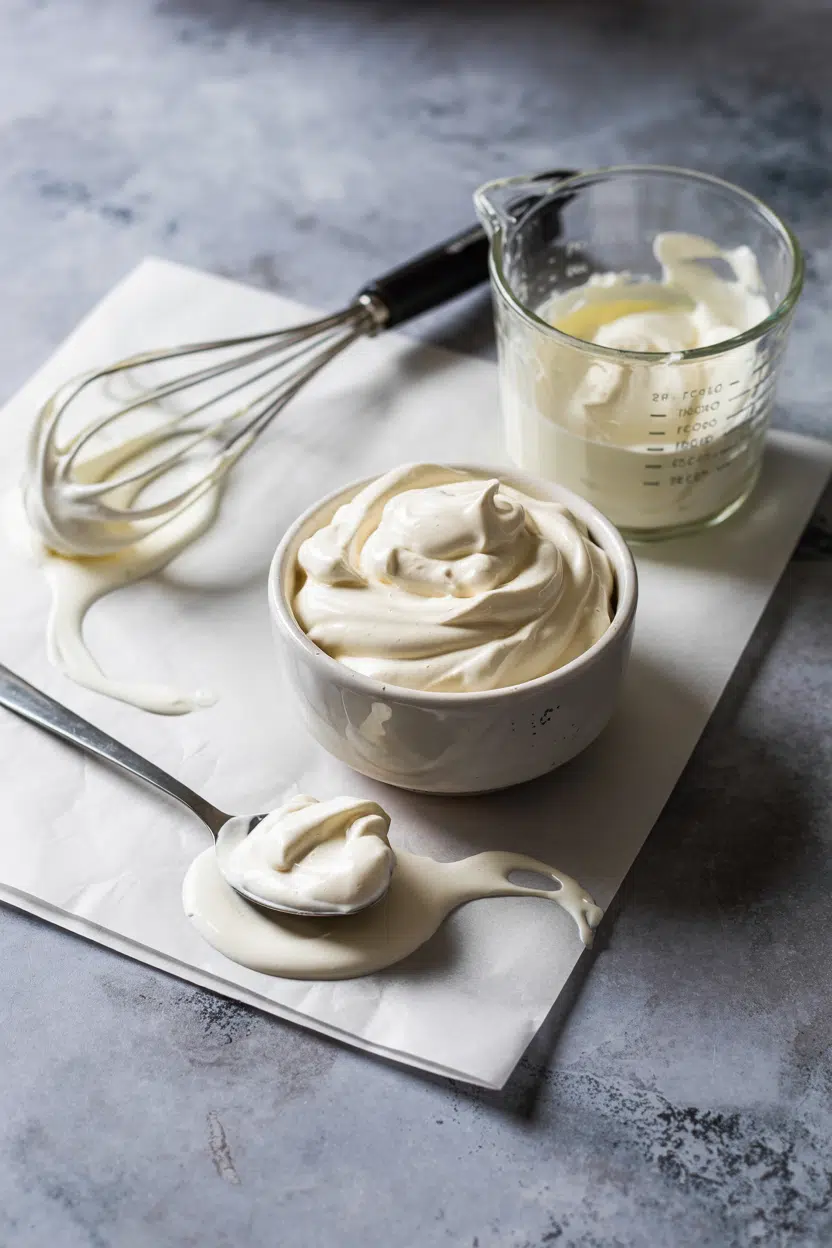
It exists where air and fat meet, which is exactly what makes it so useful and so easy to get wrong.
If you've ever reached for a storebought tub and wondered whether it compares to the real thing, the alternatives to whipped topping question matters more than most people expect.
Whipped cream is aerated heavy cream - light, mildly sweet, and built on dairy fat. It's used cold as a topping or folded into desserts. Stabilized versions hold their shape for piping. Plain whipped cream deflates within hours without stabilizers.
What Is Whipped Cream?
Whipped cream is heavy cream that has been beaten - by hand whisk, electric mixer, or aerosol canister - until air is trapped in the fat network, producing a light, voluminous foam. It traces its formal identity to French and Italian pastry traditions, where chantilly cream (crème chantilly) referred specifically to sweetened, vanilla-scented whipped cream served with desserts.
Remember it later
Planning to try this recipe soon? Save it for a quick find later!
The base is always high-fat cream - typically heavy cream or whipping cream with 30-36% milkfat, which is the minimum needed to hold stable peaks. Lower-fat creams don't whip reliably.
You'll also encounter aerosol whipped cream in canisters, which uses pressurized nitrous oxide to aerate the cream on the spot.
The terminology gets messy fast.
- 🥛 Heavy cream - 36%+ fat; most stable, best for piping and holding shape
- 🥛 Whipping cream - 30-35% fat; lighter results, less structure
- 🍦 Chantilly cream - sweetened and vanilla-flavored; a French subcategory
- 🧴 Aerosol whipped cream - pre-made, convenient, deflates within minutes
- 🚫 Whipped topping - a non-dairy product; does not behave the same way
If you're curious about swapping out mascarpone in recipes that call for a rich cream component, whipped cream often appears as a lightening agent in that same context.
What Does Whipped Cream Taste Like?
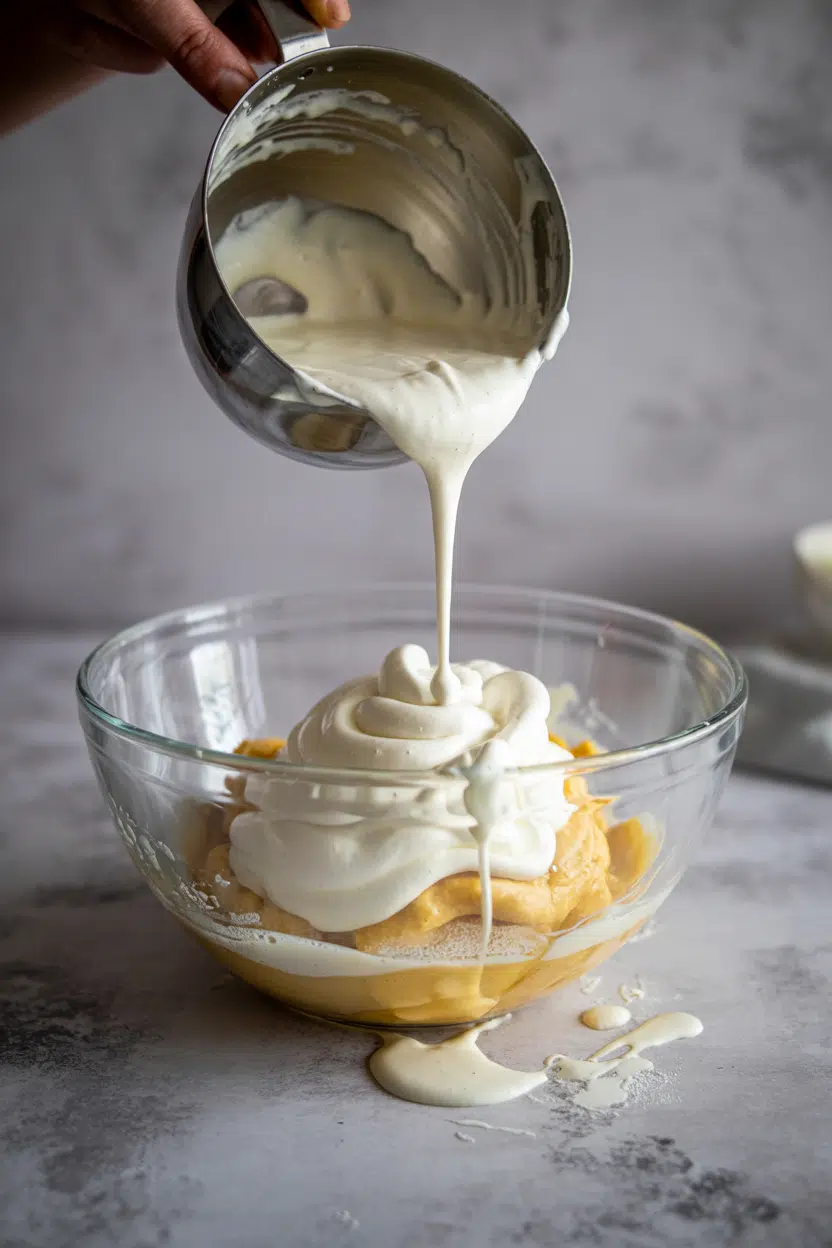
Whipped cream is mild by design. The dominant note is clean, rich dairy fat - not sharp, not sweet unless sugar has been added.
Unsweetened, it reads as neutral creaminess with a faint milky tang. Sweeten it with powdered sugar, and a soft, round sweetness emerges without becoming candy-like.
The closest comparison is a very lightly sweetened mascarpone that's been spread thin, or a spoonful of light custard with no egg weight behind it.
Cultured cream or crème fraîche bases add a subtle tang that standard heavy cream won't give you.
Texture is where whipped cream earns its place. It melts almost immediately on the tongue, adding richness without weight - which is why it pairs so naturally with dense items like spiced pies or chocolate.
How to Use Whipped Cream
Whipped cream does two distinct jobs: cold topping and structural component. As a topping, it's dolloped or piped right before serving - on pumpkin pie, fresh berries, hot cocoa, or a shot of espresso for an affogato-adjacent finish.
As a structural component, it's folded into chocolate mousse to lighten the texture, or layered through trifles and parfaits.
French patisserie uses chantilly cream extensively as a filling for cream puffs and éclairs, where it must be stabilized to survive time in the fridge. American pie and dessert culture defaults to a generous spoonful at the table.
| Method | Best For | Tip |
|---|---|---|
| 🥗 Dolloped | Pies, fruit, hot drinks | Add at the last moment - don't pre-plate |
| 🍳 Folded | Mousse, parfaits, trifles | Use firm peaks and fold gently to keep air |
| 🧁 Piped | Cupcakes, layer cakes, éclairs | Stabilize with gelatin or cornstarch first |
| 💨 Aerosol | Quick topping on drinks, casual desserts | Use immediately - deflates within minutes |
Pairings skew toward fruits with brightness and sweets with depth. Fresh strawberries, raspberries, and peaches cut through the fat.
Chocolate, espresso, and vanilla curds give the cream something to rest against. Angel food cake and sponge cake are natural matches because neither competes in richness.
When you need a dairy-free swap, there are solid replacements for whipped cream that work in most cold applications, though the mouthfeel differs noticeably.
How to Buy and Store Whipped Cream
At the store, reach for heavy cream with at least 36% milkfat for the most reliable results.
Whipping cream at 30-35% fat works but produces softer, less stable peaks.
Both should be kept cold - using heavy cream for creaminess starts with buying a carton that hasn't been heat-damaged in transit.
Ultrapasteurized cream has a longer shelf life, however it can be stubbornly slow to whip compared to standard pasteurized cream.
Skip any carton labeled "whipped topping" if real dairy is what you need. Once whipped, keep it covered in the coldest part of the fridge.
For the full breakdown on storing whipped cream correctly, timing matters more than most people think - especially for stabilized versions made with gelatin's flavor and uses as a structural aid.
- ❄️ Unwhipped heavy cream - stays fresh 1-3 weeks refrigerated, unopened
- 🍦 Freshly whipped cream - best within 2 hours; holds 2-3 days stabilized
- 💨 Aerosol cans - months unopened; use within days once opened
Powdered sugar dissolves faster than granulated when sweetening, and keeping sugar fresh ensures it incorporates smoothly without graininess.
Start Here
New to whipping cream at home? Start with plain heavy cream, a chilled bowl, and an electric hand mixer. Whip to soft peaks for topping, firm peaks for piping. Don't sweeten until you know the texture you want.
If you're folding it into a mousse or filling pastry shells, stabilize with a small amount of cornstarch or gelatin so it doesn't weep. Aerosol cream is fine for a quick coffee topping.
For anything that needs to hold longer than 20 minutes on a plate, whip it fresh.
Frequently Asked Questions
Heavy cream and air - that's it in its simplest form. Sugar and vanilla are added for chantilly cream. The fat content (minimum 30%) is what allows the cream to trap air bubbles and hold a foam structure.
Whipped topping is a non-dairy product made with hydrogenated oils, stabilizers, and sweeteners. It holds its shape longer than real whipped cream but lacks the dairy fat flavor and melts differently on the tongue.
Most failures trace to warm cream, warm equipment, or too-low fat content. Ultrapasteurized cream is also notoriously slow. Chill the bowl, beaters, and cream before you start.
Unstabilized whipped cream deflates within 2-4 hours. Stabilized versions - made with gelatin or cornstarch - hold for up to 3 days covered in the fridge. Aerosol cream collapses almost immediately after dispensing.
Yes, in dollops. Pipe or spoon individual portions onto a lined tray, freeze until solid, then transfer to a bag. They thaw in about 15 minutes and hold their shape better than refrigerated leftovers.