
You spot it on the shelf in three dozen variations - smooth passata, chunky marinara, herb-laced jarred sugo - and the choice can feel genuinely confusing.

Tomato sauce is one of those pantry staples that most cooks use weekly without stopping to think about what separates a flat, thin version from one with real depth.
A sauce built on long-simmered tomatoes behaves very differently in a lasagna than a quick pour-and-heat shortcut, and understanding those differences matters.
Good tomato sauce anchors some of the most familiar dishes in Mediterranean and American-Italian cooking, from spaghetti to shakshuka, and knowing what to look for changes what lands on the plate - pairing it with comparing dried oregano vs ground oregano options or even preparing chili garlic sauce properly can shift the whole flavor register.
Tomato sauce is a cooked, reduced tomato preparation seasoned with garlic, onion, and herbs. It delivers bright acidity, cooked sweetness, and deep umami. Use it as a base for pasta, pizza, braises, and egg dishes. Opened jars keep 5-7 days refrigerated or up to 4 months frozen.
What Is Tomato Sauce?
Tomato sauce is a cooked tomato condiment made by simmering crushed or puréed tomatoes - often with garlic, onion, olive oil, and herbs - until the liquid reduces and the flavors concentrate.
Remember it later
Planning to try this recipe soon? Save it for a quick find later!
It sits in a different category from raw tomato products like fresh salsa or uncooked passata, because heat fundamentally changes the tomatoes' chemistry: acidity mellows, natural sugars develop, and glutamates increase, building umami that a raw tomato simply can't deliver.
The sauce traces its roots to southern Italy, where it became the backbone of regional cooking from Naples outward.
You'll see it called sugo in Italian households, passata-based sauce when the base is strained, and marinara when it's kept simple - just tomatoes, garlic, and oil.
Once Italian immigrants brought these traditions to the United States, American-Italian versions evolved with added sugar and more herbs, creating the jarred pasta sauce style now standard in grocery stores.
Varieties range from smooth and pourable to thick and chunky, depending on whether the tomatoes are passed through a strainer or left with texture.
Onion choice matters too - cipollini onion cooking methods show how different alliums shift a sauce's sweetness at the base level.
What Does Tomato Sauce Taste Like?
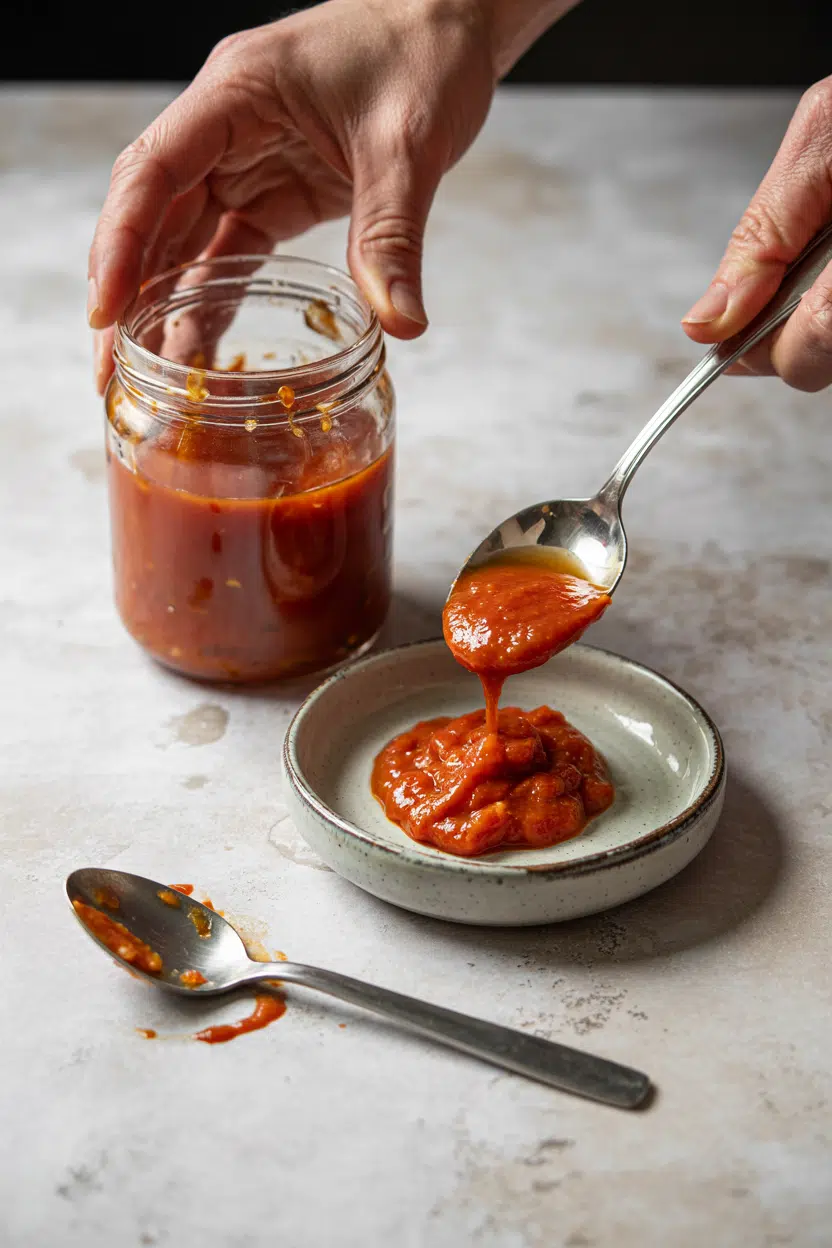
Tomato sauce lands somewhere between sharp passata and concentrated canned tomatoes, but with added savory seasoning pulling it toward full sauce territory.
The raw vegetal edge you get from crushed tomatoes softens considerably during cooking - what remains is a rounded, cooked-tomato sweetness layered under bright acidity.
Longer reduction deepens the sweetness and pushes the sauce toward richer, almost wine-like complexity.
Compared to tomato paste, the flavor is less concentrated and less bitter - paste reads as intense and almost caramelized, while sauce stays brighter and more fluid on the palate.
How to Use Tomato Sauce
Tomato sauce functions as both a standalone coating and a building block. In its simplest role, it gets tossed with spaghetti or penne and finished with grated parmesan or pecorino.
Beyond pasta, it layers into lasagna, spreads under pizza toppings, and braises short ribs or meatballs low and slow until the meat absorbs its acidity.
Shakshuka - eggs poached directly in seasoned tomato sauce - shows how well the sauce works as a cooking medium, not just a condiment. Stirring it into vegetable ragùs adds acidity and body. Blending it into a bisque with a splash of cream produces tomato soup with real savory backbone.
When the sauce runs short, knowing your tomato sauce stand-ins keeps a recipe on track without losing the acidic structure.
A sauce built on olive oil benefits from using the right fat as a carrier - the breakdown on alternatives to olive oil helps when the pantry is low.
| Method | Best For | Tip |
|---|---|---|
| 🍝 Simmered | Pasta coatings, braised meats, ragù | Reduce until sauce clings to a spoon - no pooling |
| 🫙 Layered & Baked | Lasagna, baked ziti, stuffed peppers | Use a slightly thinner sauce; it thickens in the oven |
| 🍕 Spread (uncooked application) | Pizza base, flatbreads | Keep it cold and thick so it doesn't steam the crust |
| 🍳 Poaching medium | Shakshuka, poached fish, eggs | Bring to a gentle simmer before adding proteins |
How to Buy and Store Tomato Sauce
At the store, color is the first signal.
Look for a deep, even red on the label photograph or through glass - watery, pale orange tones suggest a diluted or low-tomato product.
Flip the can or jar and check the ingredient list: tomatoes should appear first, well ahead of water, starch, or sugar.
A clean, slightly sweet aroma on opening is right; any metallic or sour-fermented smell means skip it.
Storage is straightforward once you know the windows:
- 🧊 Unopened pantry - Cool, dark shelf; commercially canned sauces keep months to years before the best-by date.
- ❄️ Opened refrigerated - Transfer to a sealed container and use within 5-7 days; watch for [tomato sauce spoilage signs](https://forkliftkitchen.com/tomato-sauce-shelf-life/) like mold or off-smell before using.
- 🧊 Frozen - Portion into freezer bags or containers; quality holds for 3-4 months.
- 🌿 Fresh herb additions - If you stir in fresh basil before storing, note that [basil's shelf life](https://forkliftkitchen.com/basil-shelf-life/) is short - it fades and darkens within days in the fridge.
Where to Start With Tomato Sauce
New to making it from scratch? Start with a simple sauté of garlic and onion in olive oil, add a can of crushed tomatoes, and simmer for 25 minutes. That baseline teaches you how the sauce thickens and what reduction actually smells like. From there, preparing tomato paste properly can show you how to add concentrated depth when the sauce needs more backbone.
If scratch cooking isn't the goal, buy jarred and upgrade it in the pan. Either way, tomato sauce rewards attention to heat and time more than any special ingredient.
Frequently Asked Questions
Marinara is a specific, minimal tomato sauce - tomatoes, garlic, olive oil, sometimes oregano - cooked briefly to keep it bright. Tomato sauce is broader: it typically includes onion, longer cooking, and sometimes wine or meat, producing a richer, deeper result.
Not exactly. Pasta sauce is a marketing term covering tomato sauce, marinara, arrabbiata, and others. Plain tomato sauce is one type within that broader category - usually simpler and less seasoned than jarred American-style pasta sauces.
Tomato paste is far more concentrated - intensely savory, slightly bitter, and thick enough to hold a spoon upright. Tomato sauce is lighter, brighter, and more acidic, functioning as a liquid component rather than a concentrated flavoring agent.
Five to seven days in a sealed container is the safe window. Glass or BPA-free containers preserve flavor better than the original can, which can impart a metallic taste after opening.
Yes. Portion it into freezer-safe bags or containers, leave a small headspace for expansion, and freeze for up to 3-4 months. Thaw overnight in the fridge and stir well before reheating - texture holds well after freezing.



