
You spot it at the farmers market - a wide, leafy bundle with ribs the color of traffic lights, ranging from bone white to deep crimson. Swiss chard is one of those greens that rewards a closer look.
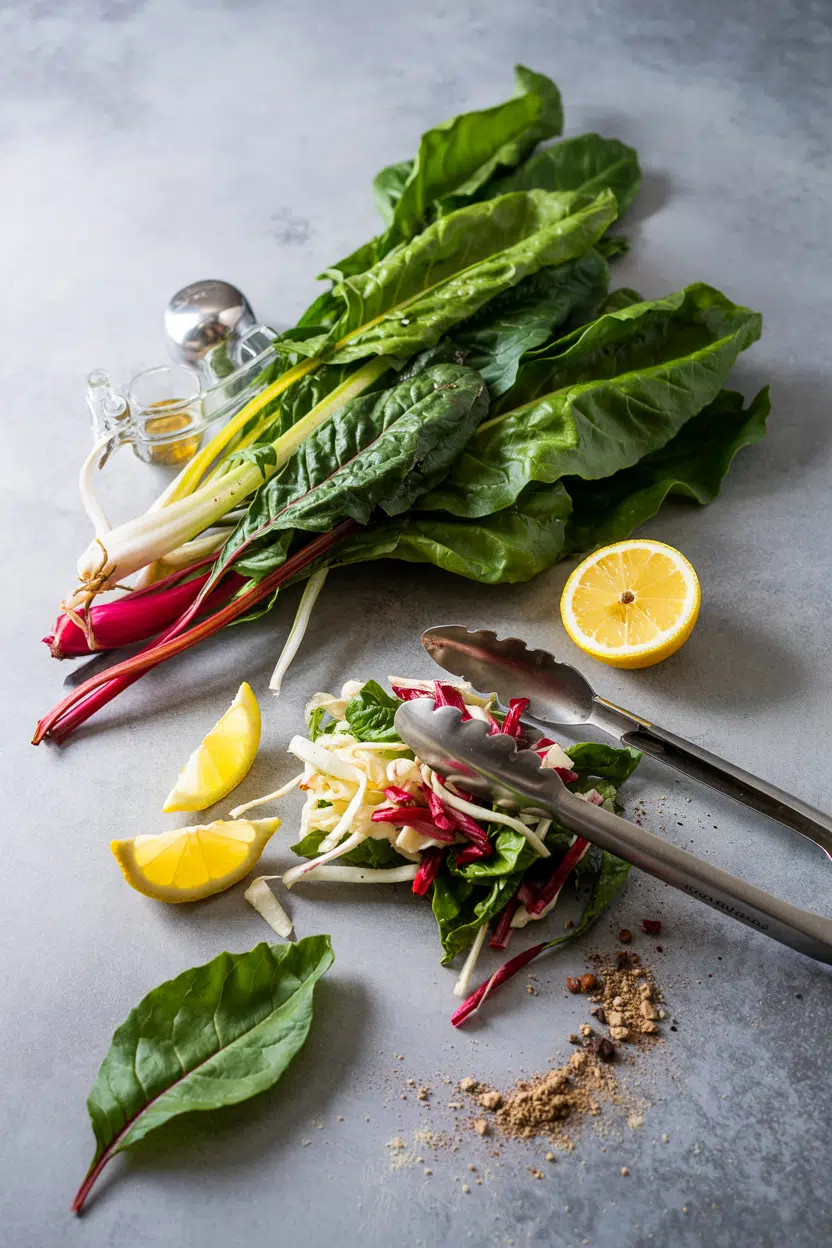
It handles heat better than spinach swaps and brings more character than standard salad greens, making it a genuinely useful addition to a weeknight kitchen. If you tend to reach for kale or collard greens but haven't tried chard, this profile covers everything you need.
Swiss chard is a leafy green with broad, tender leaves and crunchy colored ribs. Raw, it tastes mildly bitter and earthy. Cooked, it softens into something slightly sweet and silky. Best used sautéed, braised, or stirred into soups. Use within 3-7 days of purchase.
What Is Swiss Chard?
Swiss chard (Beta vulgaris subsp. cicla) is a leafy green in the same botanical family as beetroot - not brassicas like kale or cabbage, despite looking the part. It was domesticated in the Mediterranean and has been a staple of Southern European cooking for centuries.
Remember it later
Planning to try this recipe soon? Save it for a quick find later!
The plant is grown for its leaves and stems, not its roots. Chard ribs can be white, yellow, orange, or red depending on the variety. The collective term rainbow chard refers to bundles that mix several rib colors together rather than a single cultivar.
It goes by several names depending on where you are:
- Silverbeet - the standard name in Australia and New Zealand
- Chard - common shorthand in North American kitchens
- Swiss chard - the name most widely used in the United States, despite Switzerland having no particular claim to it
- Beta vulgaris subsp. cicla - the botanical classification shared with spinach beet and perpetual spinach
White-stem chard tends to have a milder flavor, while red-stem varieties carry a slightly more pronounced beet-like mineral note. Both cook the same way.
What Does Swiss Chard Taste Like?
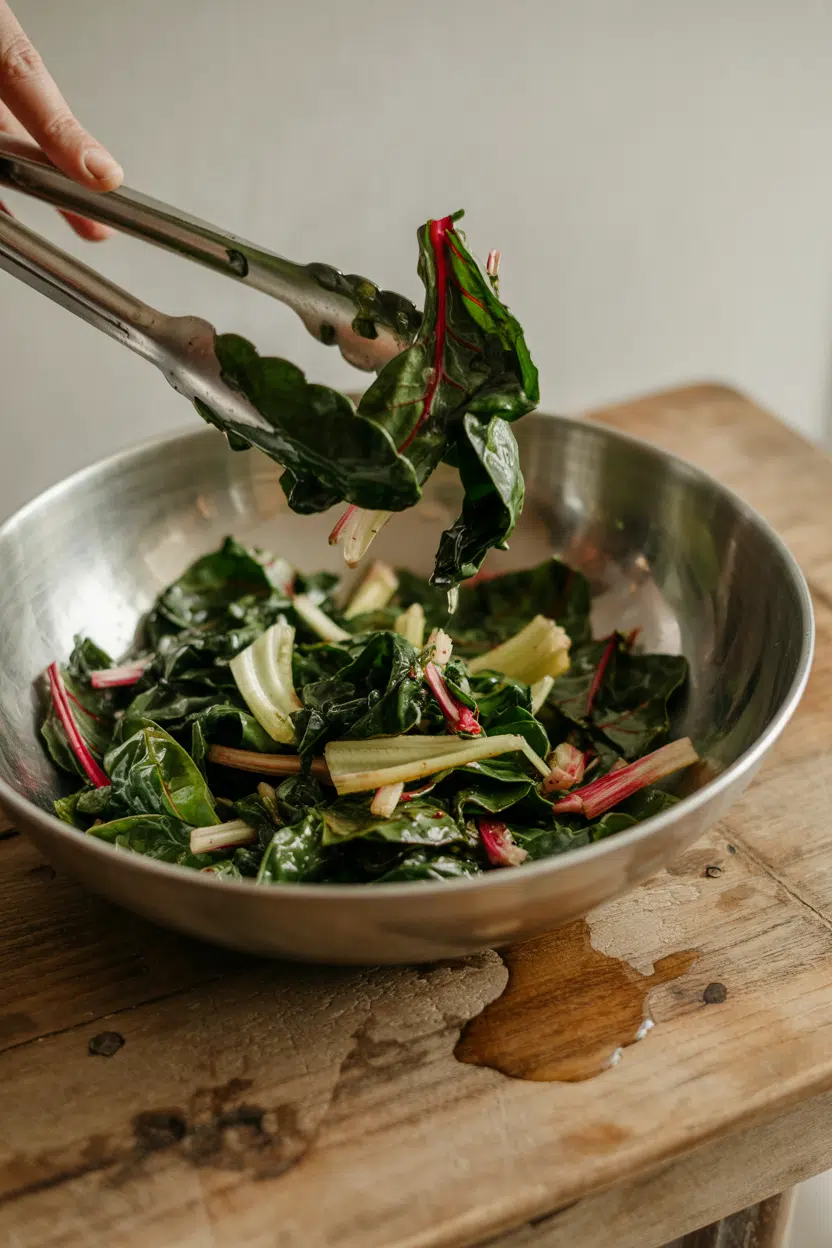
Raw swiss chard lands somewhere between spinach and beet greens - mildly bitter, earthy, and with a faint mineral quality that the leaves inherit from their botanical relatives. The bitterness is noticeable but not sharp.
Heat changes everything. Sautéed or braised chard loses most of its bitterness and develops a subtle sweetness, while the leaves go from chewy to silky within minutes. The stems hold their crunch longer and carry that mineral note more prominently than the leaves.
Acid - lemon juice or a splash of vinegar - brightens the flavor and softens any remaining bitterness. It's a reliable finish when chard tastes flat or slightly muddy after cooking.
How to Use Swiss Chard
Treat the stems and leaves as two separate ingredients. Stems need more time than leaves, so add them to the pan first and give them a few minutes of heat before the leaves go in.
The most common approach - and the fastest - is a quick sauté. Start stems in olive oil with garlic, add leaves once the stems soften, then finish with lemon juice.
This is the foundation for dozens of Italian-style preparations, and it works on a weeknight in under fifteen minutes.
| Method | Best For | Tip |
|---|---|---|
| 🍳 Sauté | Quick side dish, pasta additions, grain bowls | Stems first, leaves last - about 3 min apart |
| 🥘 Braise | Folding into polenta, farro, or bean dishes | Use stock and aromatics; low heat for 15-20 min |
| 🥗 Raw (sliced) | Slaws, grain salads, massaged salads | Slice leaves thin and massage with salt and acid first |
| 🍲 Soup | Minestrone, lentil soups, bean broths | Add in final 5 minutes to avoid mushiness |
| 🥚 Baked | Frittatas, quiches, stuffed leaves | Squeeze out moisture after blanching before adding to eggs |
| 🫙 Pickled | Stems as a crunchy condiment or relish | Quick-pickle stems in white wine vinegar and a pinch of sugar |
Chard pairs naturally with garlic, lemon, olive oil, and pancetta. For something richer, fold braised leaves into ricotta for a pasta filling or layered grain dish.
Middle Eastern preparations often use stuffed chard leaves in place of grape leaves - the wider leaf surface makes it easier to roll. Check pairings for swiss chard for complete pairing ideas.
How to Buy and Store Swiss Chard
Look for glossy, crisp leaves with no large holes or yellowing. The ribs should feel firm and snap when bent - a limp rib is a sign the bunch has been sitting too long. For rainbow chard, vivid color along the stems is a quality indicator; avoid bunches with brown spotting along the veins.
Store chard unwashed, wrapped in a slightly damp paper towel and placed in a perforated plastic bag. Keep it in the crisper drawer.
The leaves are more delicate than the stems, so check the leaves first when assessing freshness.
- Leaves: Best within 3-5 days; deteriorate faster than stems
- Stems: Firm and usable for up to 7 days if kept cold and dry
- Do not wash until ready to use - moisture accelerates decay
For a full breakdown of how long chard holds in different conditions, see our guide on swiss chard storage guide.
Where to Start with Swiss Chard
New to chard? Sauté it first. Stems in, leaves in two minutes later, garlic, olive oil, a squeeze of lemon at the end. That single method shows you what the green does at its best - and takes less time than most pasta cooks.
If you're already comfortable with it, the stems deserve more attention. Quick-pickle them, roast them separately, or fold them into a frittata with eggs and feta.
They're the most underused part of an already underused green.
Can't find chard at your market? Our swiss chard swaps guide covers the closest options by use case.
Frequently Asked Questions
Yes, but the texture and bitterness are stronger raw. Slicing the leaves thin and massaging them with salt and acid first makes a significant difference. Stems can be eaten raw too - they're crunchy and slightly earthy, similar to raw beet stems.
Cook it. Heat breaks down the bitter compounds quickly, especially with braising. Finishing with lemon juice or a splash of vinegar also brightens the flavor and masks any residual bitterness.
3-7 days, depending on freshness at purchase. Store unwashed in a damp towel in the crisper drawer. Leaves go first - check them after 3 days even if the stems still look firm.
They're closely related - both are subspecies of Beta vulgaris. Beet greens have a stronger earthy-sweet flavor and thinner stems, while chard has wider leaves and meatier ribs bred specifically for eating.
It's nutrient-dense and low in calories, with meaningful amounts of vitamin K, vitamin A, and magnesium. The high vitamin K content is worth noting if you take blood-thinning medication - consistent intake matters more than occasional use.



