
You spot a row of pale, oval fillets at the fish counter - some labeled Dover sole, others simply "sole" - and wonder whether the mild-looking fish is worth the premium price tag.

If you've enjoyed flounder in cooking or explored alternatives to haddock, sole sits in familiar territory but occupies a lane of its own.
Few white fish match its combination of fine texture, subtle sweetness, and quick kitchen turnaround.
Sole is a delicate flatfish with mildly sweet, clean white flesh and very low fishiness. It cooks fast - typically under five minutes - and suits French, British, and Scandinavian preparations equally well. Fresh fillets last just 1-2 days in the fridge, so plan to cook soon after buying.
What Is sole fish?
Sole is a small-to-medium flatfish native to the Northeast Atlantic and North Pacific coasts. Like all flatfish, it has a compressed oval body with both eyes positioned on one side - an adaptation for life on the seafloor.
Remember it later
Planning to try this recipe soon? Save it for a quick find later!
The fish travels under several names at market. Dover sole (Solea solea) is the prized European species, caught mainly in the North Sea and English Channel.
Lemon sole and rock sole are related but distinct species, generally softer in flesh and less expensive.
Sole belongs to the broader white fish category, meaning lean, pale-fleshed, and mild.
It is thinner and finer-textured than Atlantic cod, and most markets carry it as skinned fillets rather than whole fish.
Understanding fish in cooking helps put sole's position in perspective - it sits at the delicate end of the white fish spectrum, a step finer than most everyday options.
What Does sole fish Taste Like?
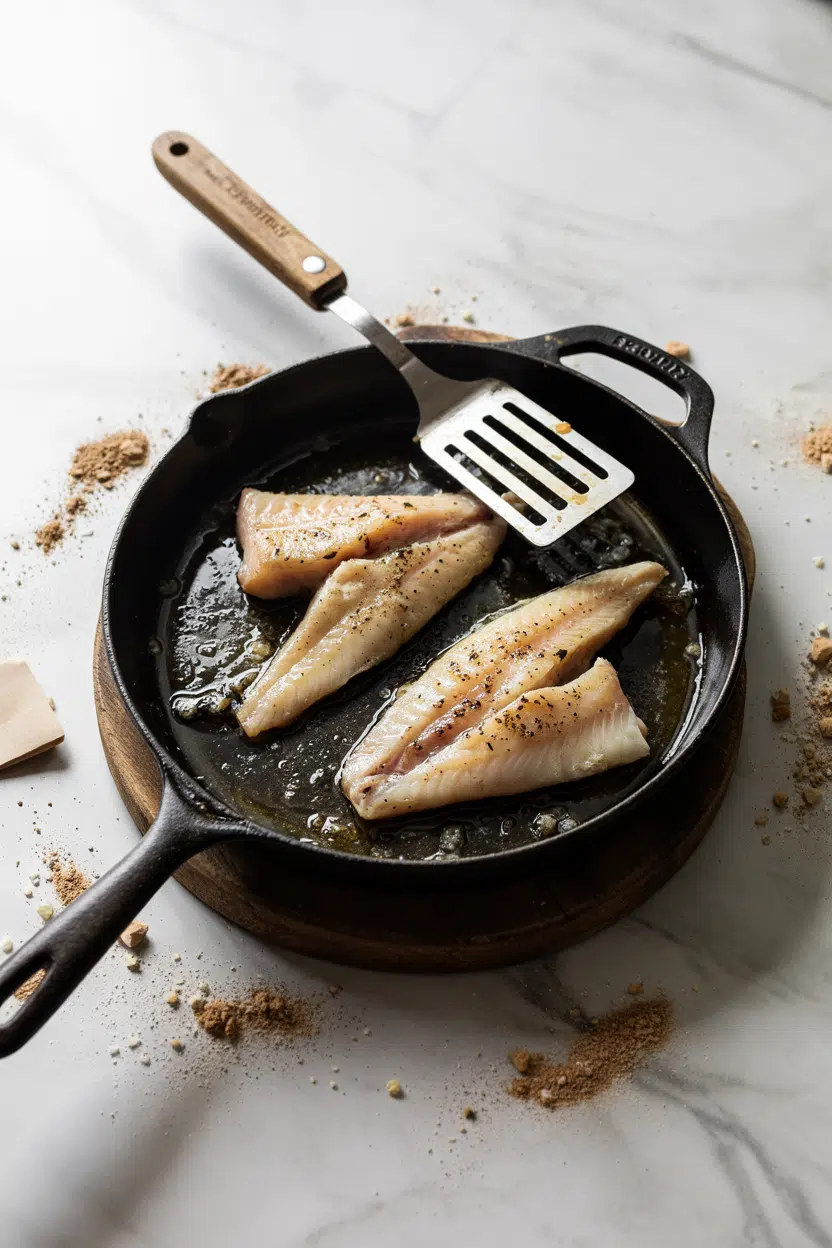
Sole has a mildly sweet, clean flavor with a faint background of brine and the faintest hint of butter - even before any fat hits the pan.
Fishiness is minimal, which makes it one of the most approachable white fish available.
Raw sole smells faintly of the sea - nothing sharp. Cooked, the flesh turns from translucent to opaque white, and the fine flakes stay tender but hold together if handled carefully.
Overcooking tightens the texture quickly, so watch the clock.
Compared to cod, sole is noticeably milder and finer-grained. Against tilapia, it tastes cleaner and slightly sweeter, without tilapia's occasional muddy note.
It is closest in character to flounder, though Dover sole carries a more pronounced sweetness when both are cooked side by side.
How to Use sole fish
Sole is a fish that rewards restraint in the kitchen. Its mild sweetness pairs with brown butter, lemon, fresh parsley, chives, and dill - ingredients that accent rather than compete.
Heavy spice rubs or gelatinous cream sauces overwhelm it fast.
French cuisine leans hardest on sole. Sole meunière - the classic of lightly floured fillets pan-seared in brown butter with lemon and parsley - remains the benchmark preparation.
British kitchens favor simple pan-fried Dover sole served whole or as fillets.
Scandinavian cooks tend toward gentle poaching in court-bouillon or light stews, while Japanese preparations use steaming with ginger and scallions to let the natural sweetness lead.
| Method | Best For | Tip |
|---|---|---|
| 🍳 Pan-sear | Sole meunière, brown butter fillets | Use medium-high heat and cook 90 seconds per side max |
| ♨️ Steam | Whole sole or fillets with aromatics | Line the steamer with scallions to prevent sticking |
| 🫙 Poach | Rolled stuffed fillets, delicate stews | Keep liquid at a bare simmer - a rolling boil breaks the fillet |
| 🫕 En papillote | Baked sole with lemon, herbs, wine | Seal tightly so steam builds and the fillet stays moist |
| 🍟 Light fry | Battered strips, tempura sole | Use a thin, light batter - heavy coatings mask the flavor |
When you need a swap, knowing your options for swapping out sole fish keeps you from stalling mid-recipe. For sides, baby carrots, new potatoes, and light olive oil with garlic all pair cleanly without fighting the fish.
How to Buy and Store sole fish
At the counter, look for fillets with glossy, translucent flesh and clean edges. Brown edges, a sour or ammonia smell, or fillets that fall apart when touched are all signs to skip.
Whole sole should have clear, bright eyes and firm belly flesh.
Checking for dover sole spoilage signs before cooking takes seconds and saves a wasted meal.
Once home, store sole on ice in the coldest part of your fridge and cook within 1-2 days.
For longer storage, freeze promptly in vacuum-sealed bags or wrapped tightly in plastic and foil - a full breakdown of sole fish's shelf life covers what to expect from frozen fish across several months.
- ❄️ Fridge storage - Place on ice or in the coldest zone; use within 1-2 days.
- 🧊 Freezer storage - Vacuum-seal or double-wrap tightly; quality holds 3-6 months.
- 🚫 Avoid refreezing - Thawed sole that has been out for hours should not go back in the freezer.
Start Here if You're New to Sole
Buy Dover sole when you can find it - the flavor difference over generic supermarket fillets is noticeable. Cook it the first time in brown butter with lemon and parsley: minimal technique, maximum payoff.
Note that brown butter pairs with more than just fish - if you end up with leftover browned butter, the same technique behind making brown butter blondies at home puts it to good use.
Once you have a feel for sole's pace in the pan, baking en papillote and gentle poaching follow naturally.
Frequently Asked Questions
No. Sole is a small, short-lived flatfish and generally sits in the low-mercury category. Regional advisories vary, so it's worth checking local guidelines for Pacific species specifically.
Handle fillets as little as possible and use a wide spatula for turning. A very brief sear - around 90 seconds per side - keeps the fillet intact before the flakes have a chance to separate.
Dover sole is noticeably sweeter and cleaner, with finer flakes. Tilapia can carry a faint muddy or flat note that Dover sole lacks entirely.
Yes, flounder is the closest practical substitute. It has a similar mild profile but slightly softer flesh, so reduce cook time by about 20 percent to avoid over-softening.
Properly vacuum-sealed sole holds quality for 3-6 months frozen. Beyond that, the flesh stays safe but turns drier and loses its fine texture when cooked.



